
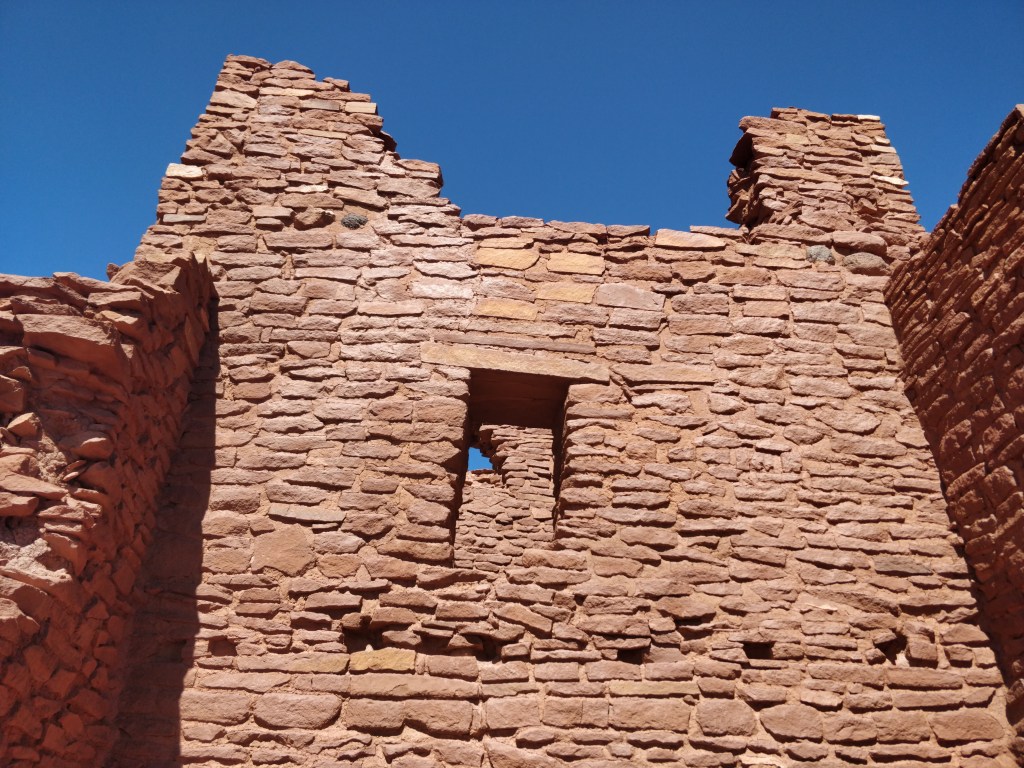
We followed a north by northwest route from New Mexico into Arizona to visit the ruins of the Gila Cliff Dwellers, the Puerco Pueblo, the Homolovi, and the Waputki peoples. Once in Arizona, most of the ruins we encountered were either on or near the Little Colorado River. We met the Navajo at the place where it joins the mighty Colorado River rushing towards the Grand Canyon.
Before the Spanish Explorers arrived to search for El Dorado, ancient peoples lived in these beautiful and often desolate places. By 1400 AD, each of the ancestral Puebloan groups had disappeared, moved on, or melded old cultures into new. Speculation as to the cause of this mystery includes everything from prolonged drought to aliens.
Gila Cliff Dwellings
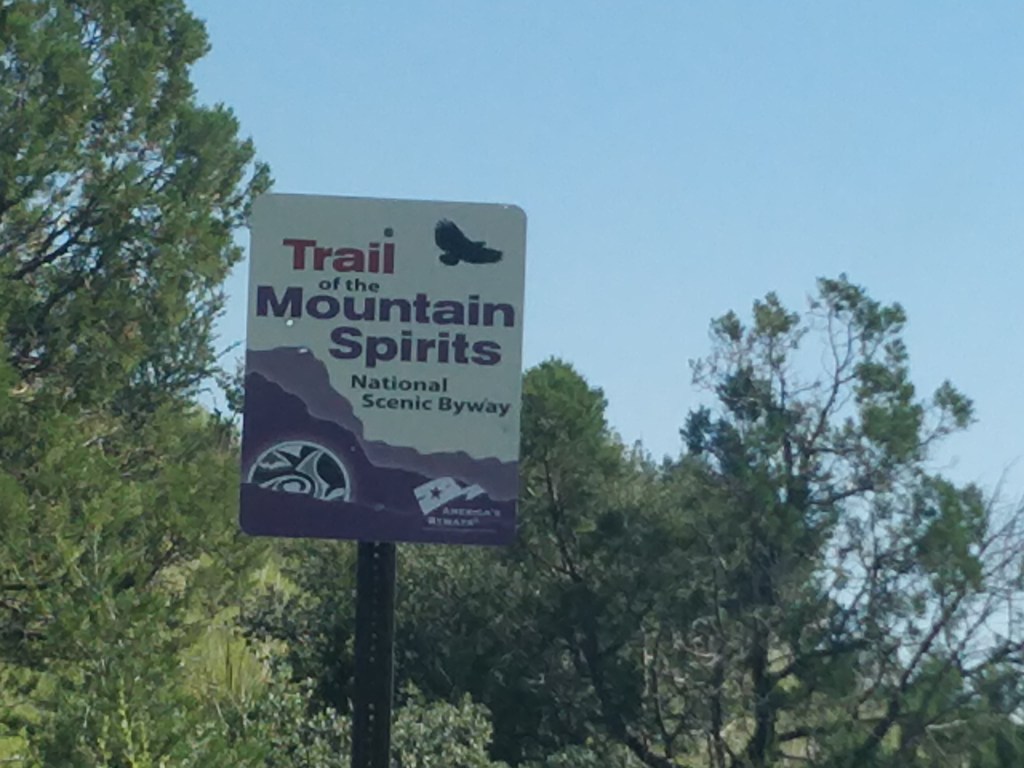
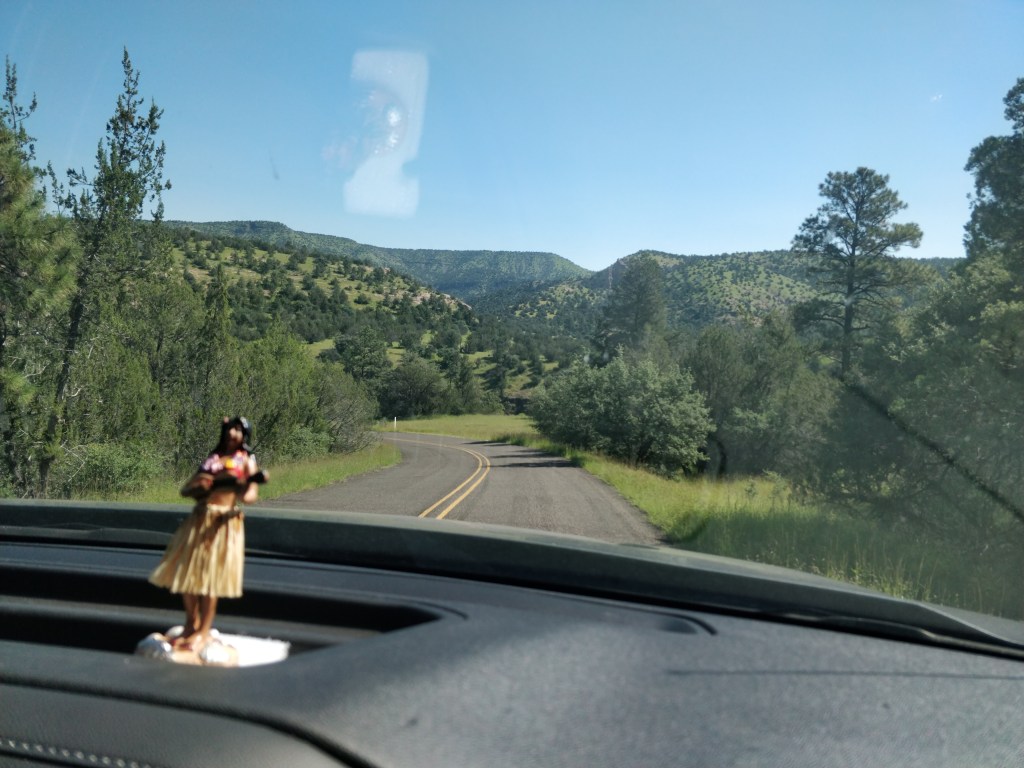
North of Silver City, New Mexico, along a scenic highway is the Gila Cliff Dwellings National Monument. The 44 mile drive takes about two hours to travel along a very twisting road through the Gila National Forest.
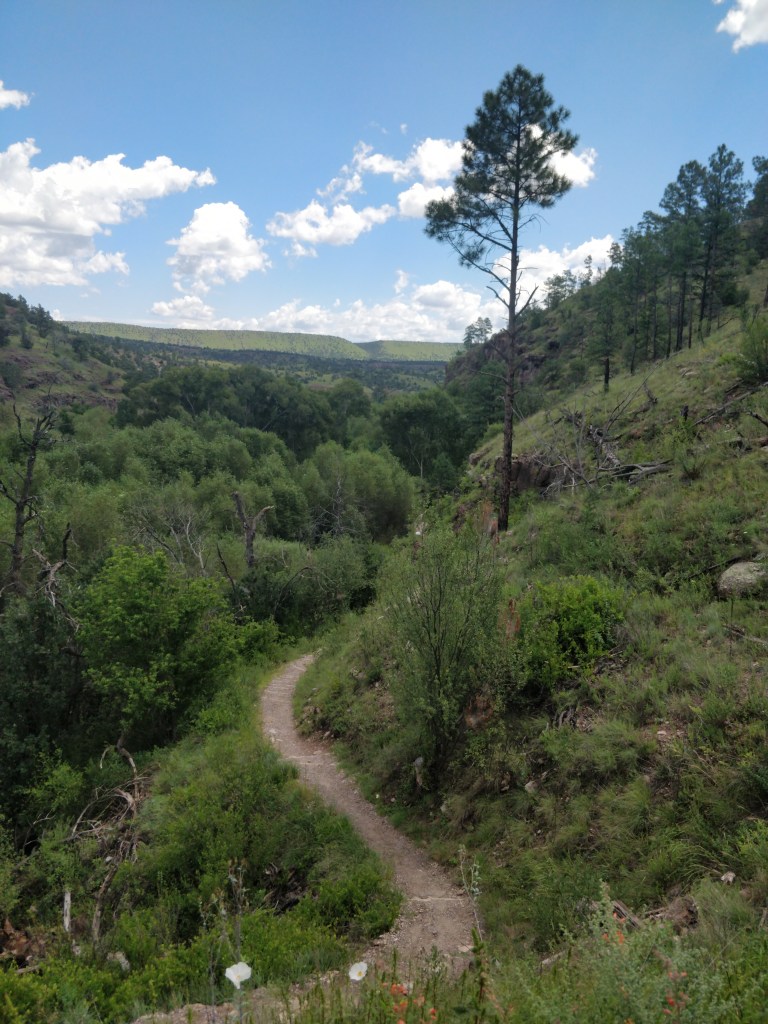
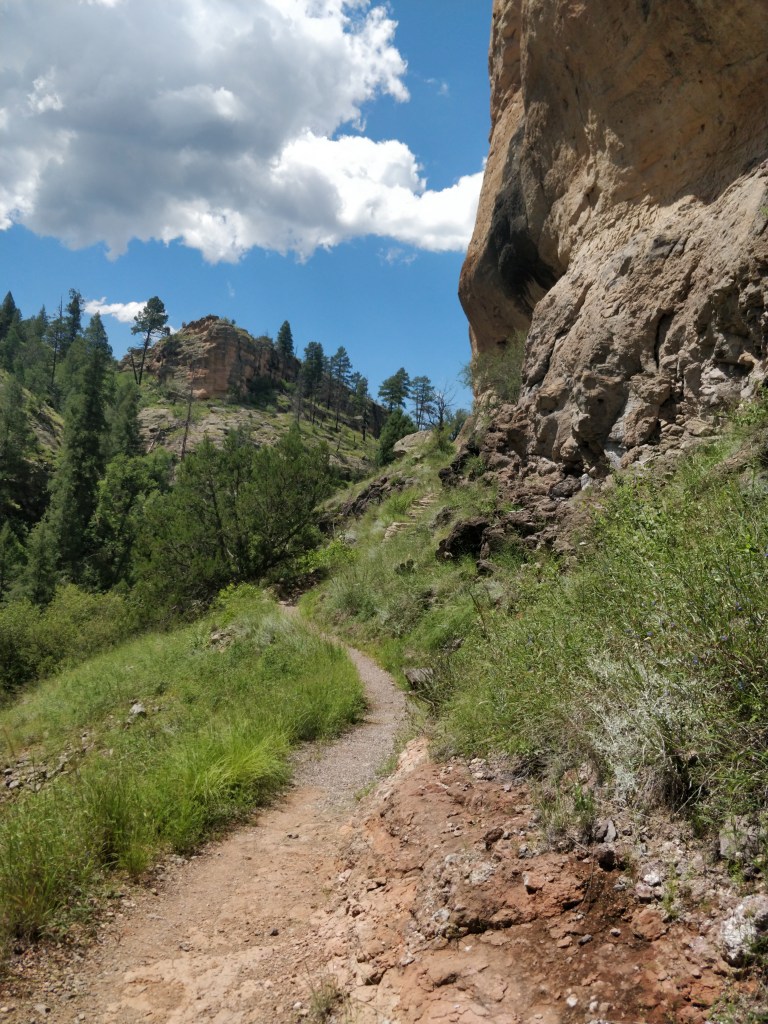
From the visitor center, we walked about a mile along the Gila River into the Canyon. The Mogollon people walked the same trail 700 years ago into this lush canyon oasis.
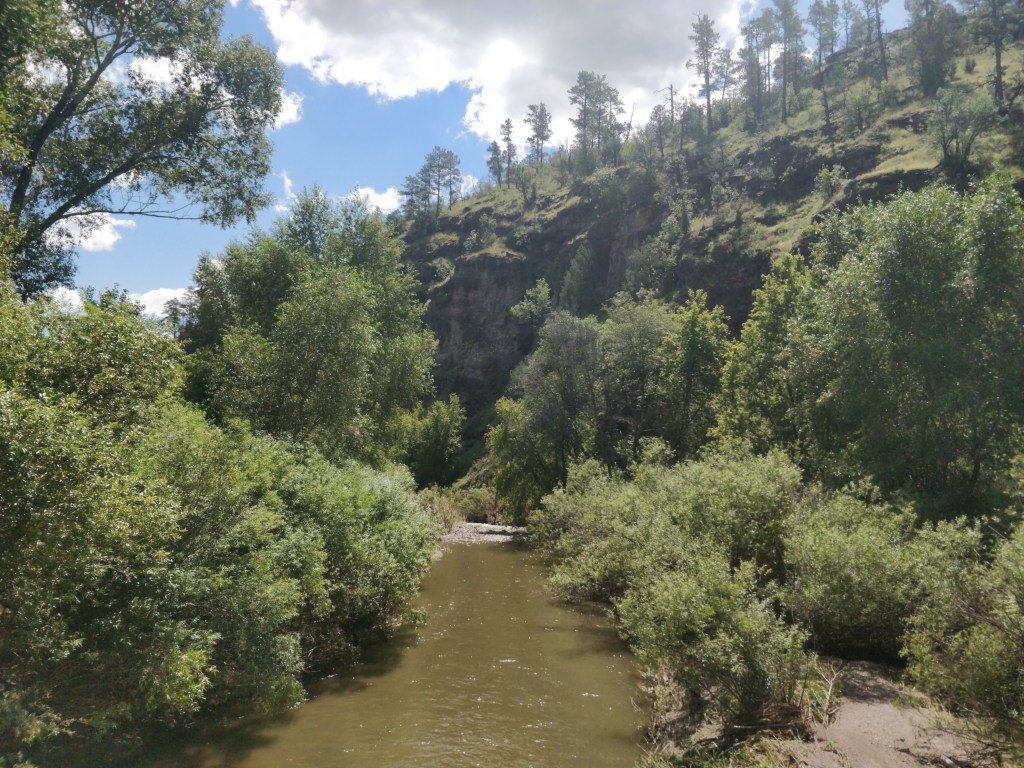
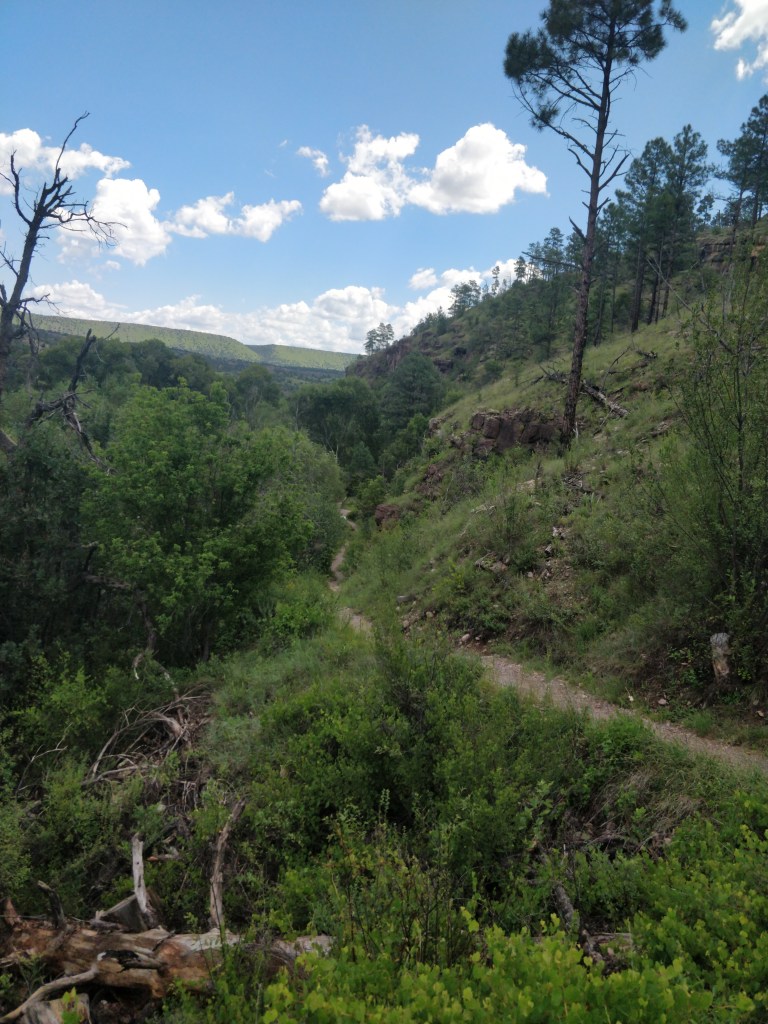
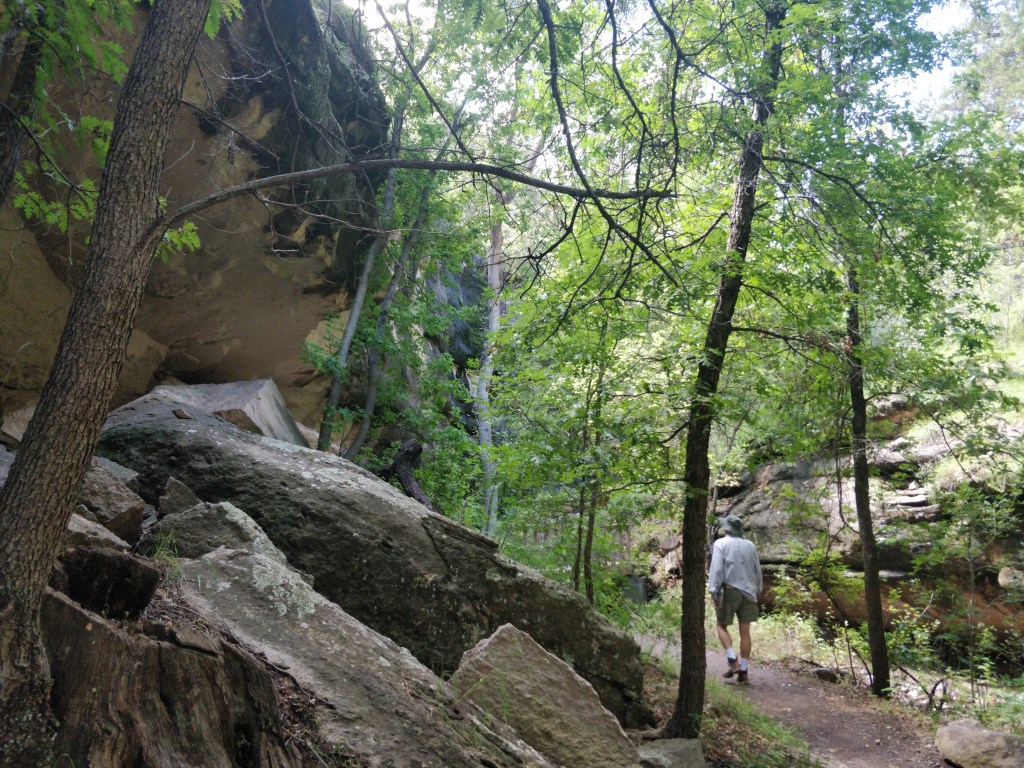
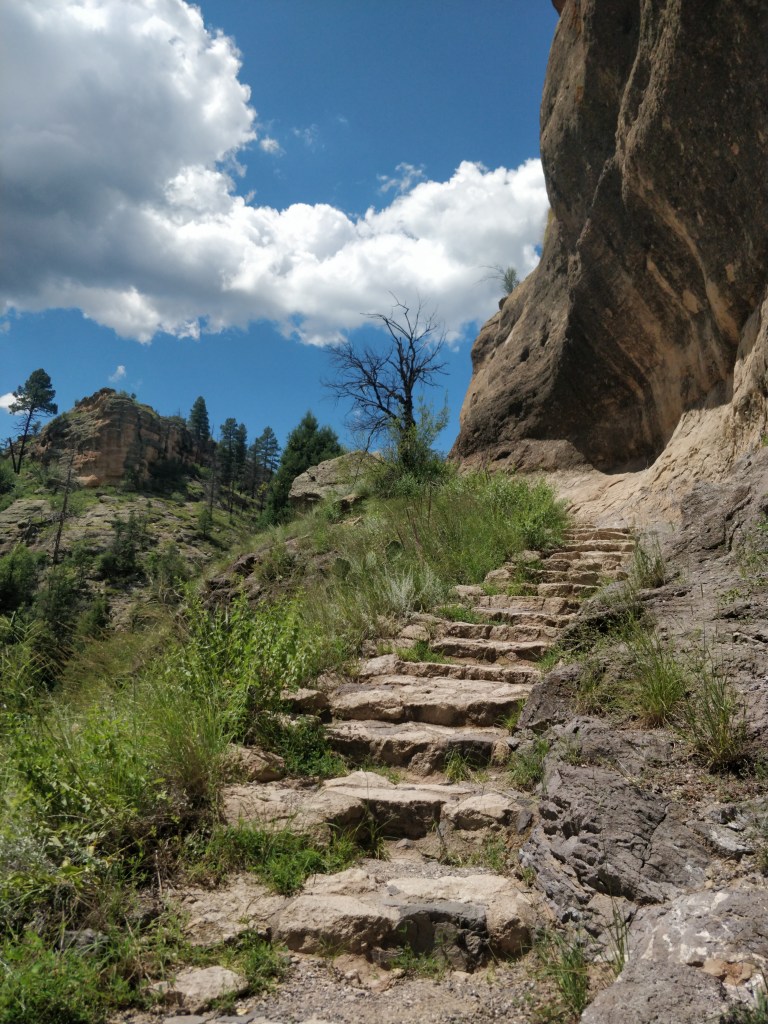
The whole area is the remains of a giant volcano. Erosion carved out the canyon walls, dislodged boulders and widened the caves. The dwellings have been dated to the 1280’s but it is believed that humans temporarily camped in the caves for thousands of years. The Mogollon left this area around 1300 and continued their tradition of journeying. Descendants live on in the Pueblo cultures of the Southwest.
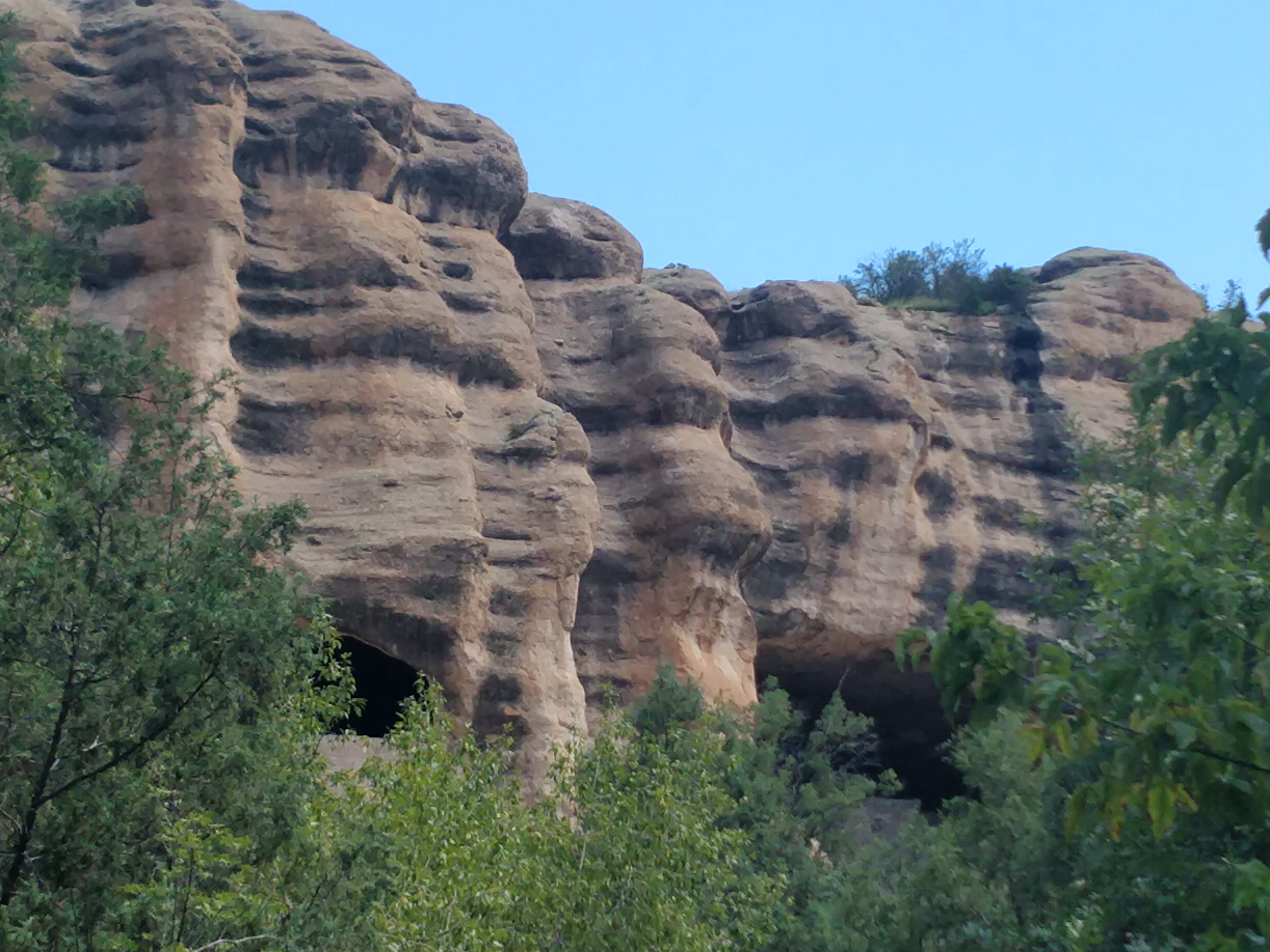
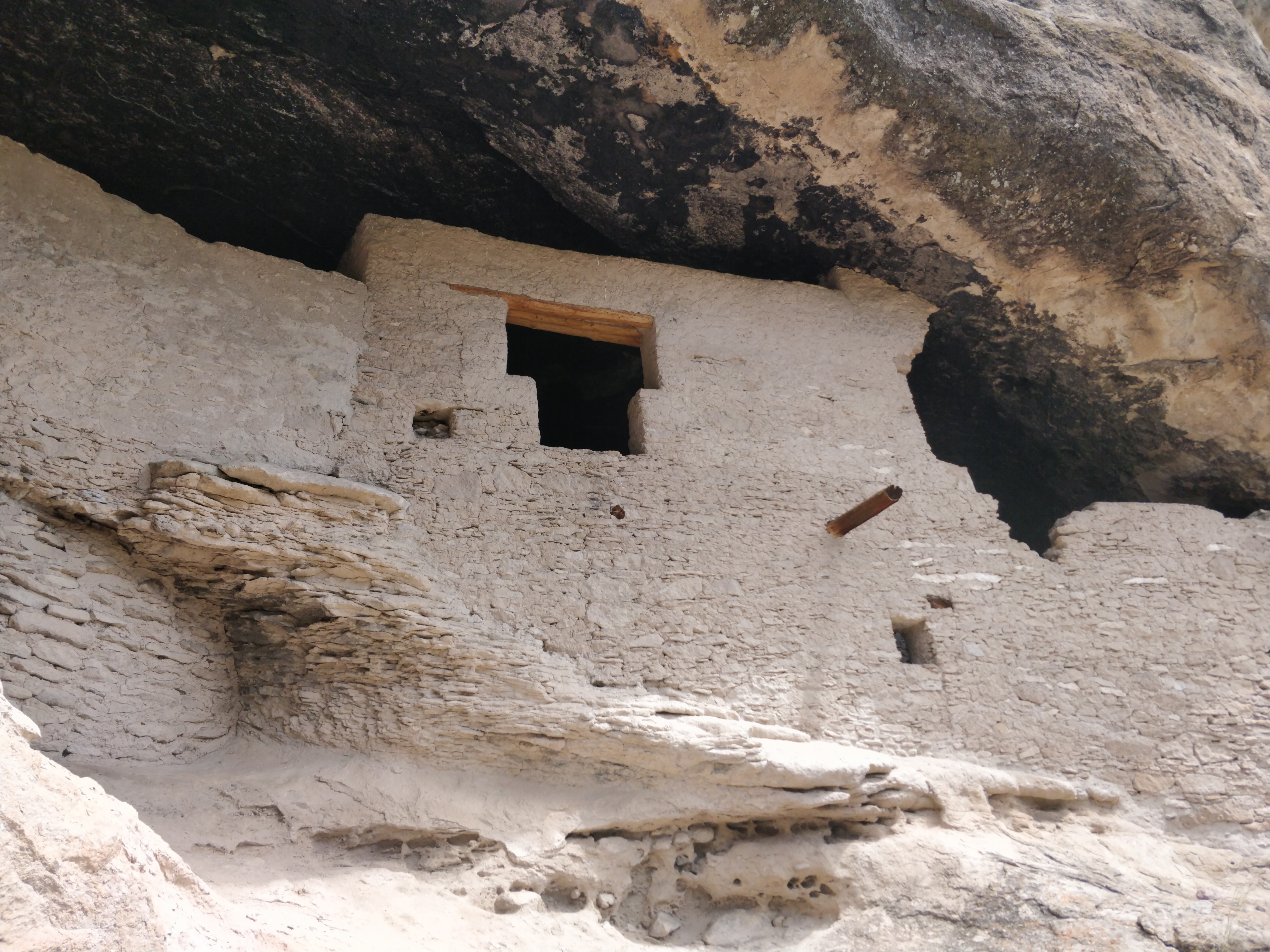
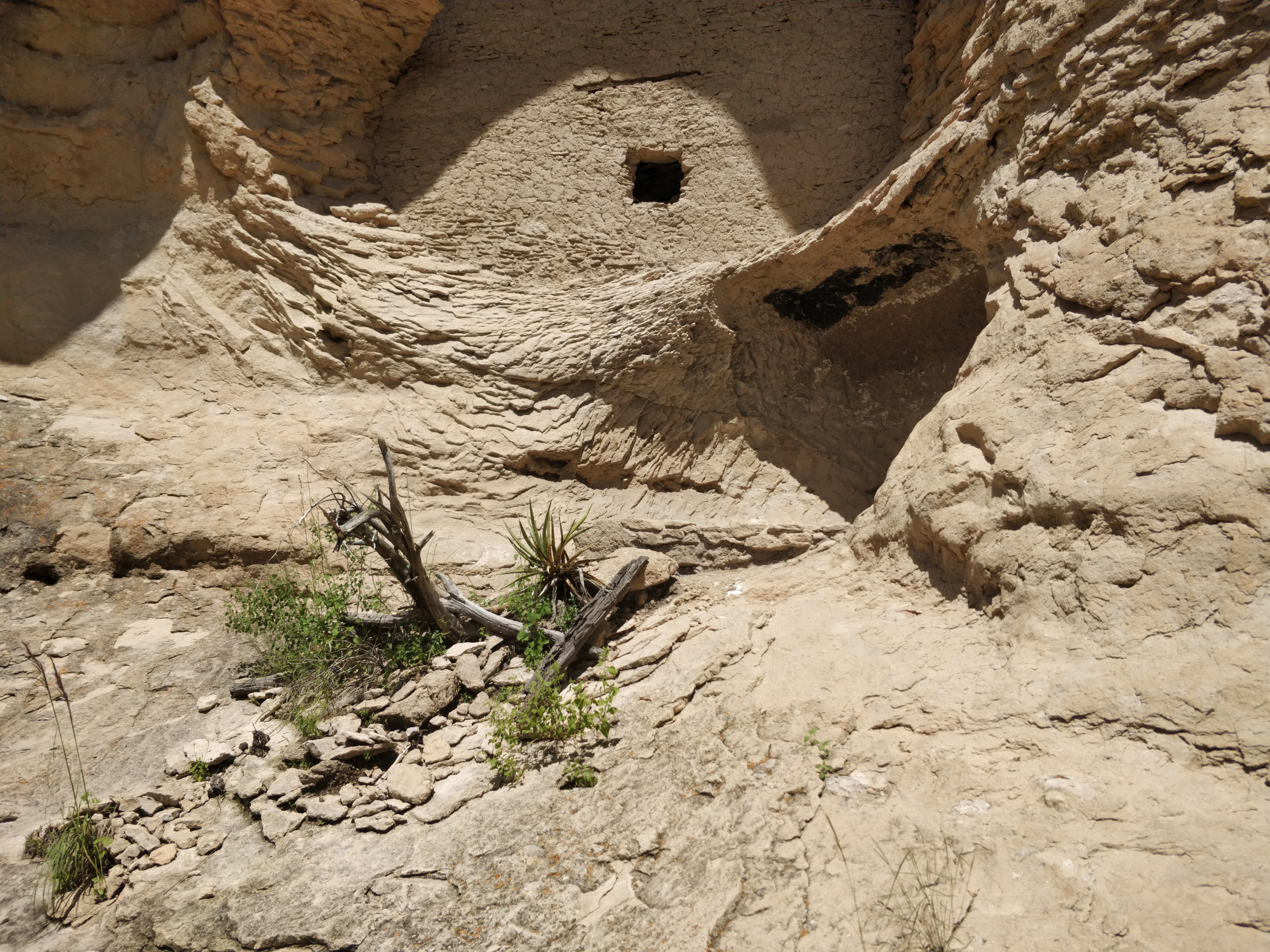
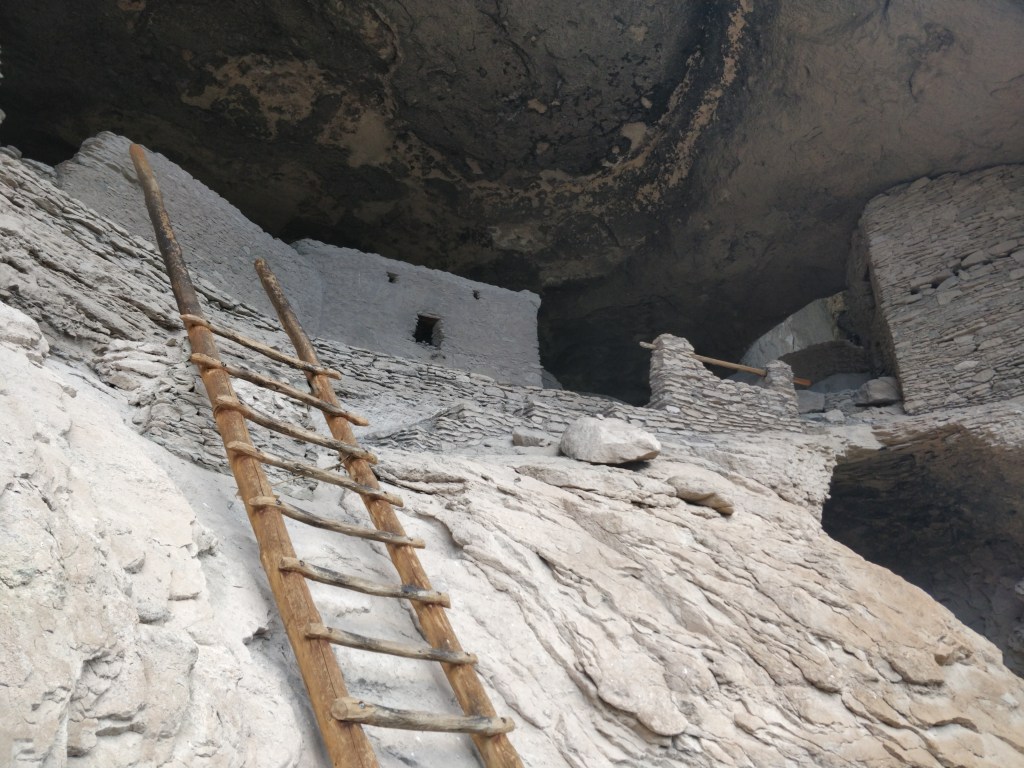
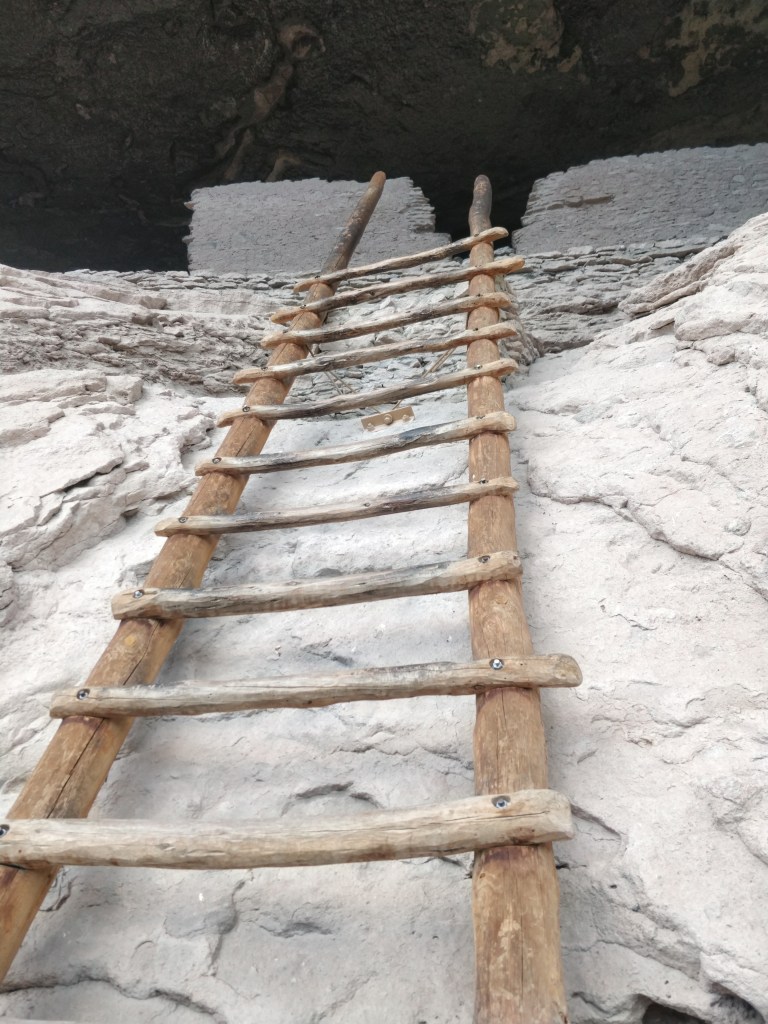
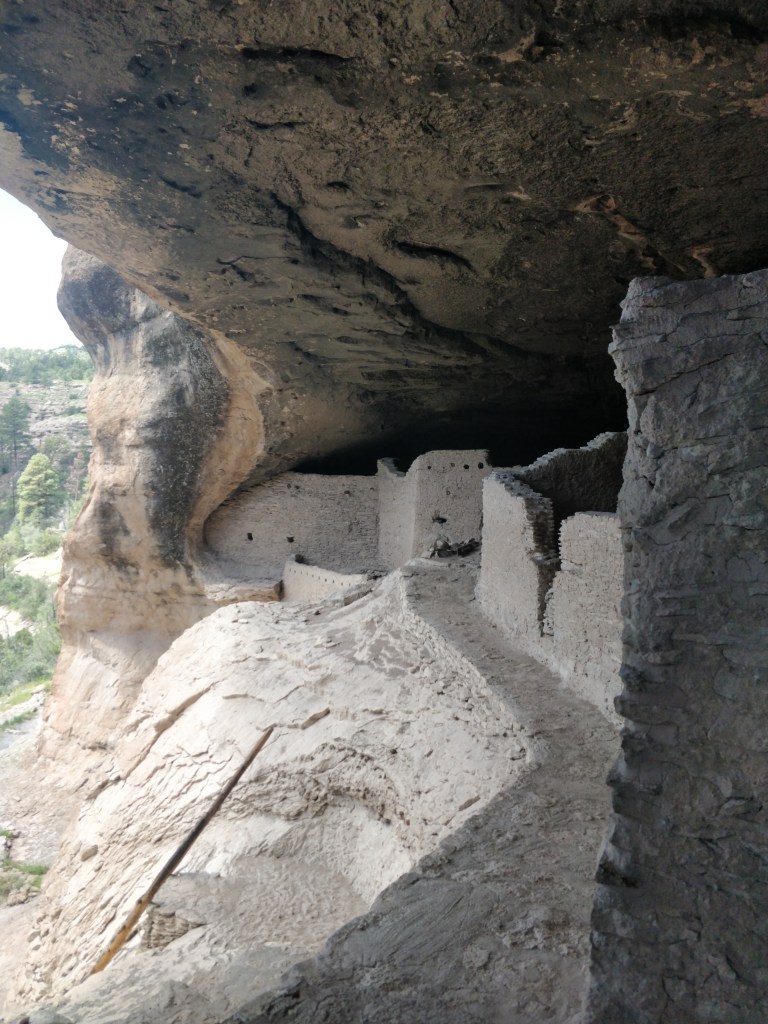
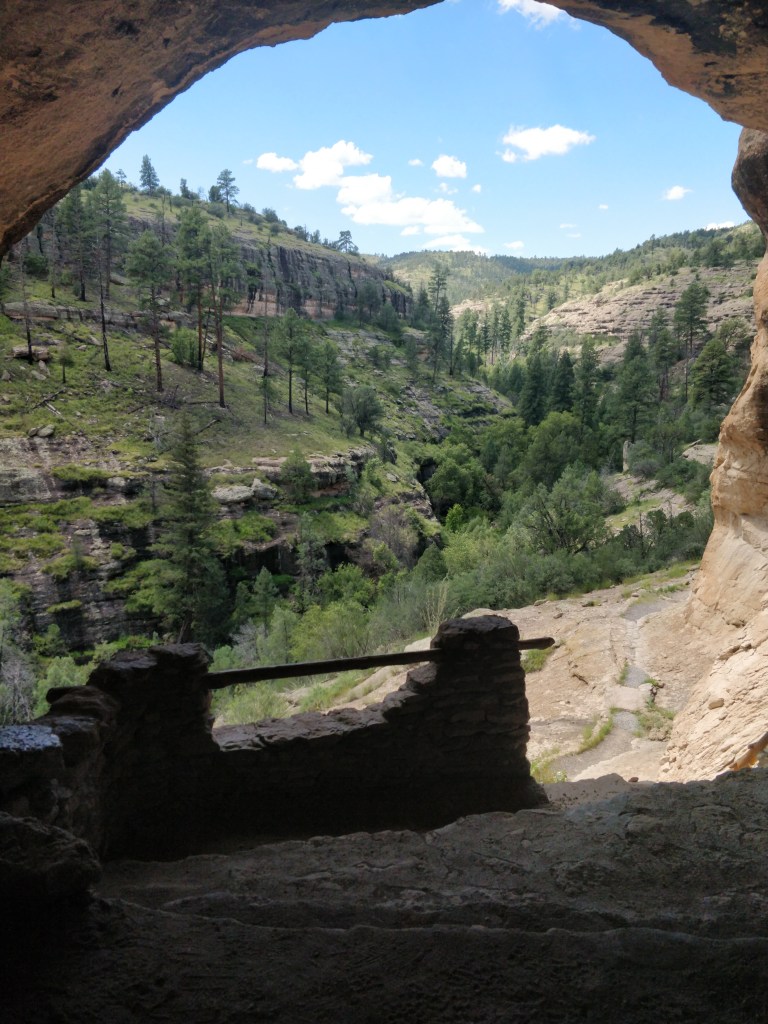
What a view!
Later, in the 1500’s, the Apache migrated to this wilderness. Geronimo, the famous Apache leader, was born in this area in the early 1820’s and his people lived here until forced from their lands in 1886.
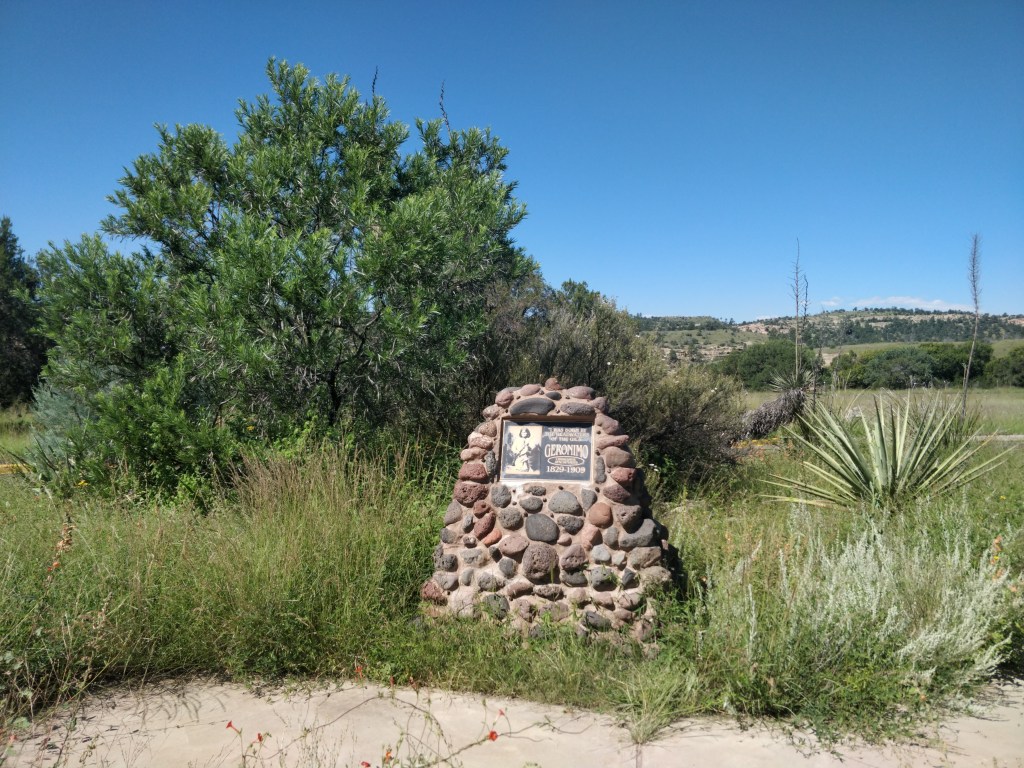
The Gila Wilderness and Gila National Forest surround this area to provide over 3.3 million acres of public forest and range land. Trails, hot springs, and backpacking opportunities abound is this magnificent place.
Kinishba Ruins and Fort Apache
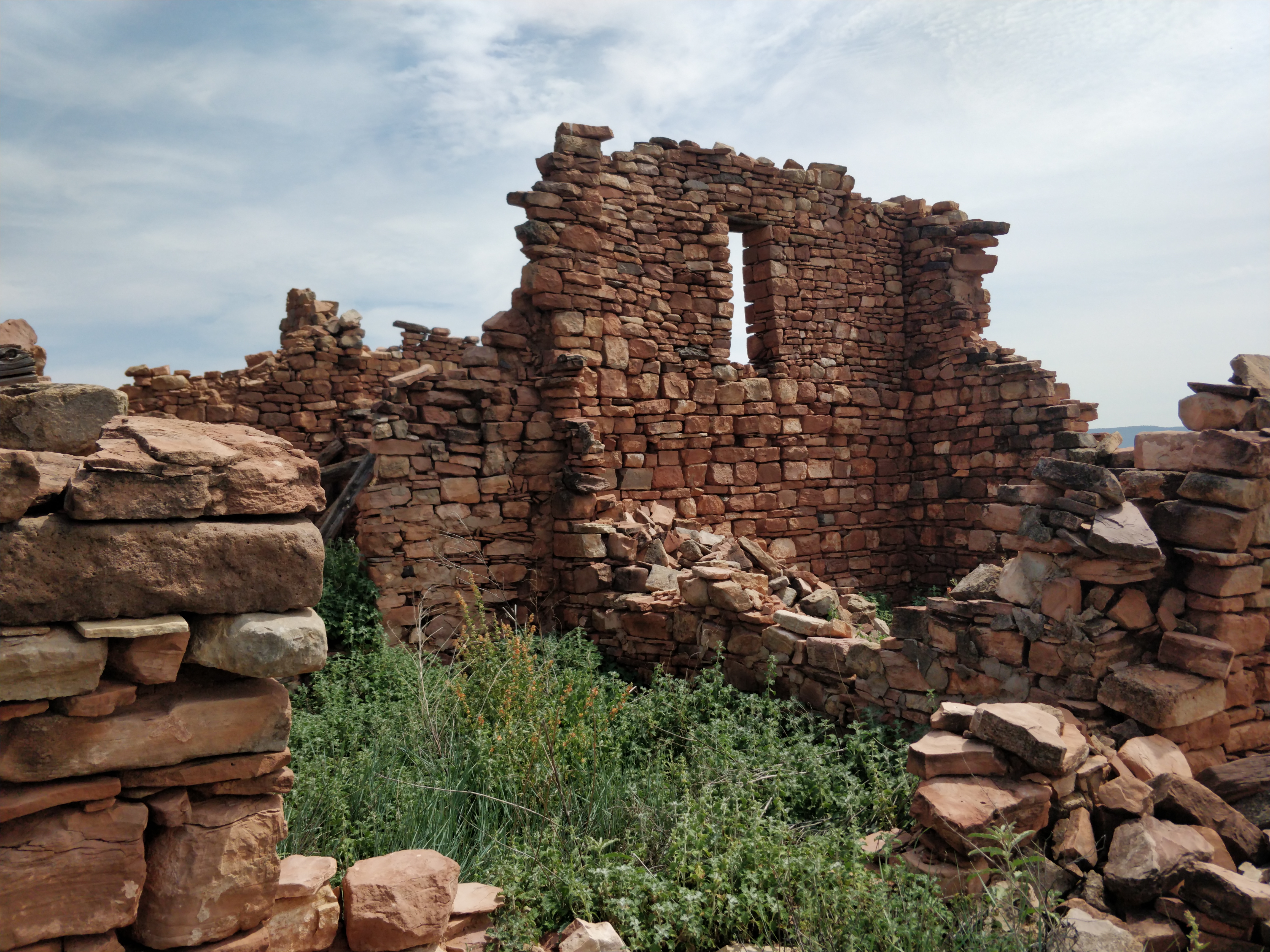
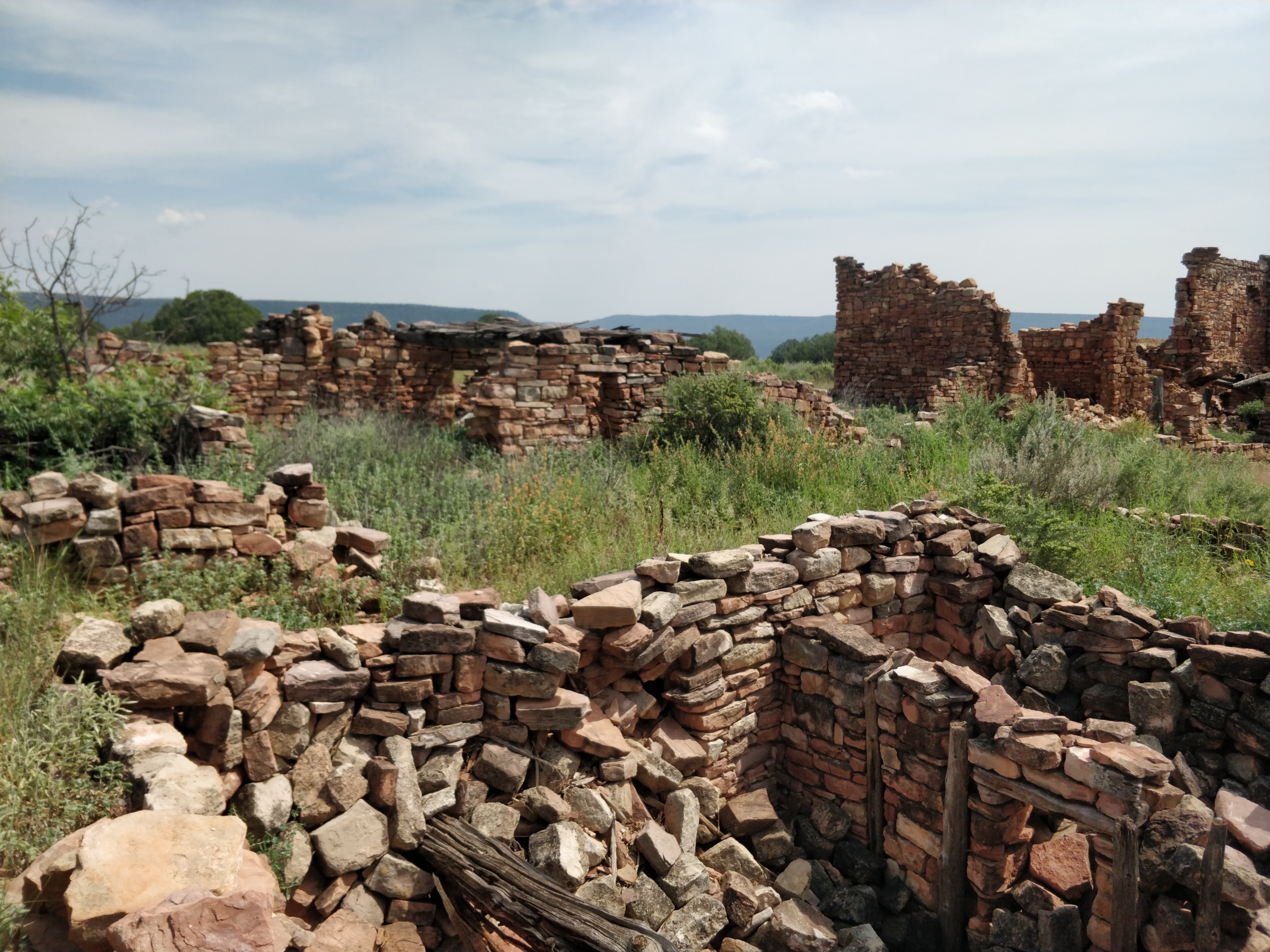
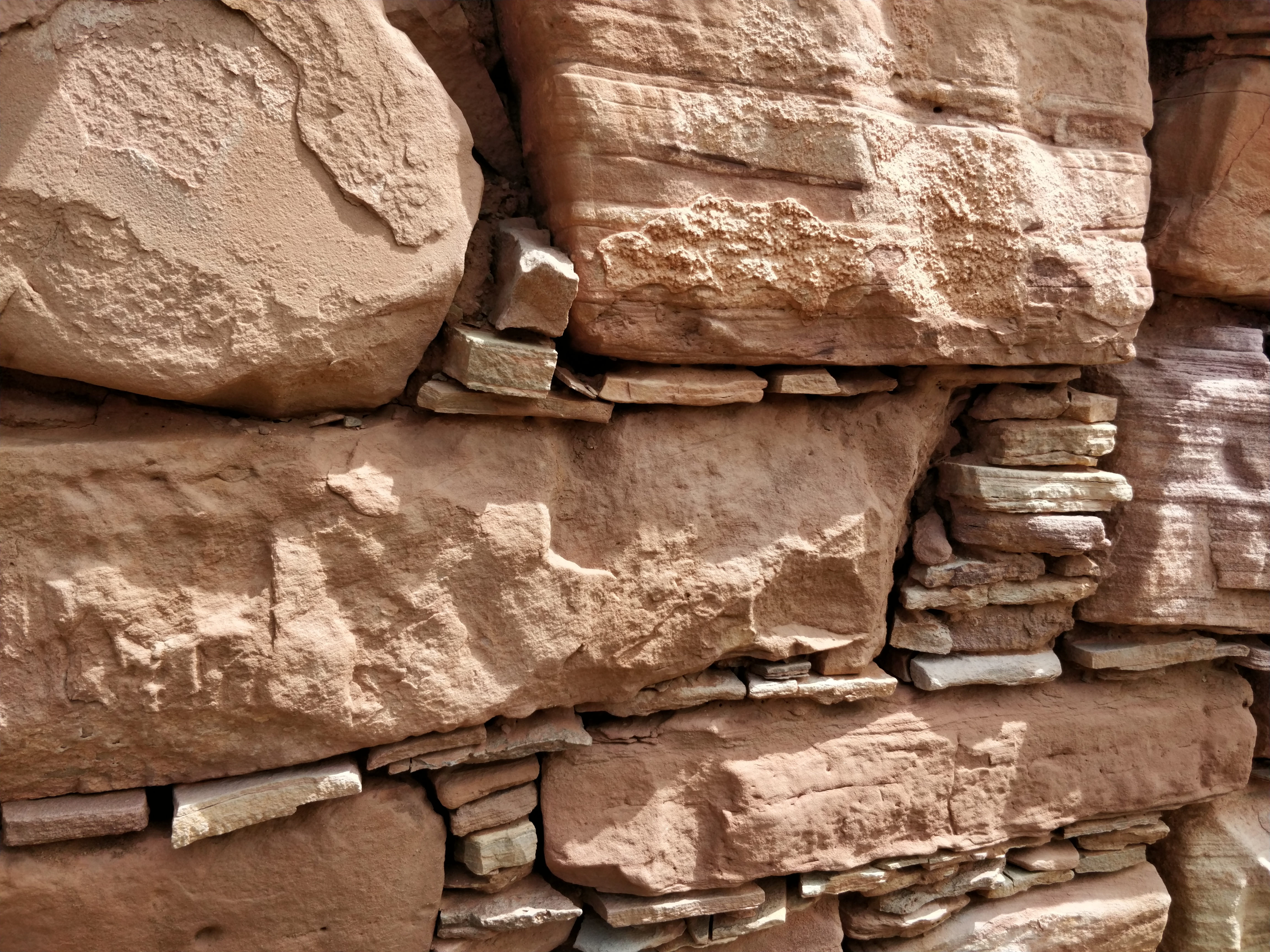
About 150 miles due west of the Gila Cliff Dwellings are the Kinishba Pueblo Ruins in Arizona. The structures were built and inhabited between 1250 and 1400 by the Mogollon Pueblos and, possibly, the Anasazi. The Hopi and Zuni people are believed to be their descendants. The site consists of nine separate mounds of which 220 rooms have been excavated. Some of the buildings in the settlement reached up to three stories high with a central courtyard. Underground religious rooms called Kivas were also excavated. While much of the site was destroyed by treasure hunters prior to 1930, a few of the structures have been partially reassembled. It is believed that these ruins were visited by Coronado’s expedition in 1540. The site is within the White Mountain Apache Reservation and part of the Fort Apache heritage center.
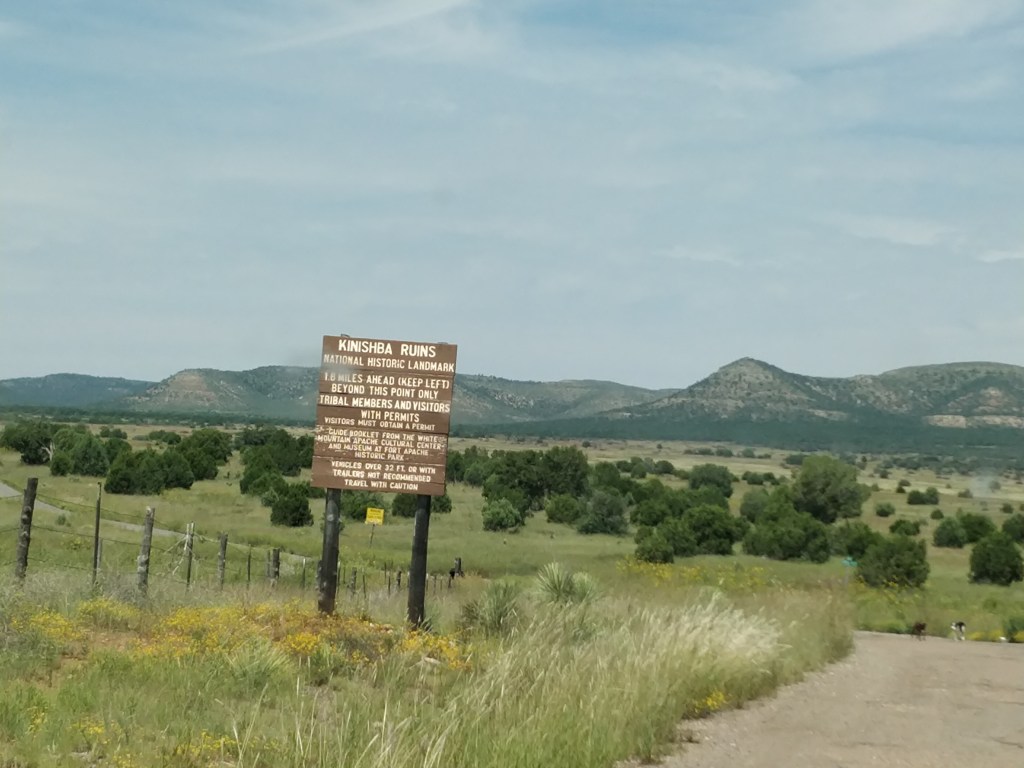
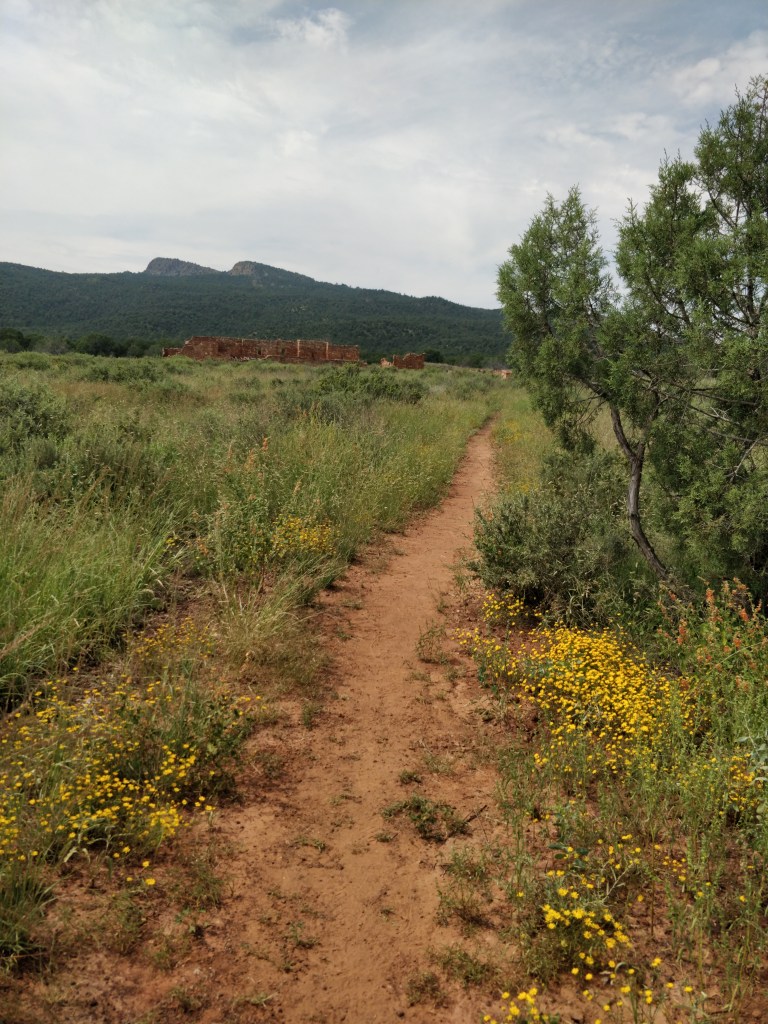
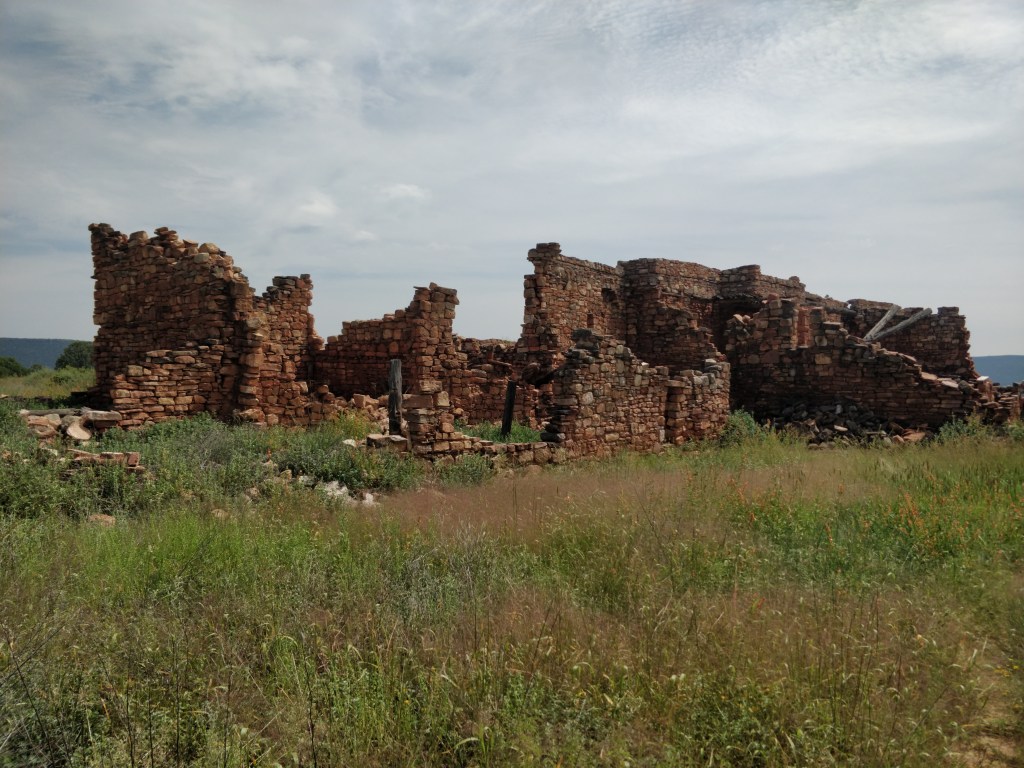
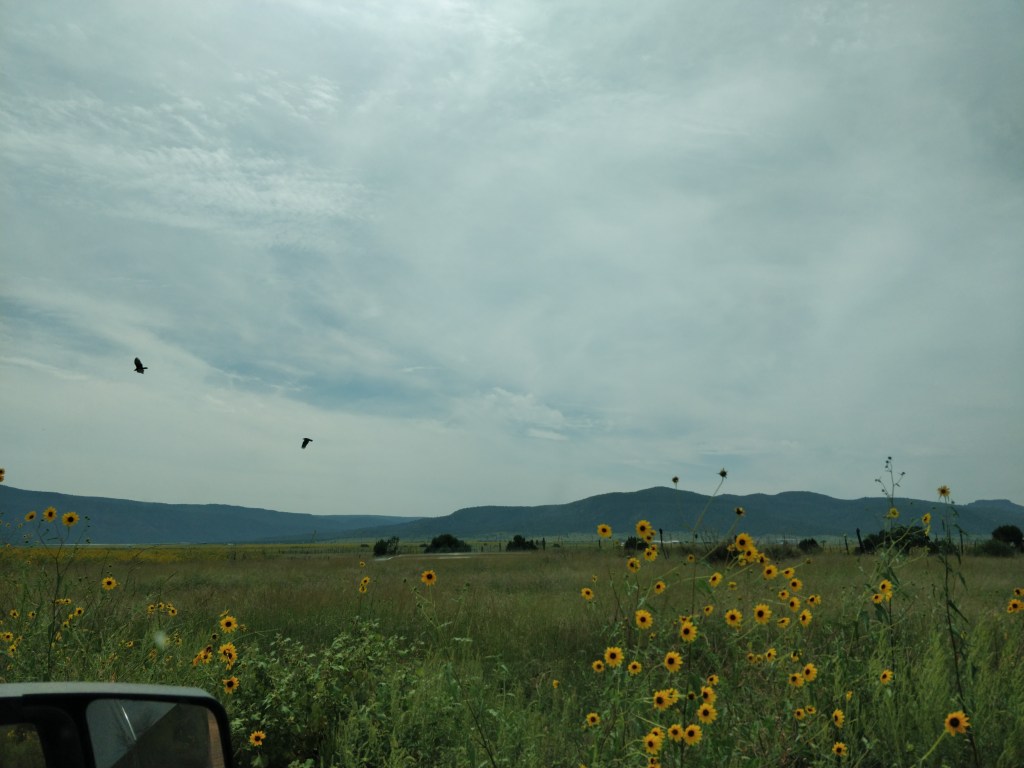
We reached this site via a dirt road that ran through range land and fields of wild flowers. The site is less manicured than other National Monuments, but that only made the ancient space more poignant for me. We were the only visitors at the time and greatly enjoyed exploring the area among and around the ruins.
Fort Apache
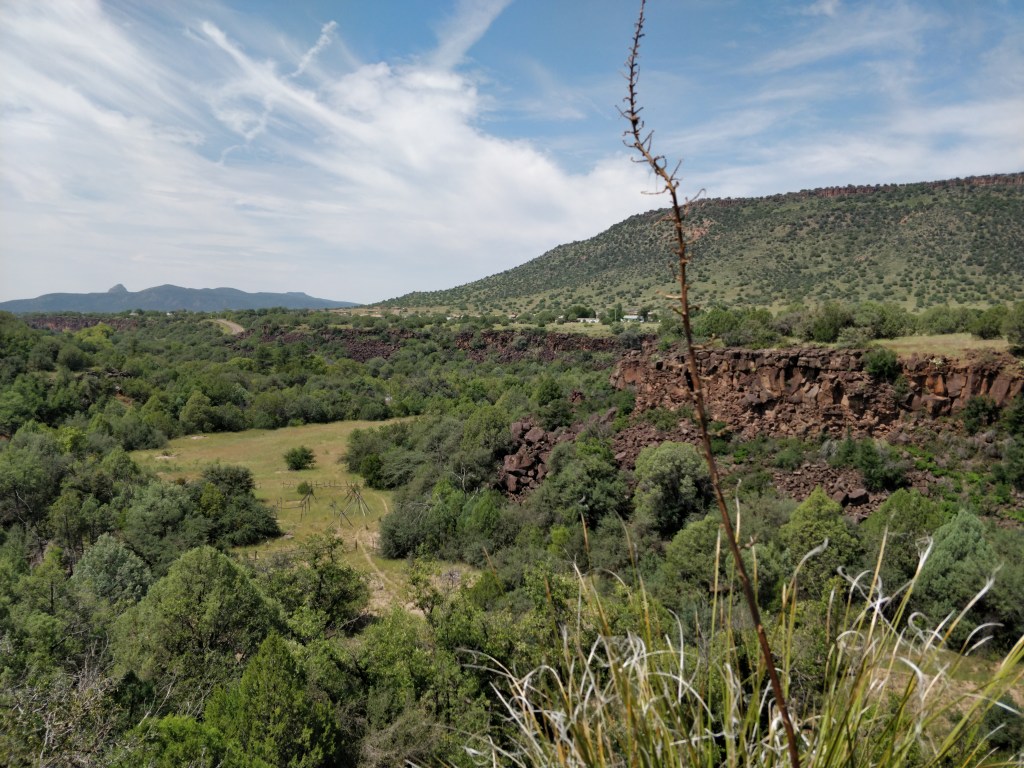
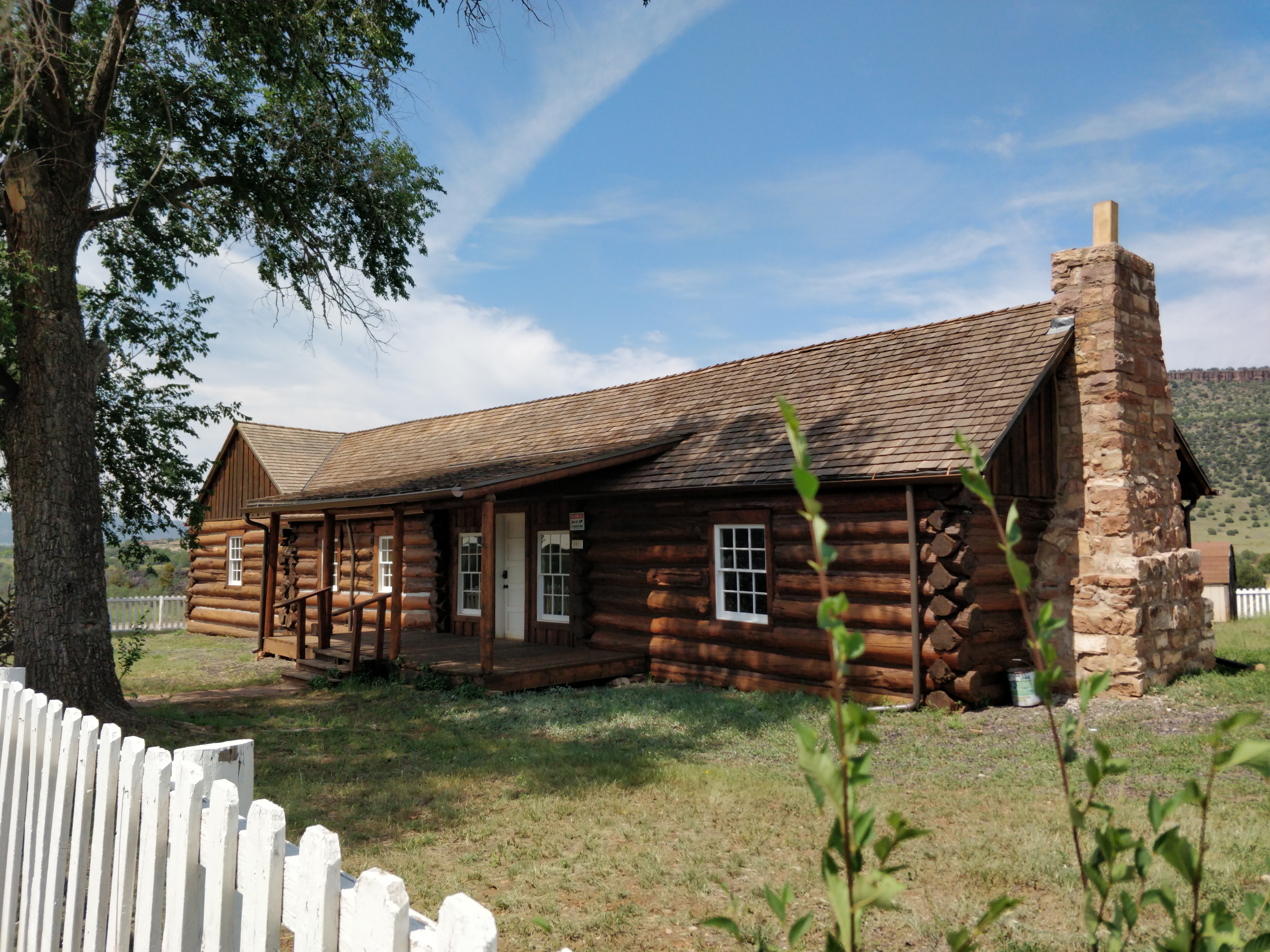
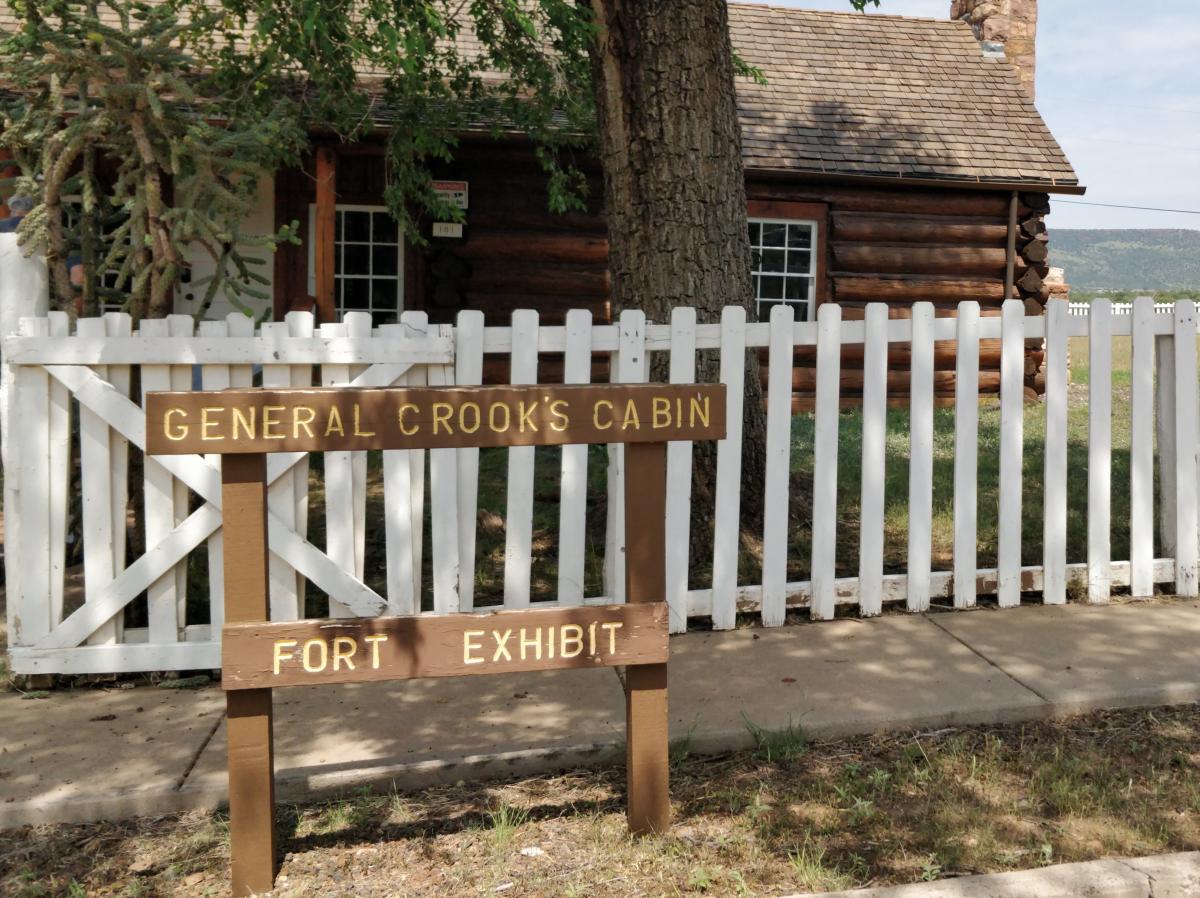
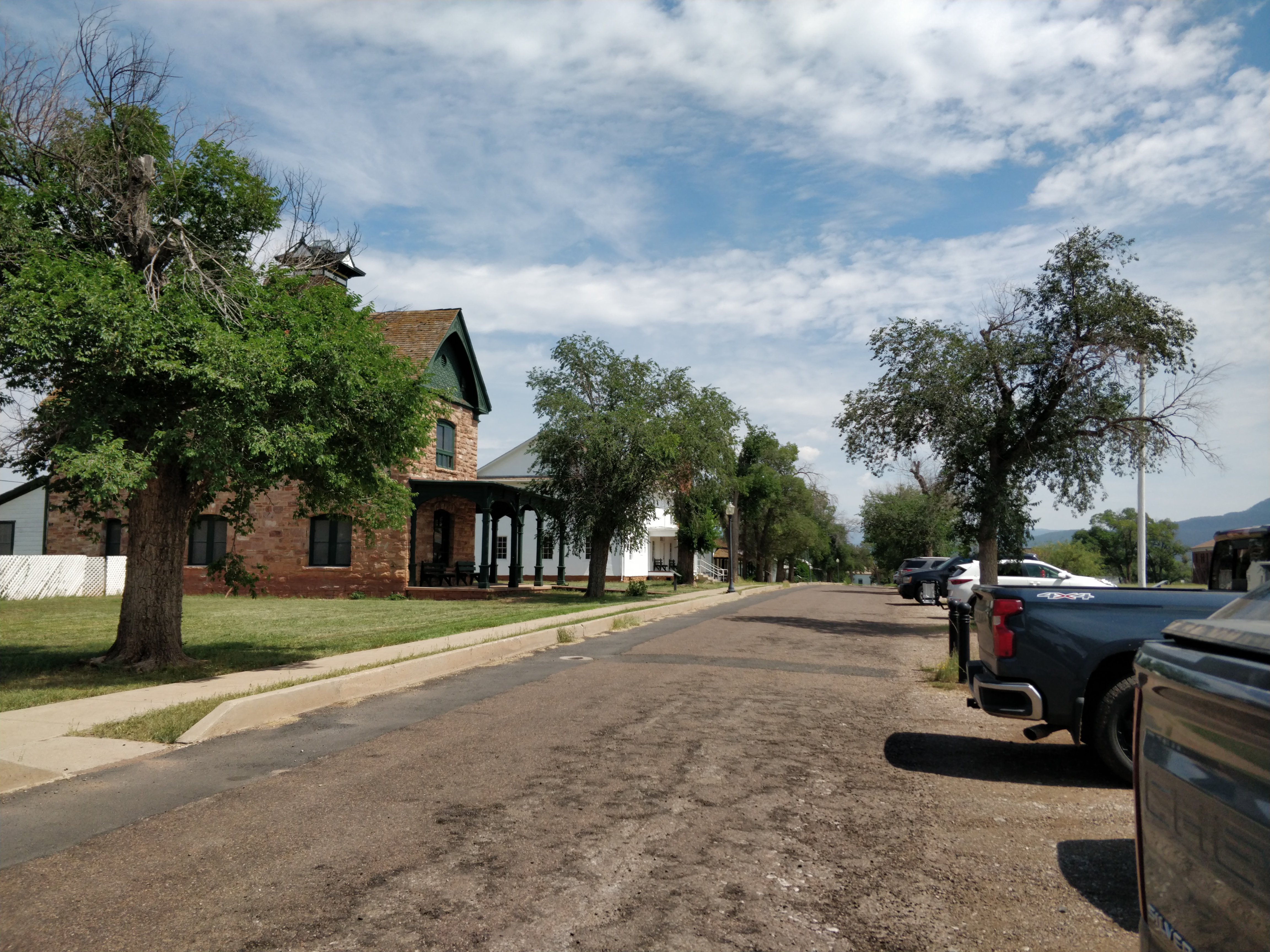
The Fort Apache heritage center is located on the White Mountain Apache Reservation and consists of a museum and over 20 buildings used during the time U.S. Soldiers resided in the Fort. The officer accommodations seemed luxurious compared with what we observed in Fort Selden (see previous post). Some of the buildings continue to be used for education and retail purposes. Of particular interest to us was seeing General Crook’s office and residence. Supposedly, one of our ancestors served under his command as a scout during the conflicts with other Indian tribes. Geronimo led a rebellion against the Fort Apache reservation for over a year before being captured as a direct result of the scouts’ efforts.
Puerco Pueblo
Within the Petrified Forest National Park in Holbrook, AZ, is a partial excavation of an ancient 100+ room Puebloan village.
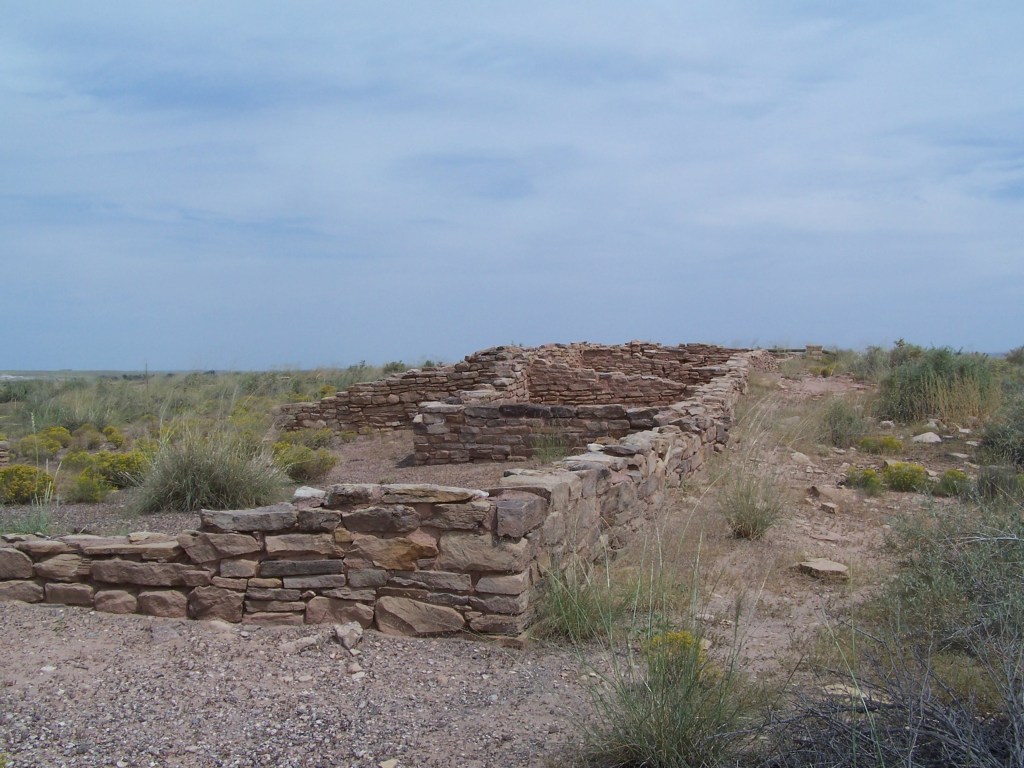
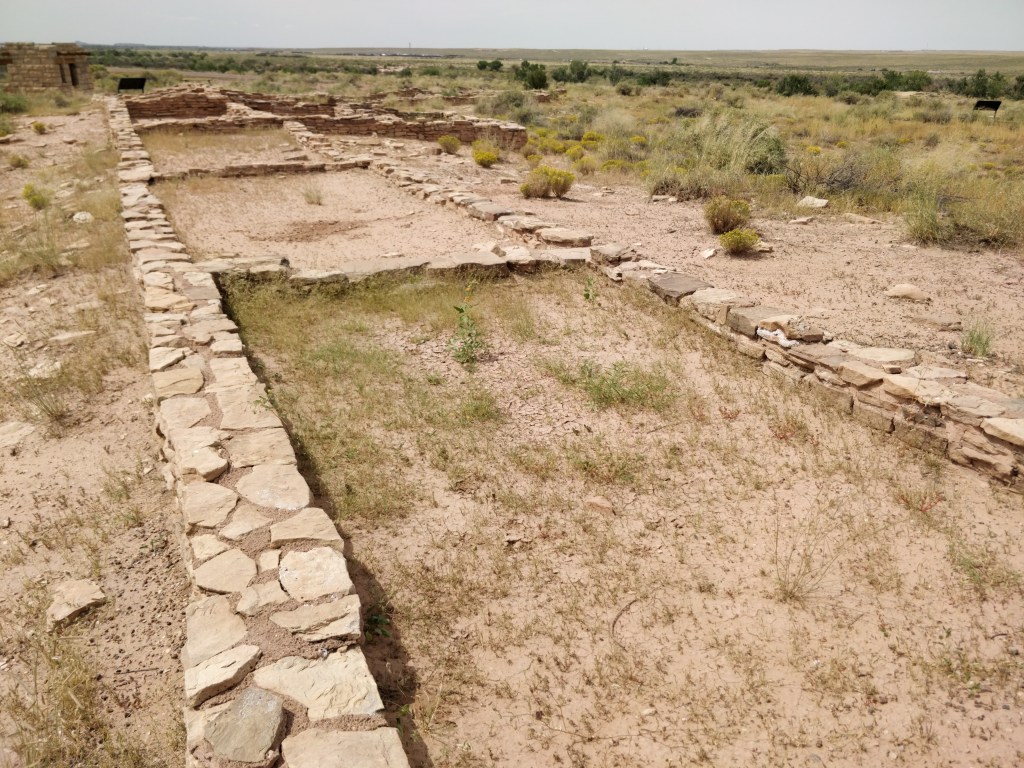
Petroglyphs are also located in this area including Newspaper Rock which contains over 650 figures and images as old as 2000 years. Throughout the park is evidence of human occupation for over 13,000 years! However, by 1400 AD, the Puerto Pueblo peoples had moved on and the buildings were abandoned.

Petroglyphs among the landscape.
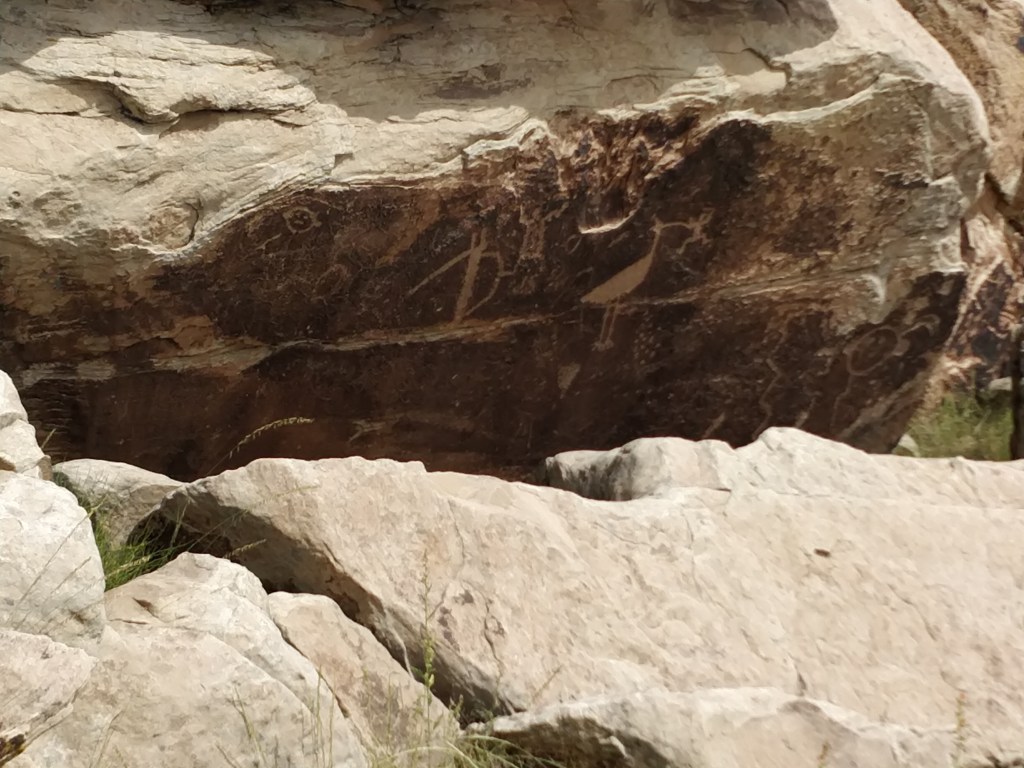
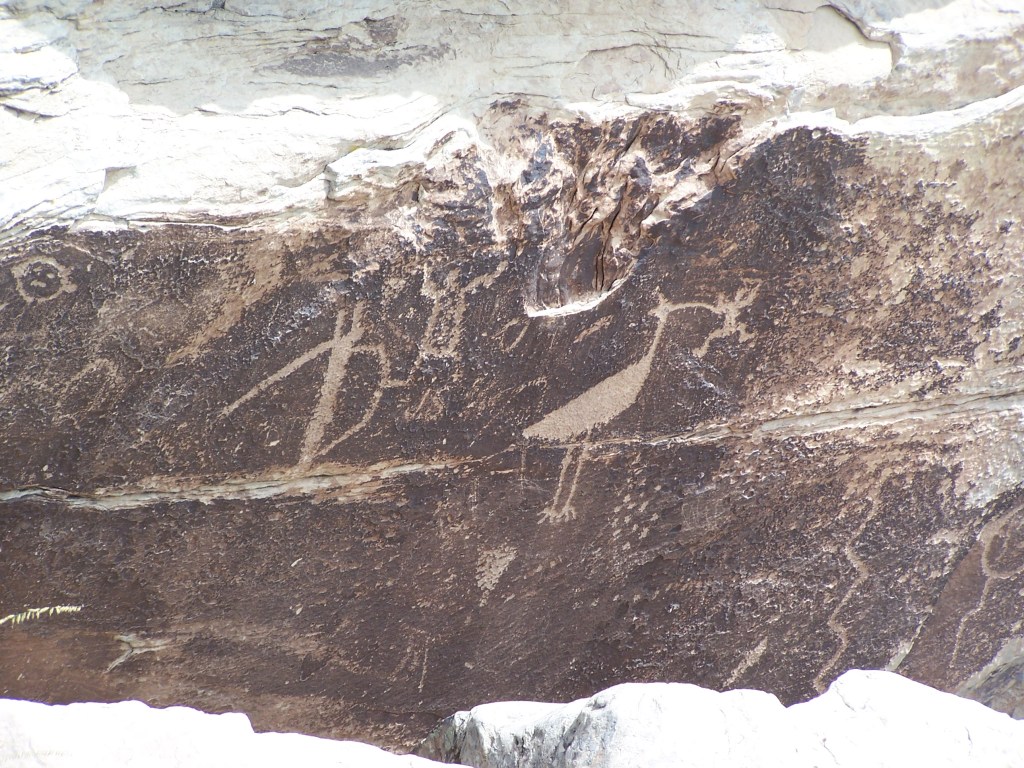
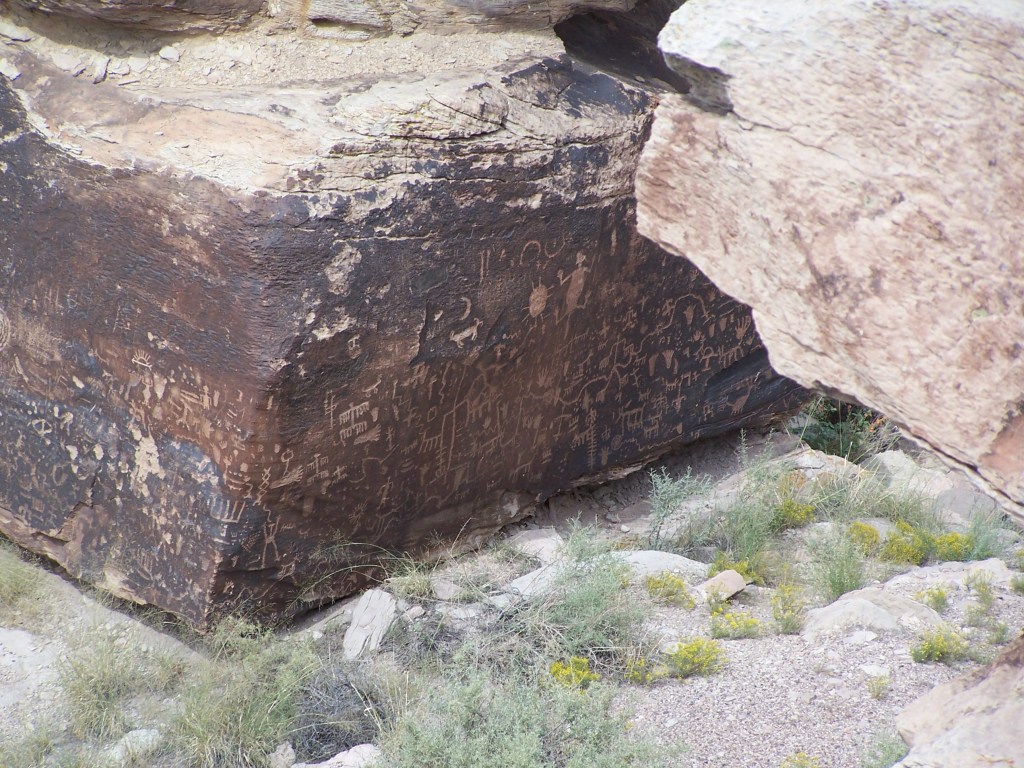
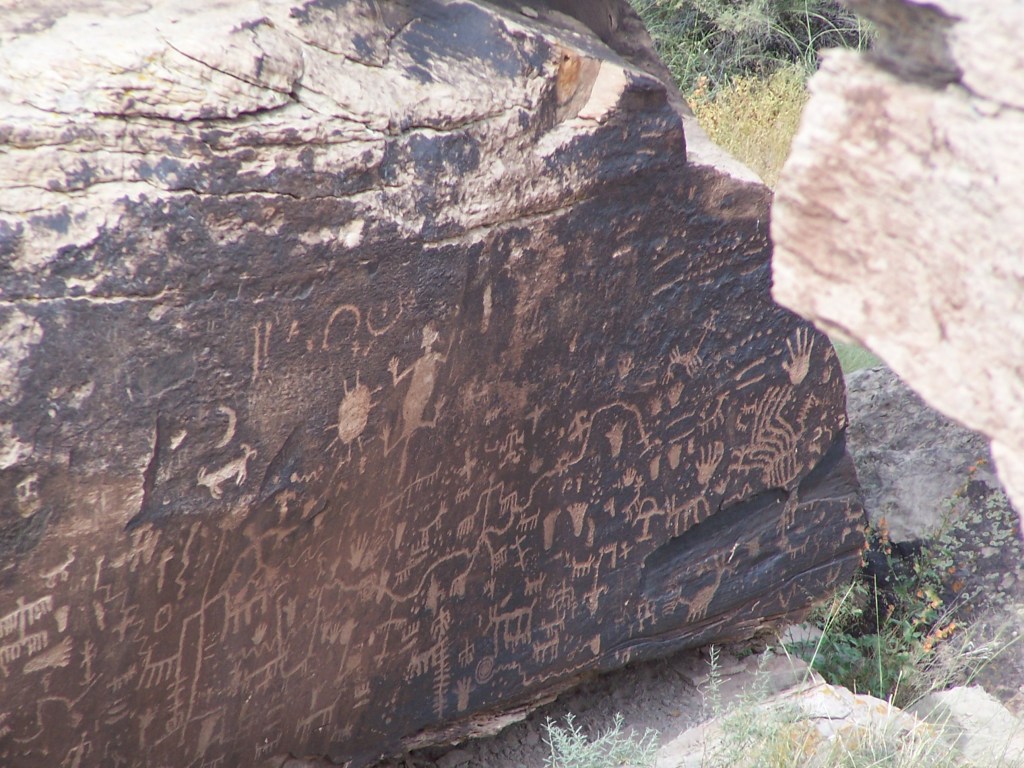
“Newspaper Rock”
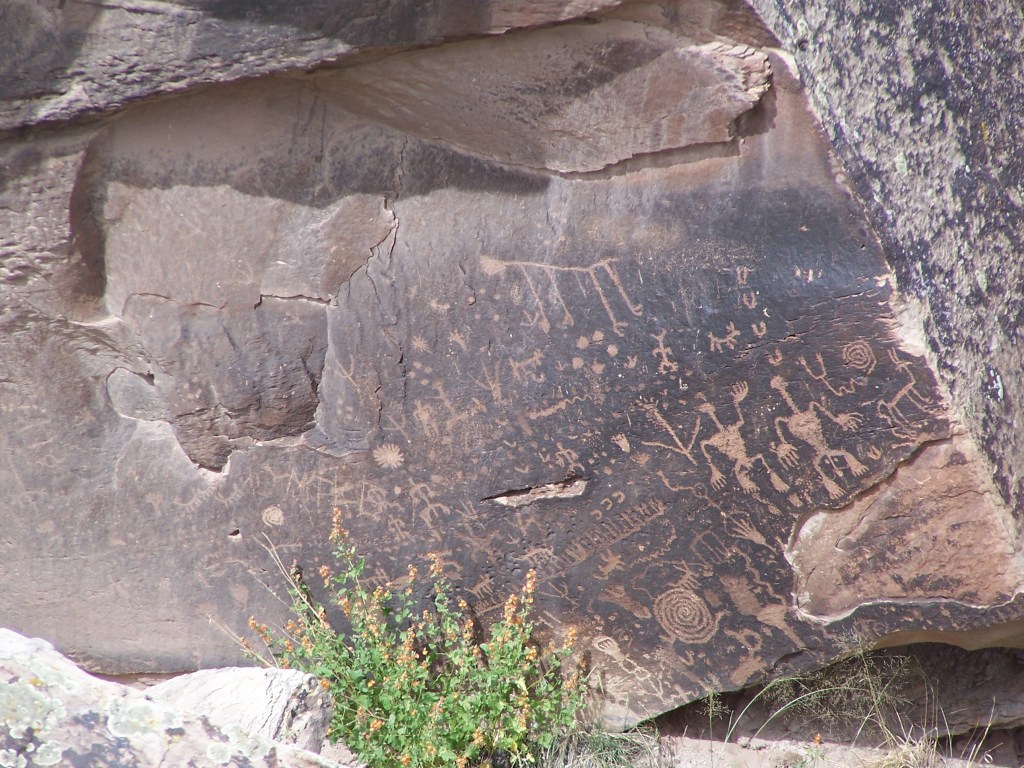
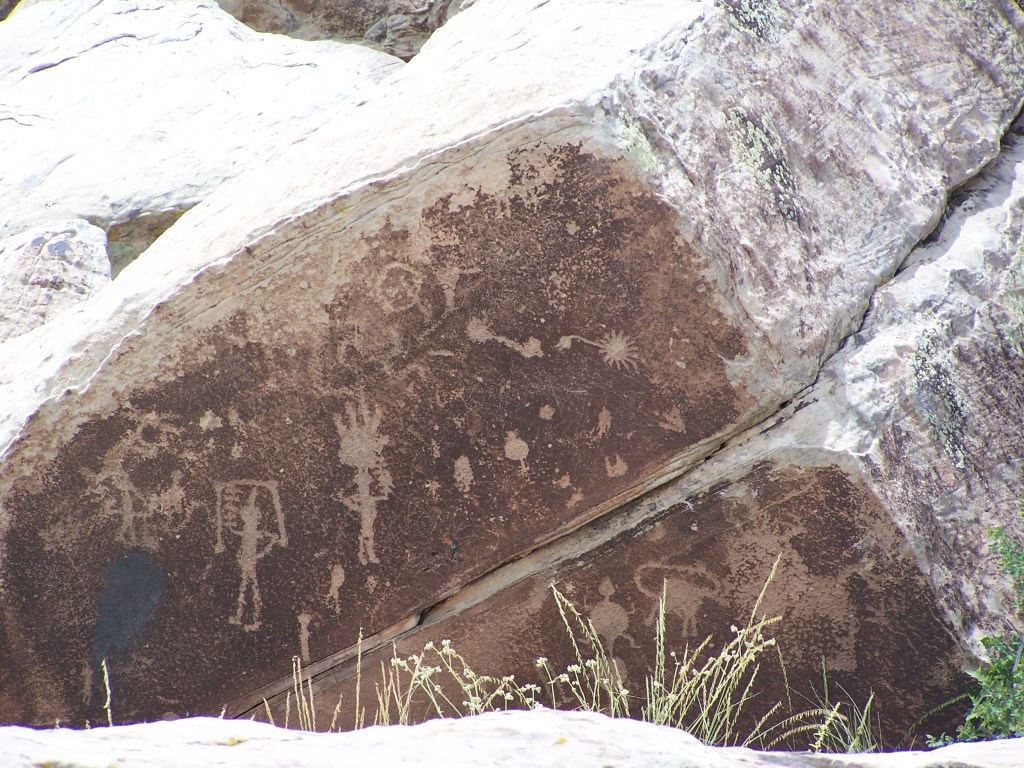
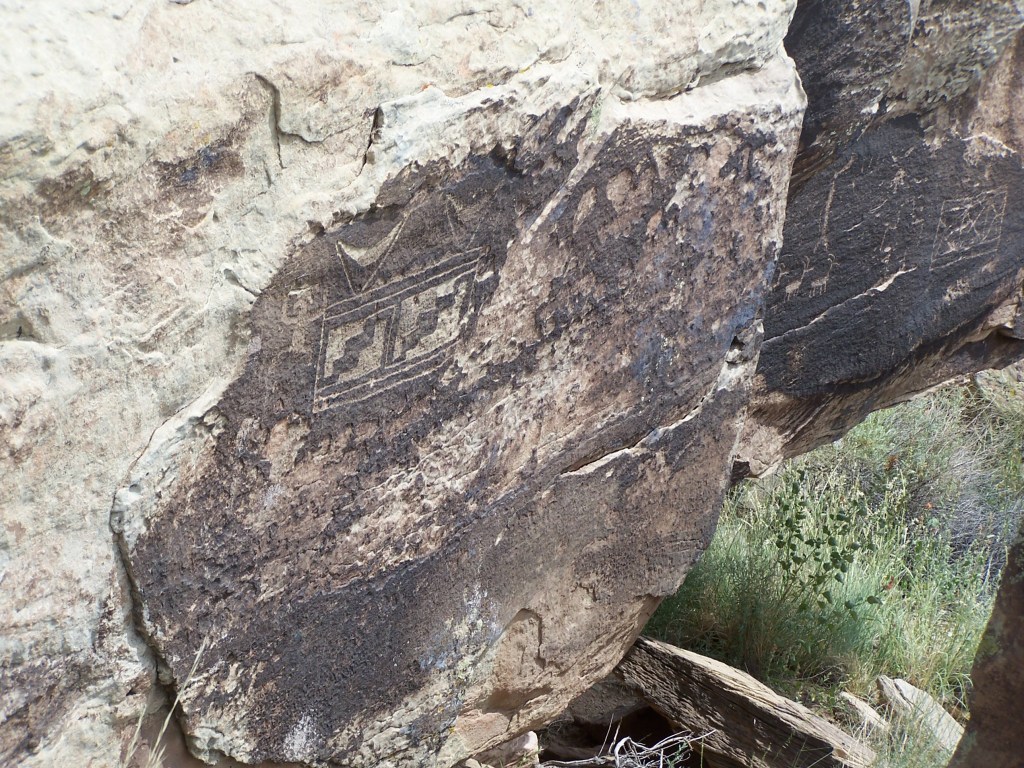
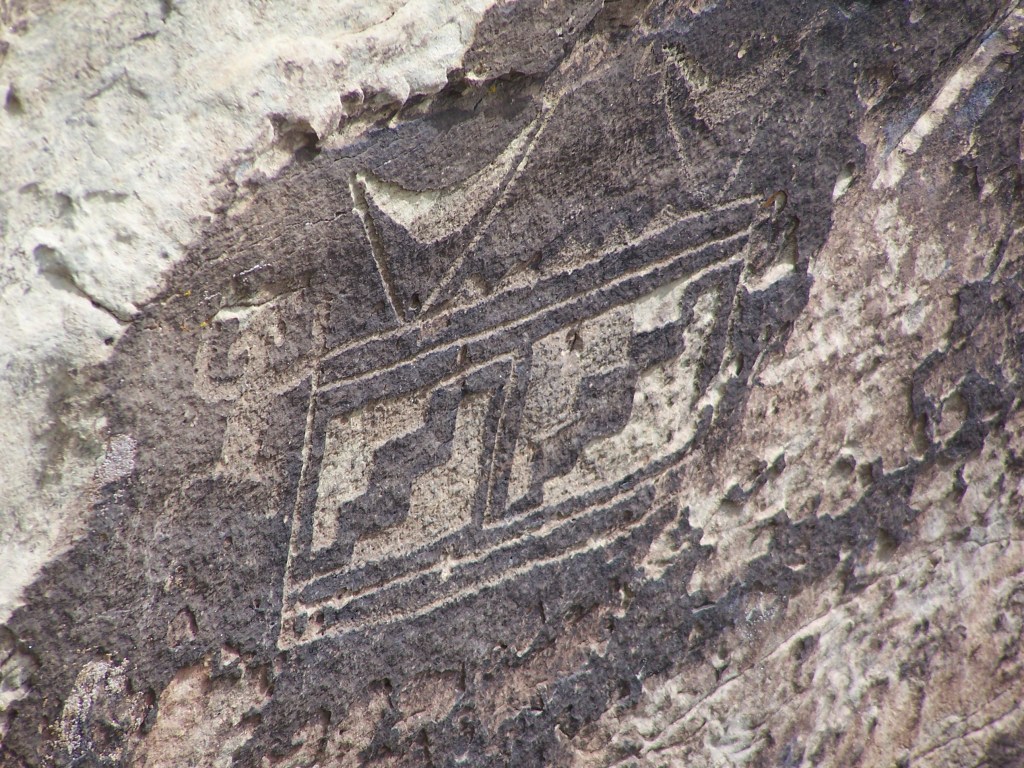
Migration symbol.
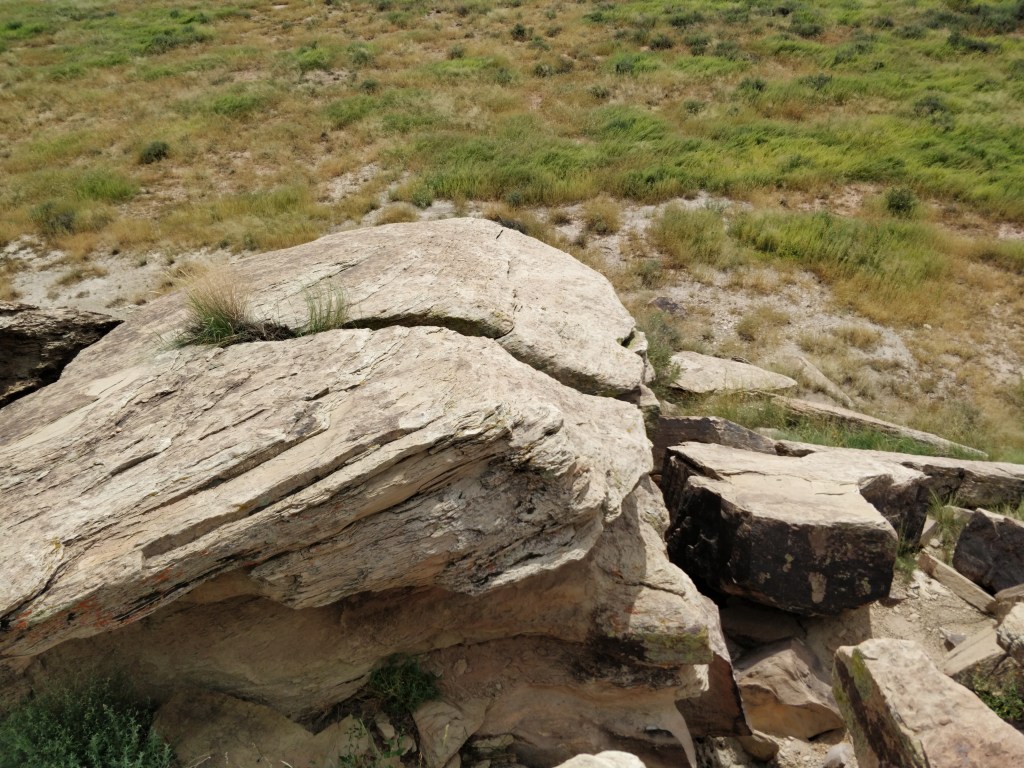
Summer Solstice Rock – early calendar marker.
Homolovi State Park
In Northern Arizona along the Little Colorado River near Winslow, are the ruins of the migrating ancestral Hopi from the 1200’s to late 1300’s. Homolovi is Hopi for “Place of Little Hills.” Broken pottery, scraping tools, arrowheads, and shaped stones cover the land all along the trails. The archaeological sites within this state park contain between 1,200 to 2,000 rooms. Considered sacred land, the park protects the ties between the Homolovi inhabitants and the Hopi people of today.
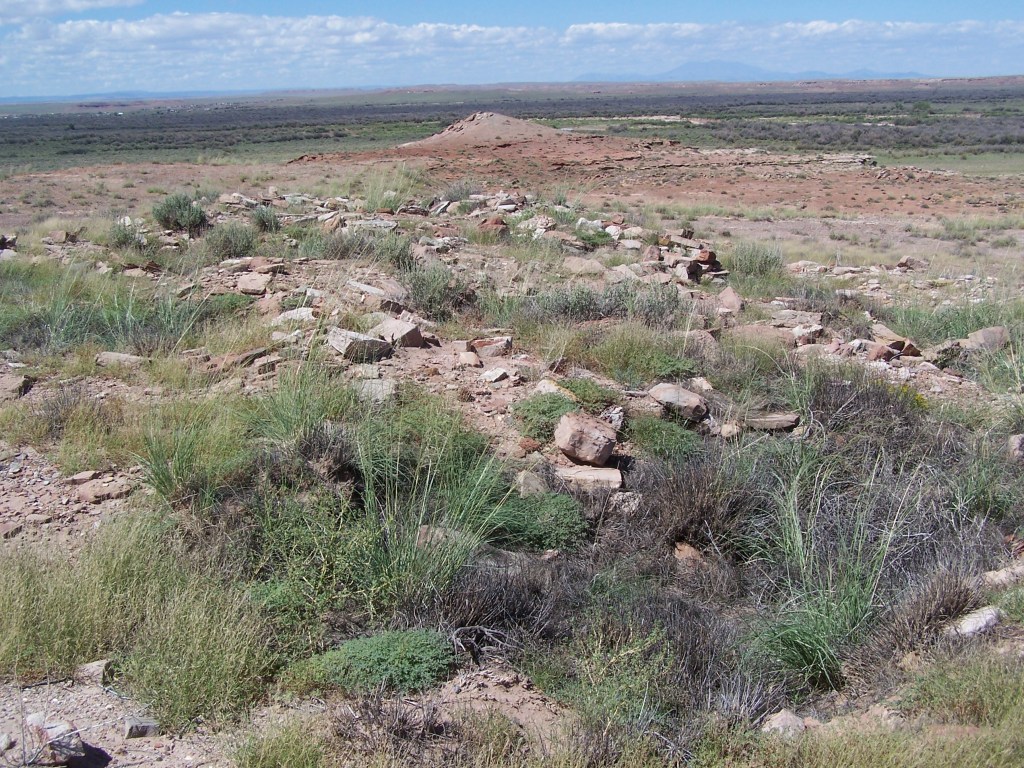
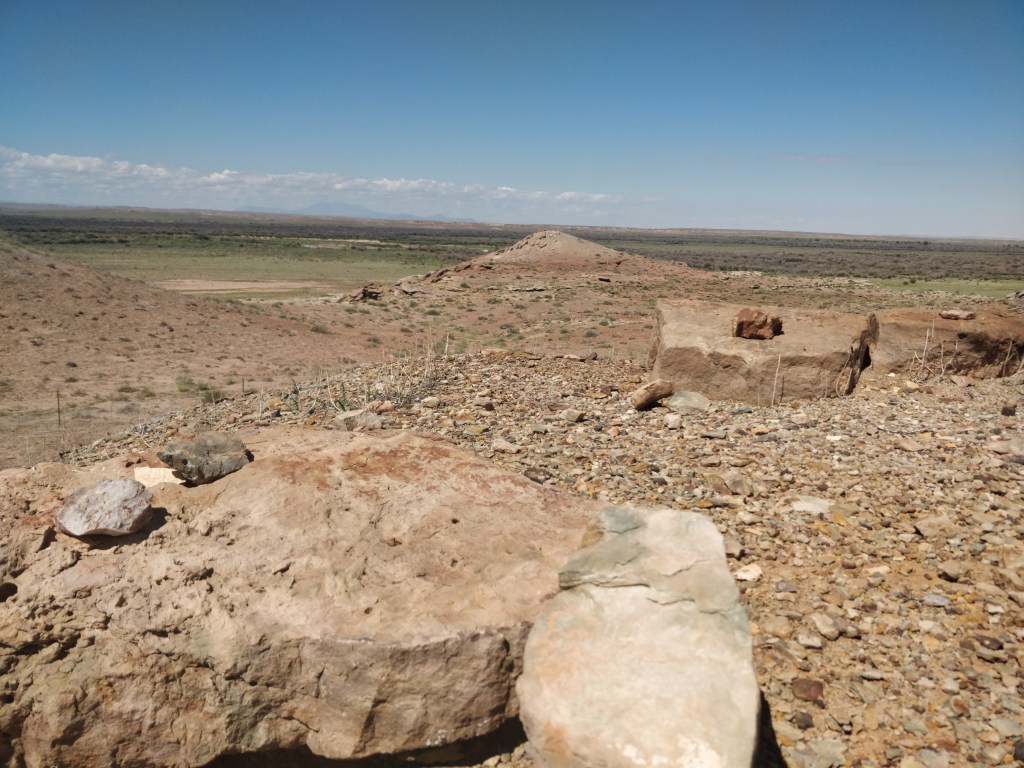
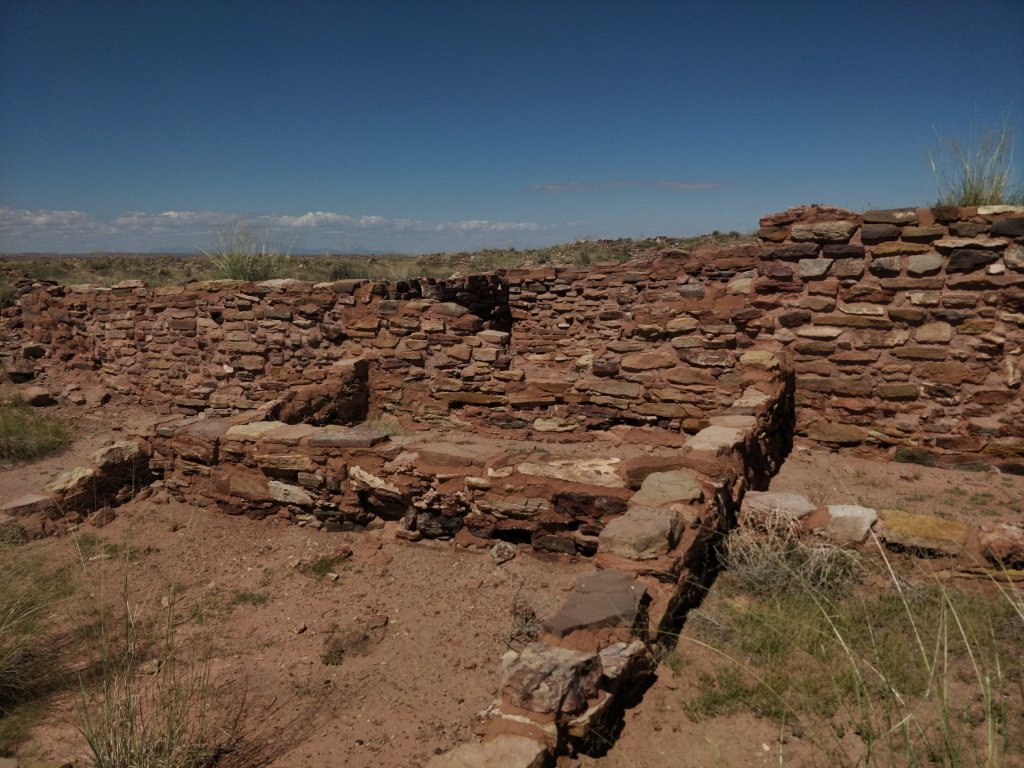
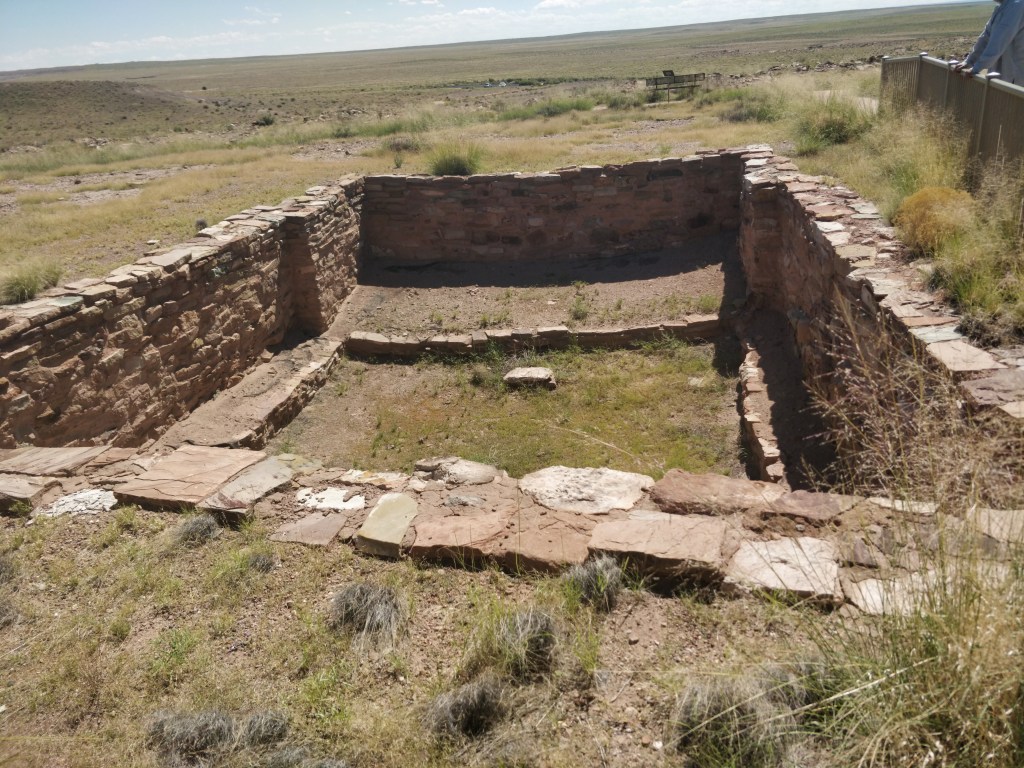
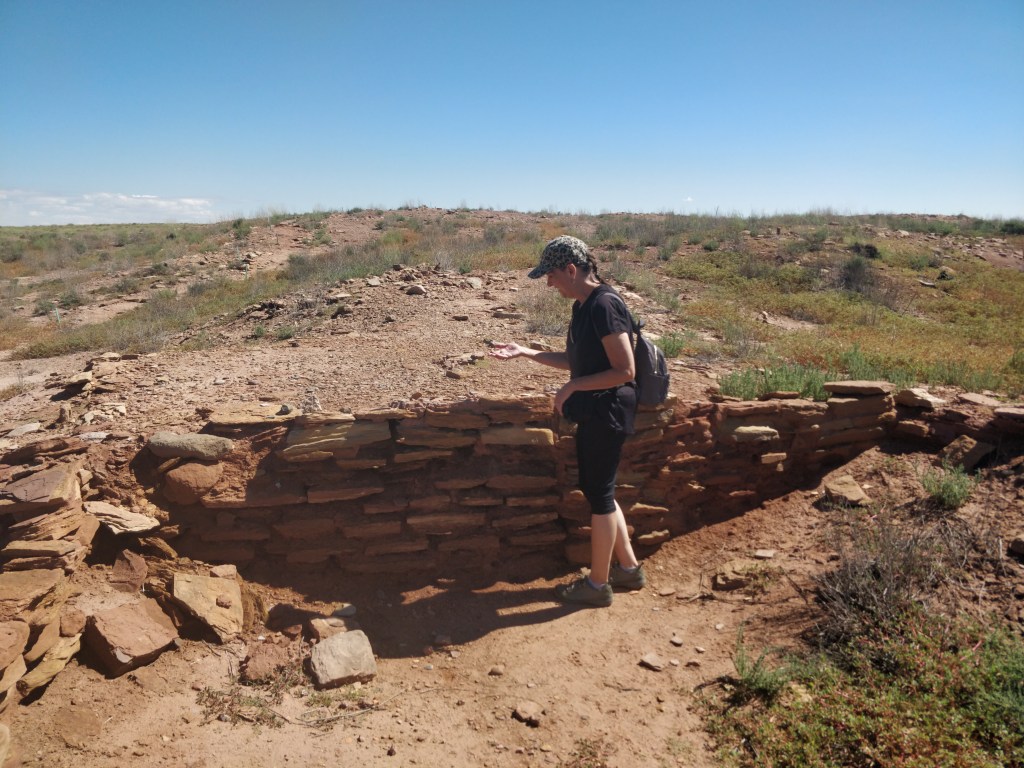
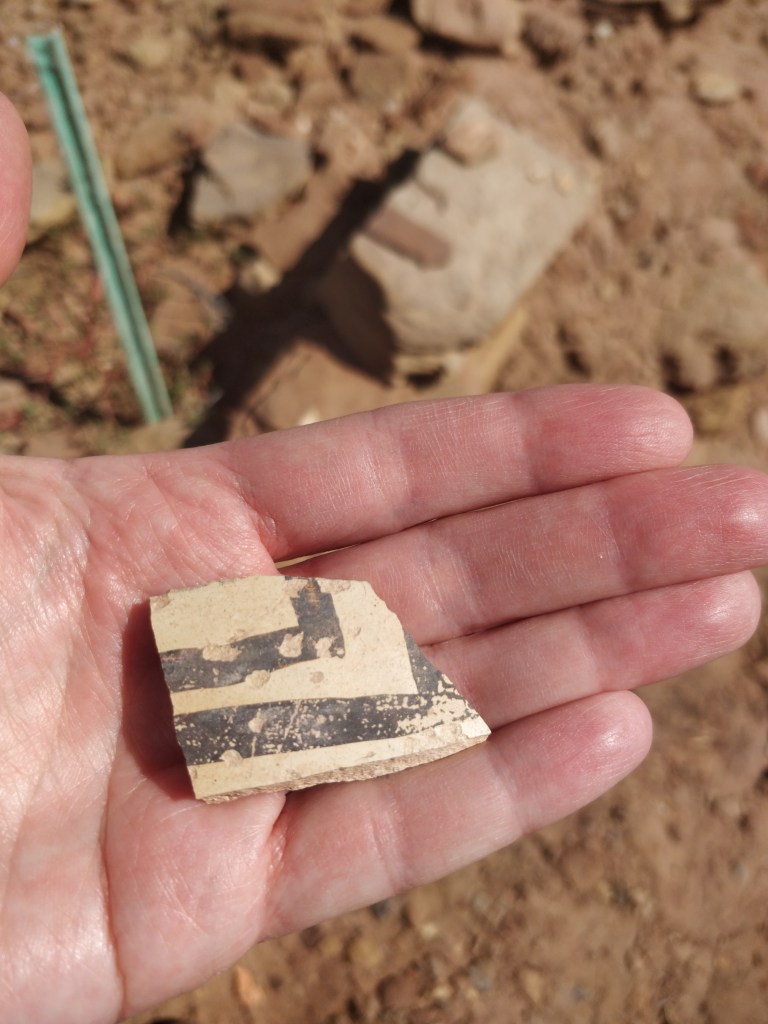
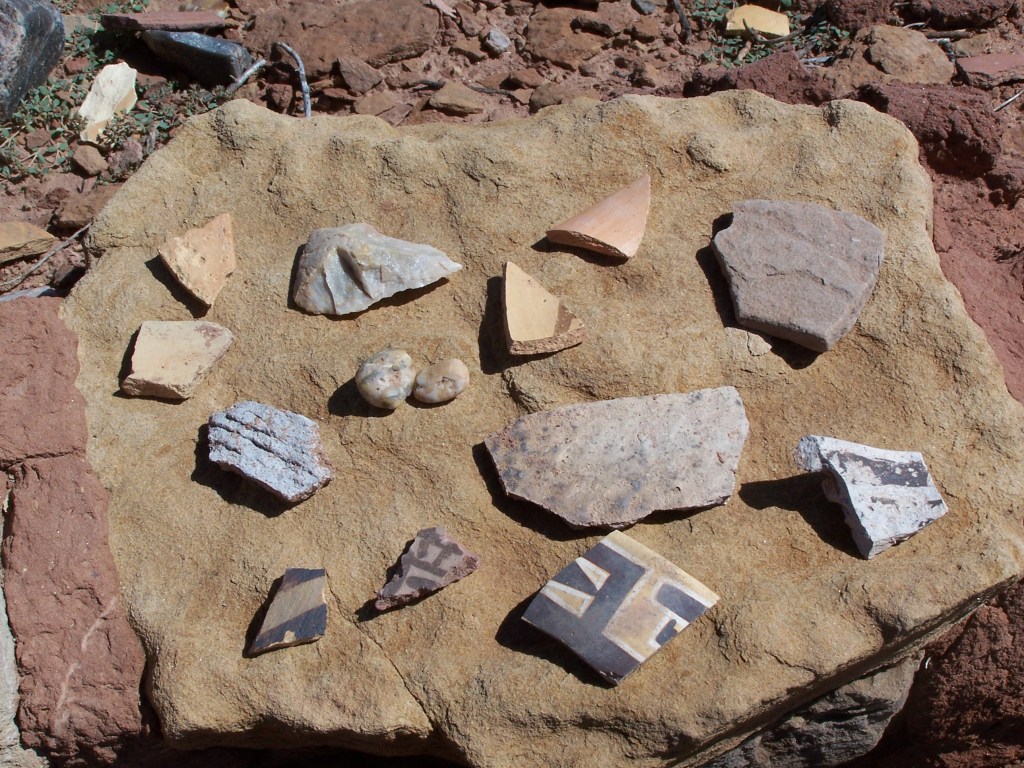
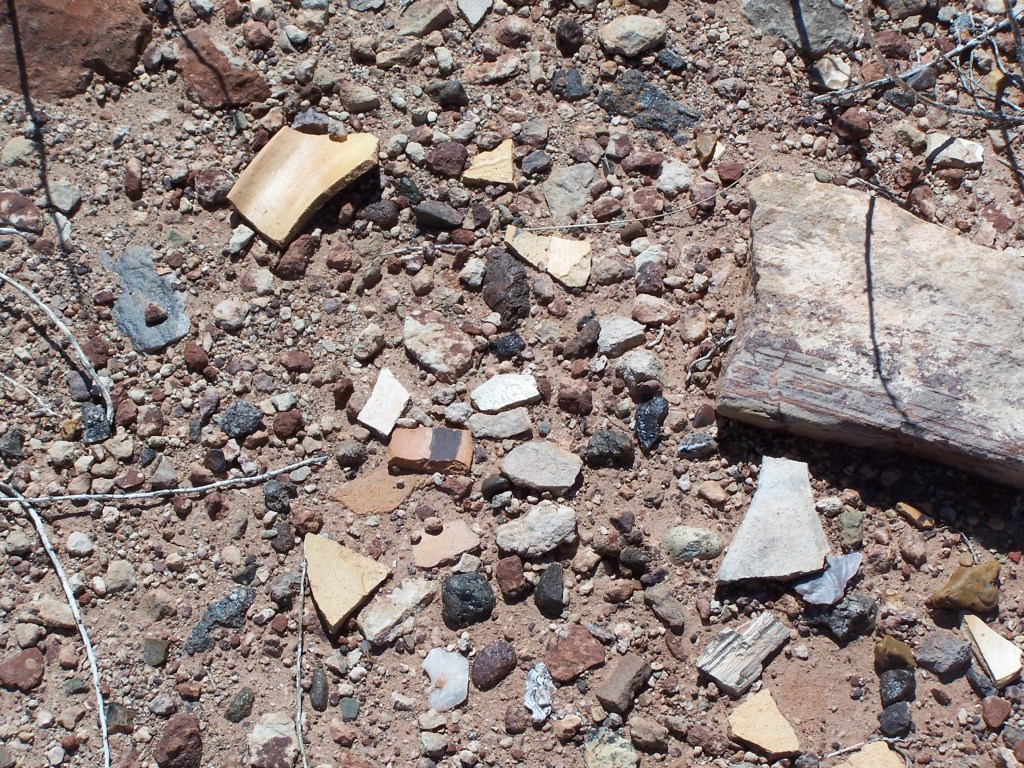
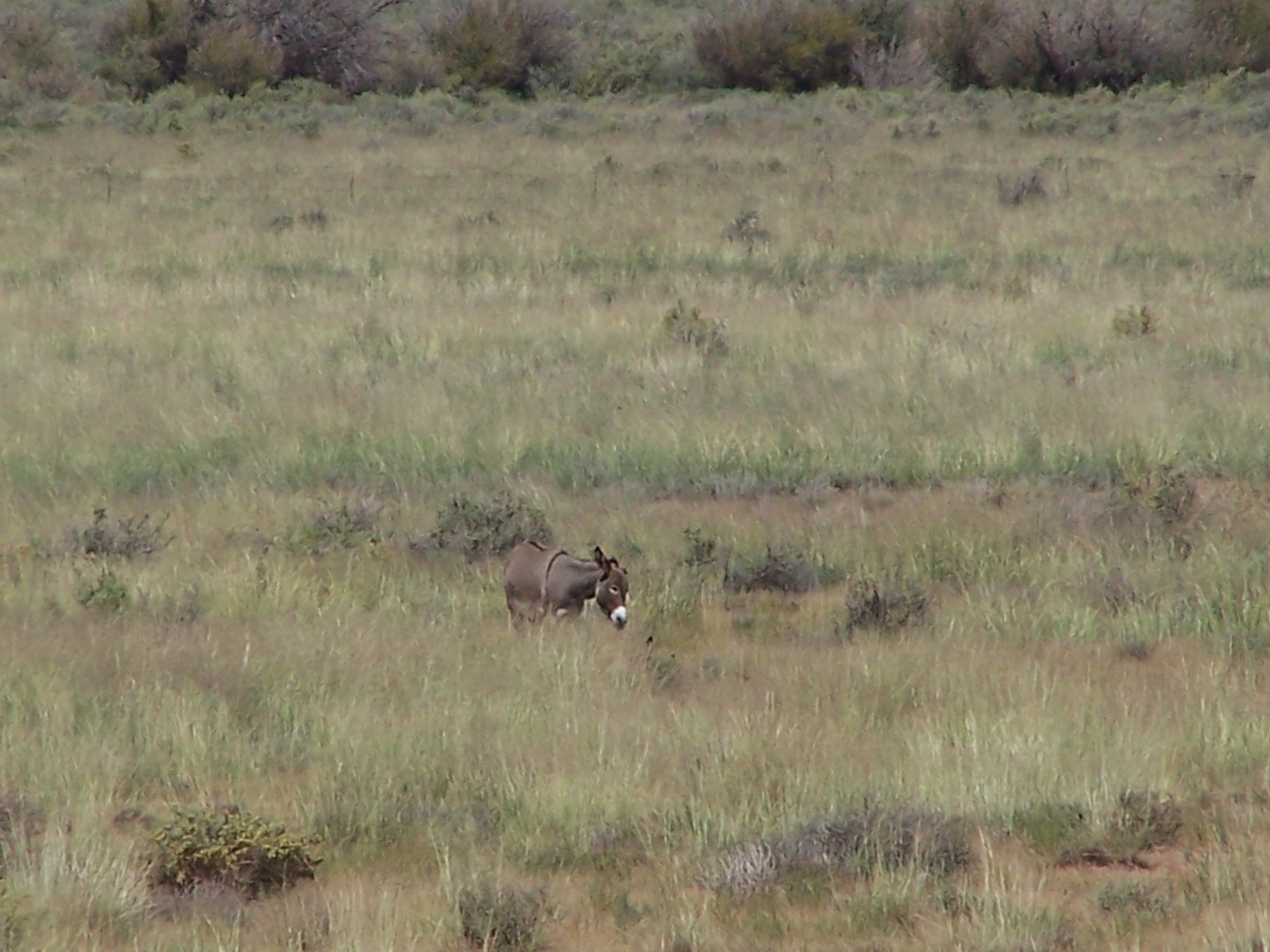
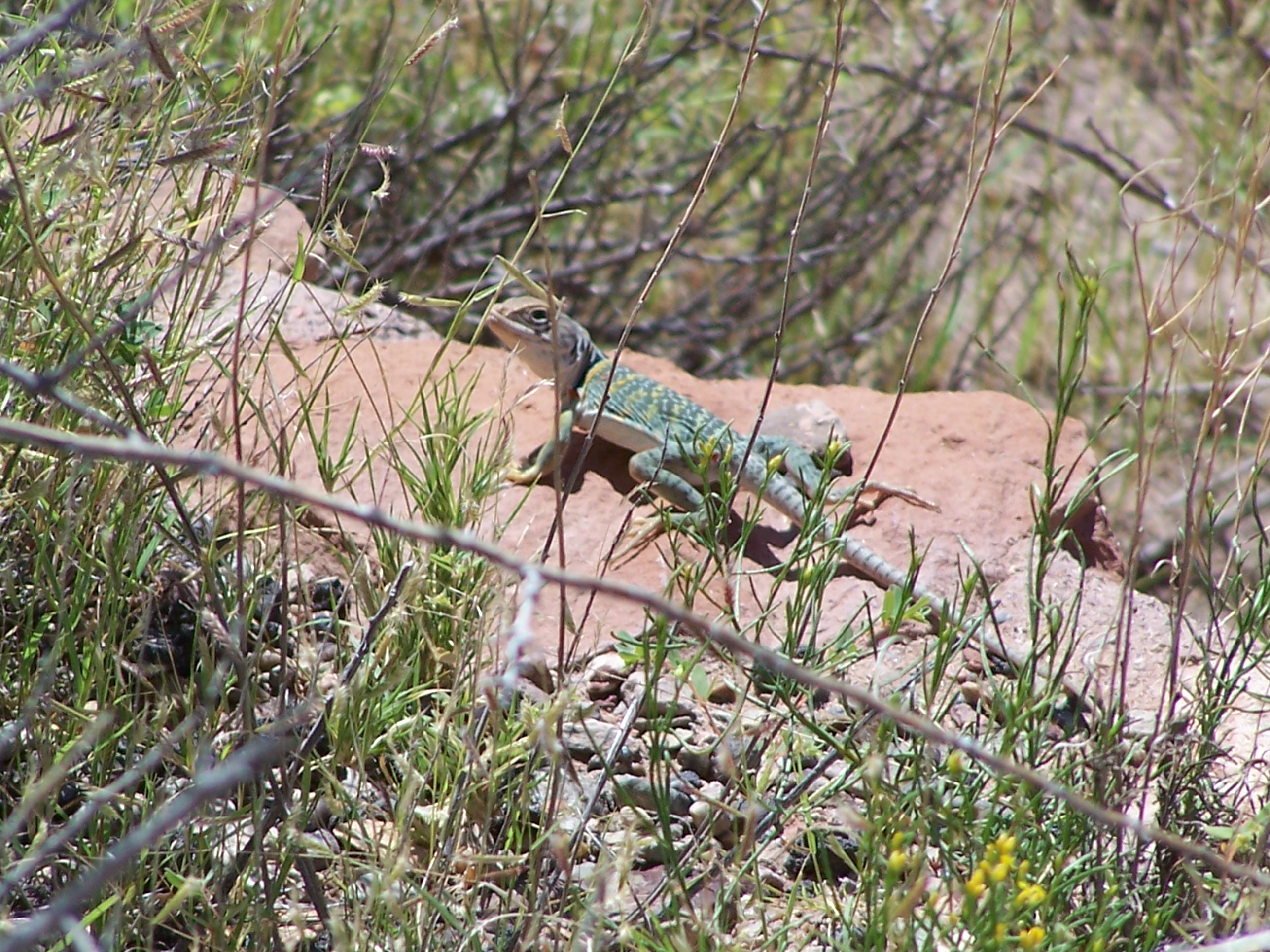
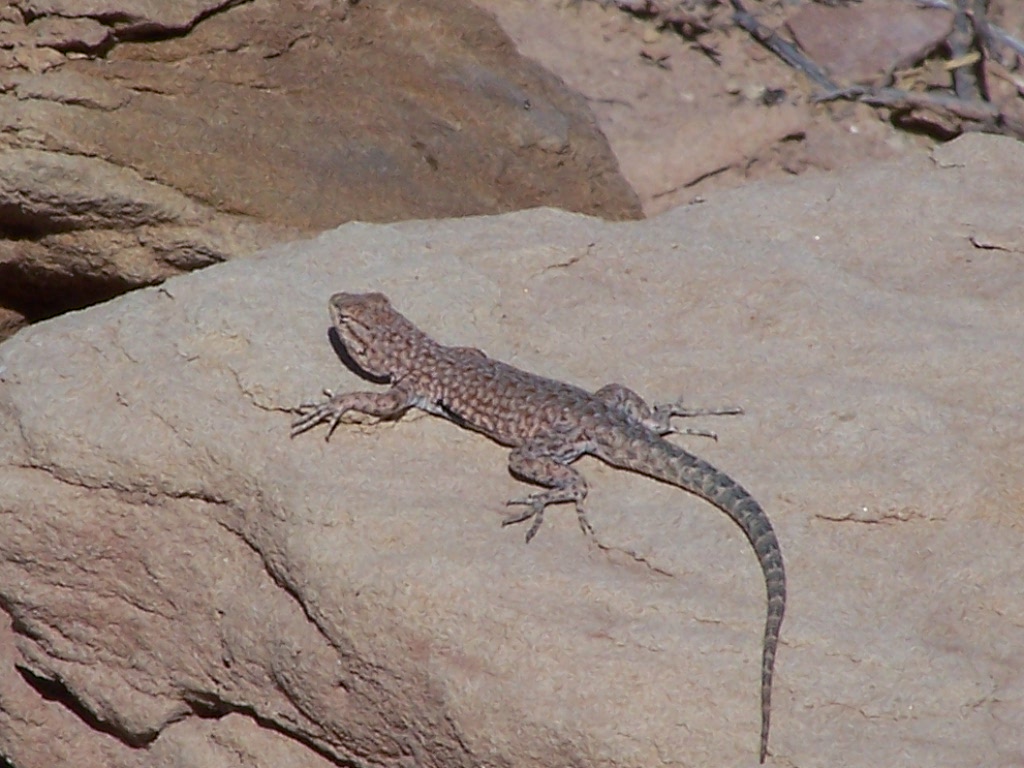
Wild burros and lizards are at home among the ruins.
Wupatki Pueblo
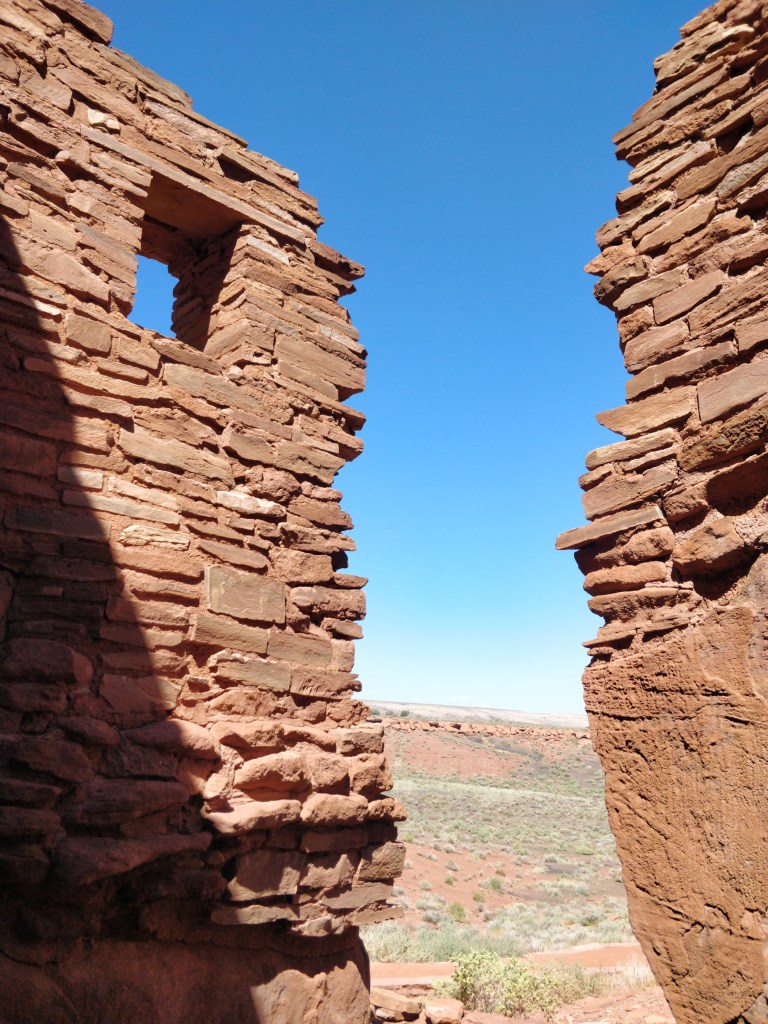
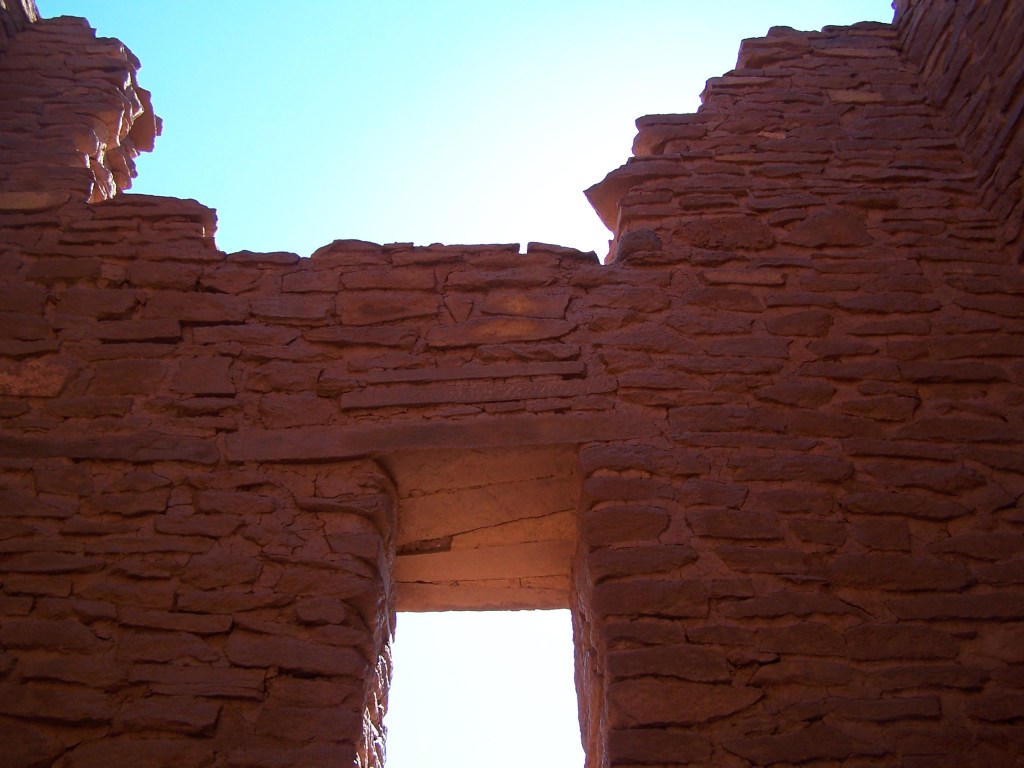
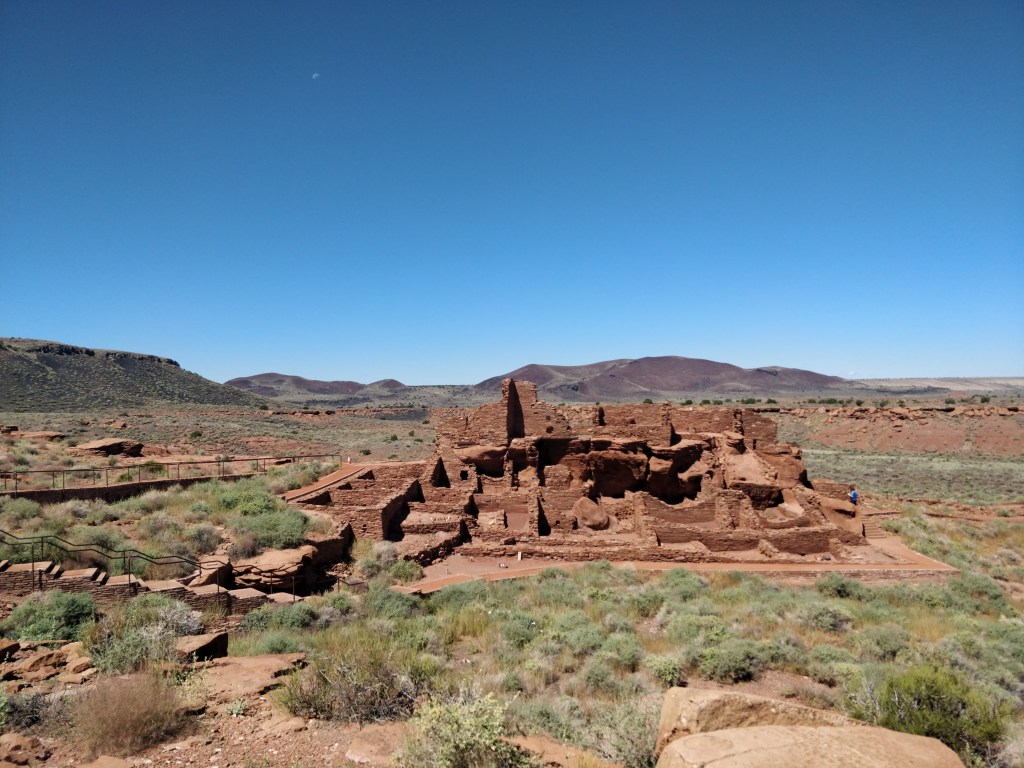
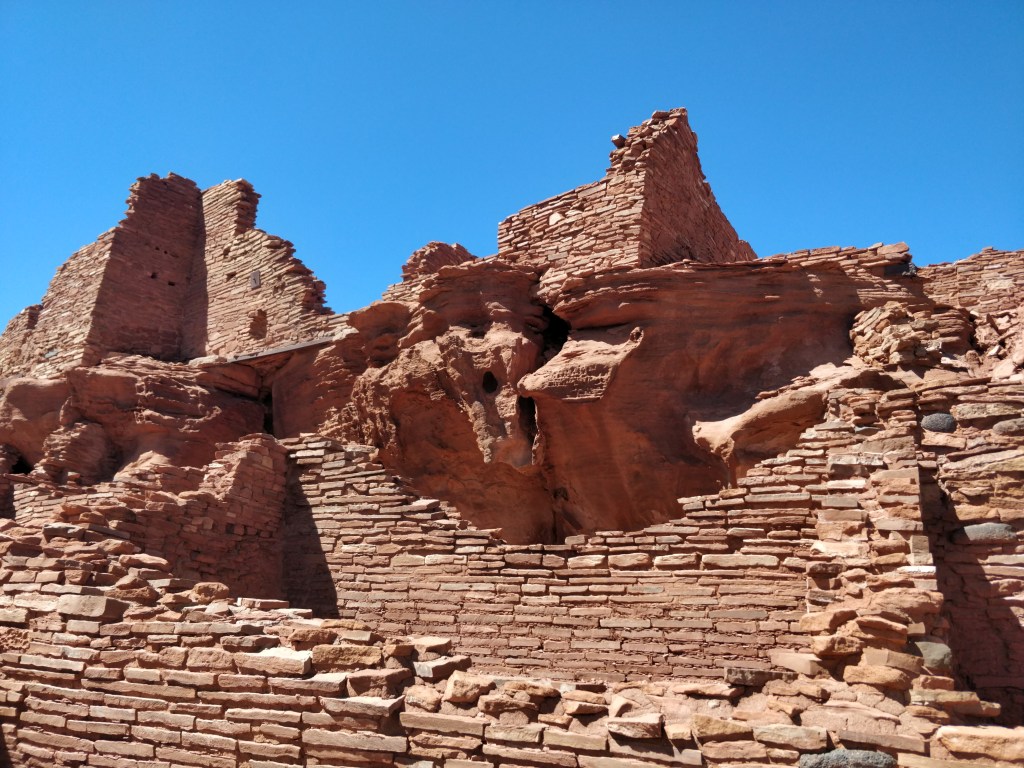
Some of the largest and most intriguing ruins were located here at the Sunset Crater Volcano.
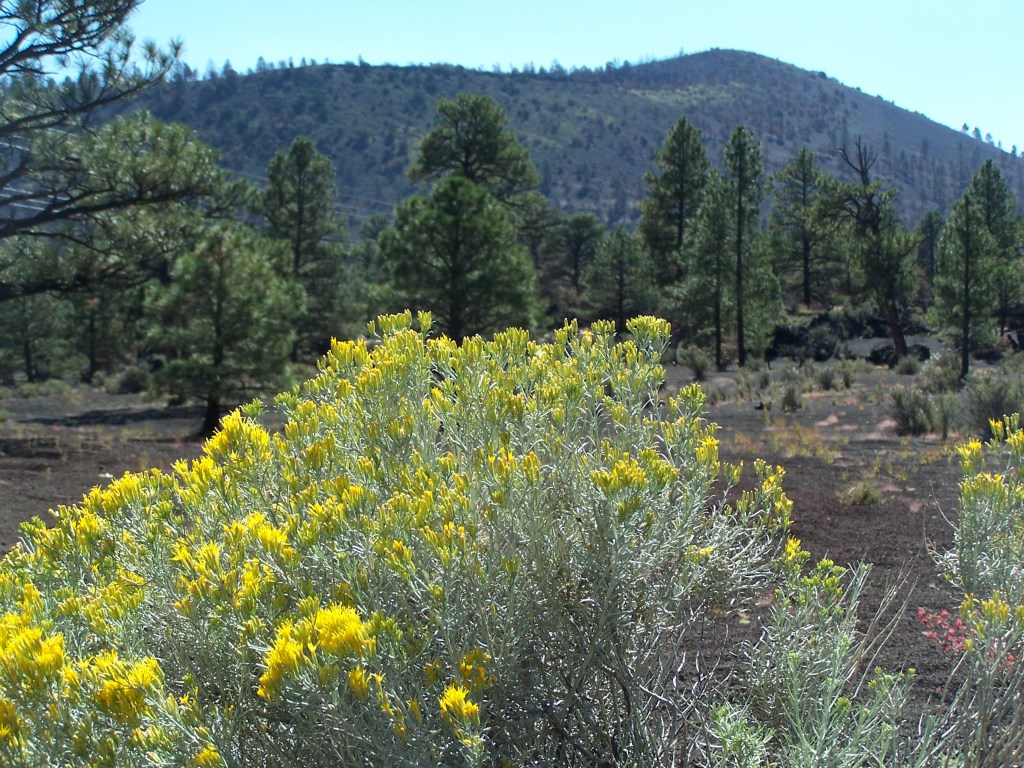
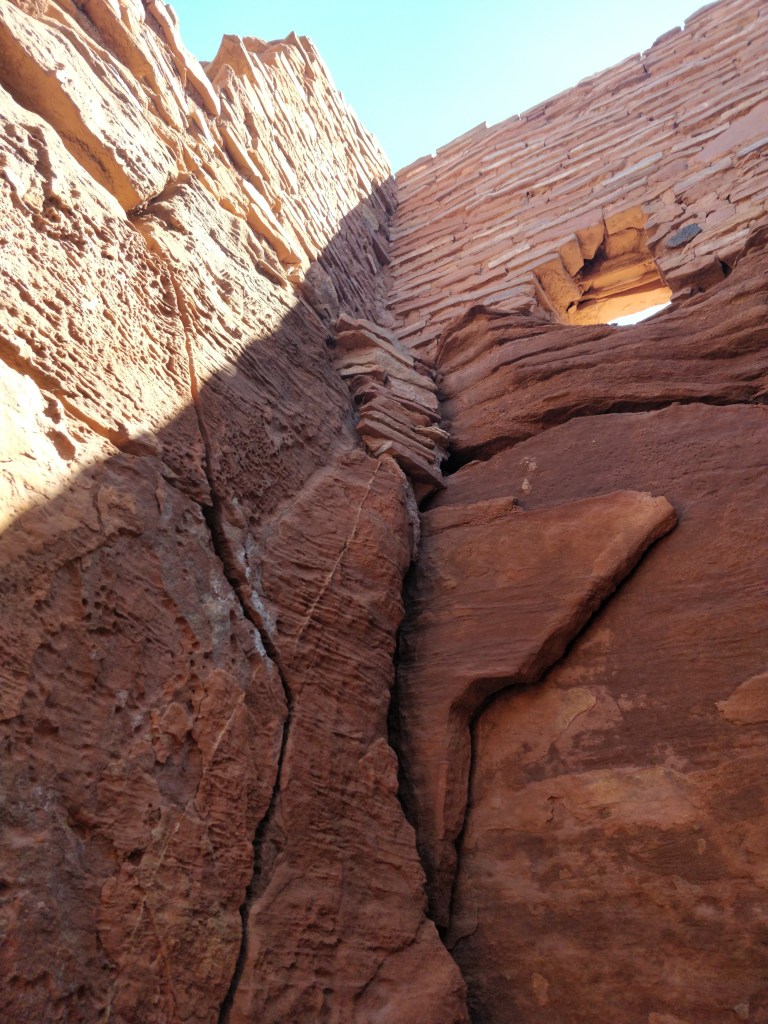
Pueblo ancestors lived in the area prior to the earthquakes and eruptions that occurred between 1040 and 1100 AD and returned almost 100 years later to establish a rich cultural and trading center. The conditions were extreme and farming was marginal with very little water. Many different influences are evidenced in the buildings, textiles, tools, and pottery indicating the settlement was at the crossroads between many cultural traditions. By the end of the 1200’s, the people were gone, leaving behind well built dwellings that remain partially intact more than 700 years later. Nearby Hopi, Zuni and Navajo people are the descendants of the Wupatki Pueblo.
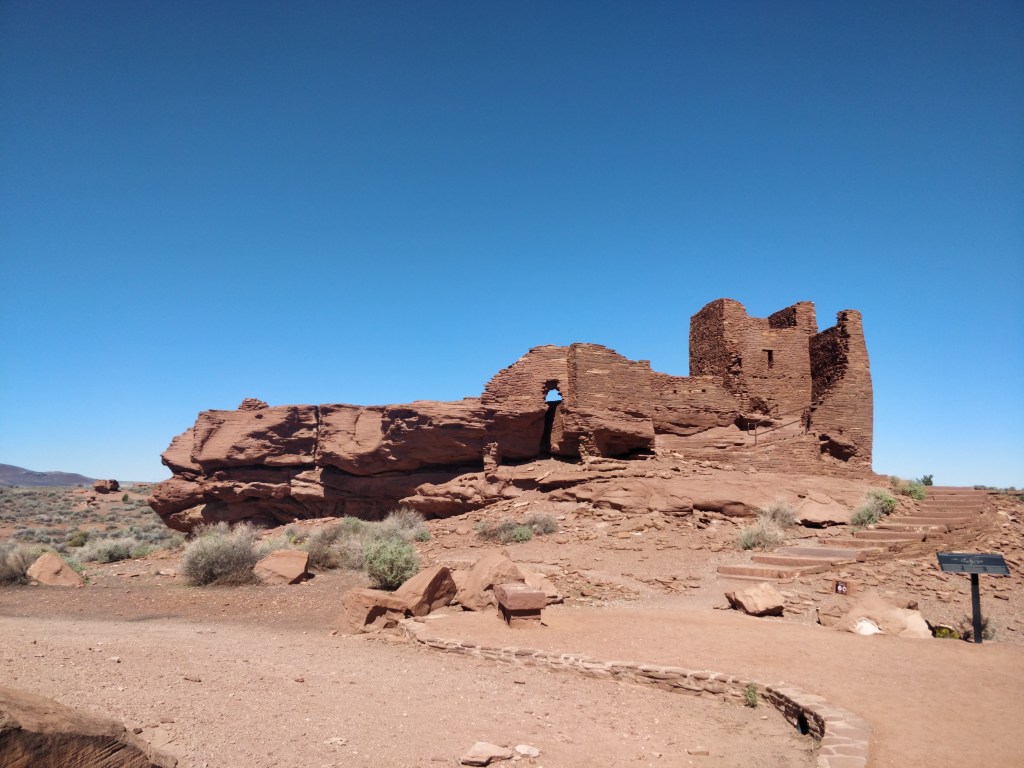
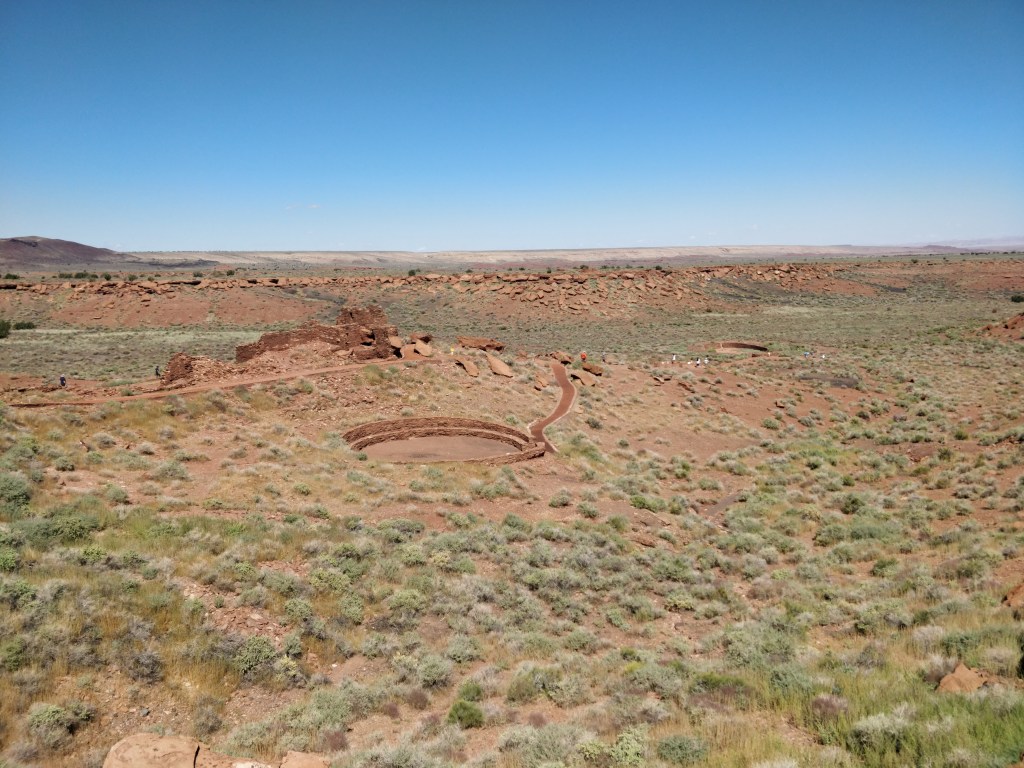
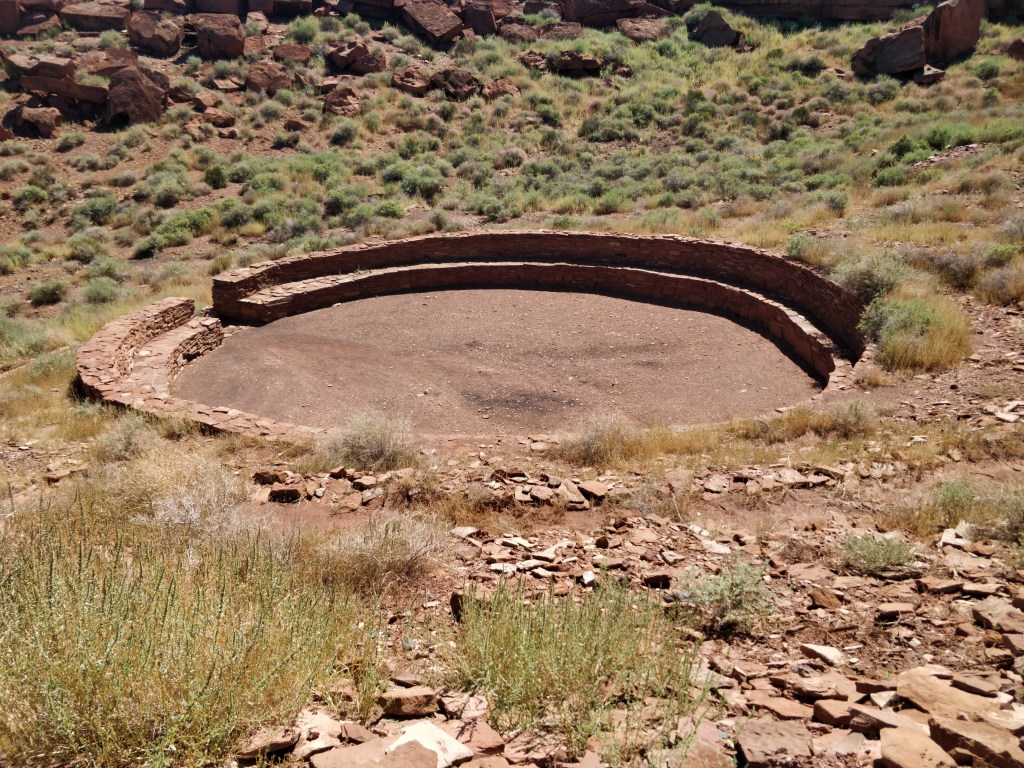
Ceremonial gathering space.

Navajo Roadside Stand
The landscape changed as we progressed along the Little Colorado. In the distance, we could see the river carving deep channels in the hilly grassland.
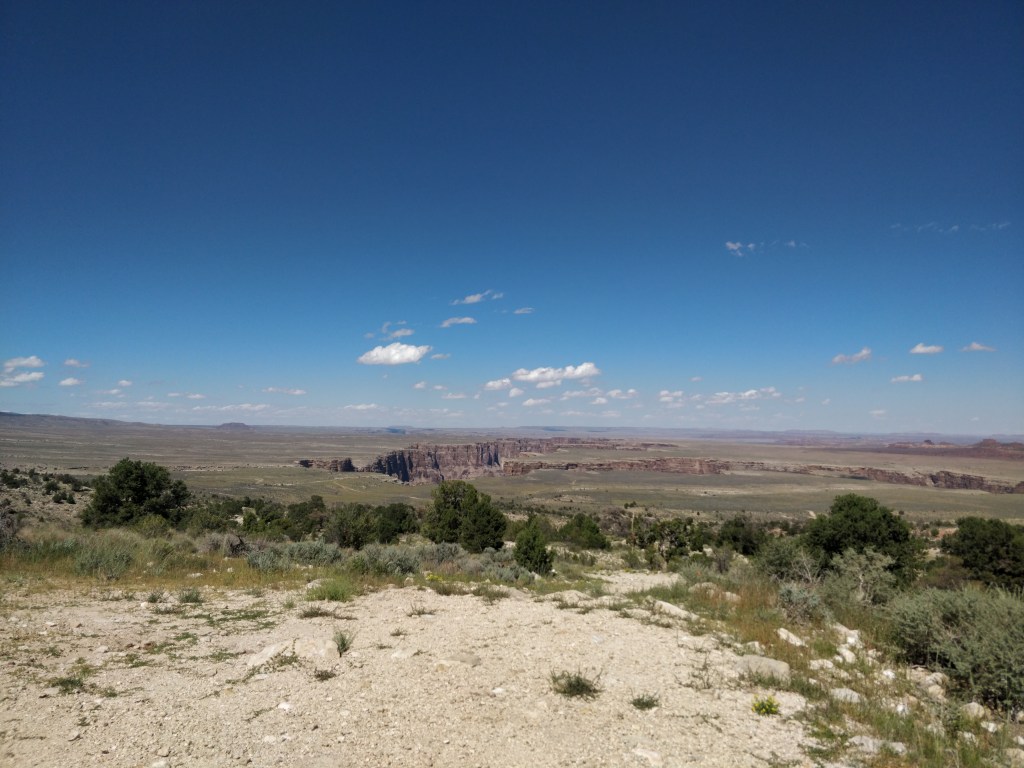
Along the road, we began to pass roadside stands selling Native American pottery, jewelry, and other items until we could no longer resist. We pulled into one with an empty parking lot and walked over to have a look.
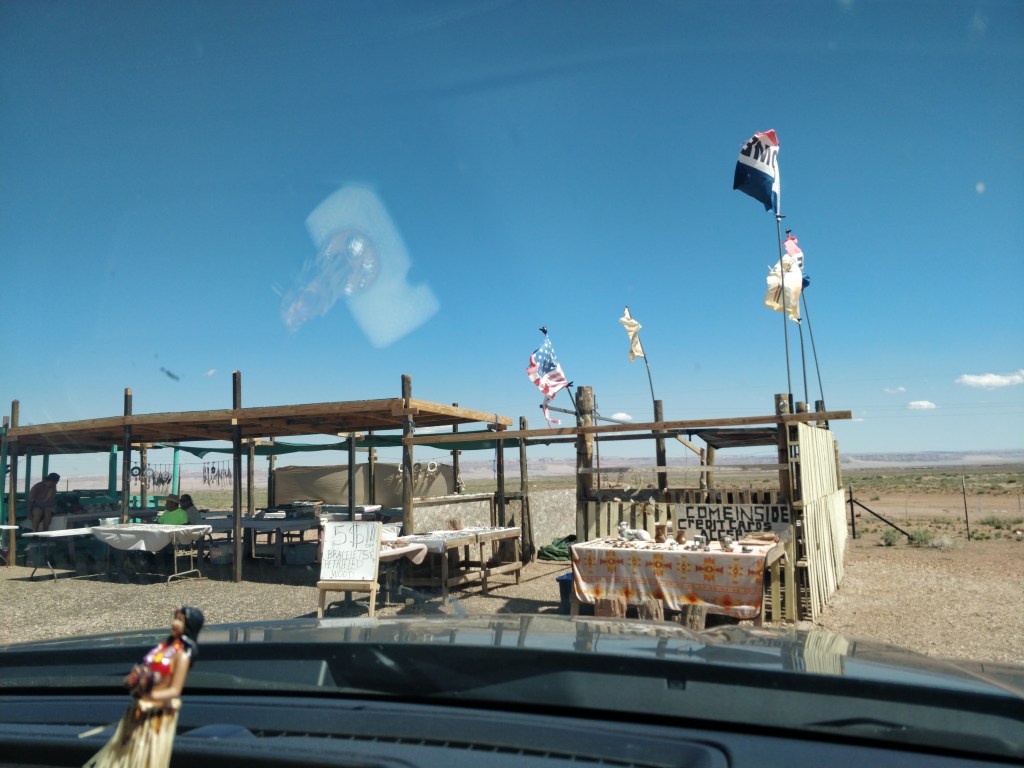
We were first greeted by a young Navajo man who enthusiastically described how he had made each item for sale. He told us the story of the river which ran behind his stand and how the roadrunners were affected by the drought. He then introduced us to the artists in the adjacent stands who were his aunts, uncles, and cousins. Each one had a story to tell about each of the items being sold. But it was the oldest uncle who told the story of the horned lizard to us.
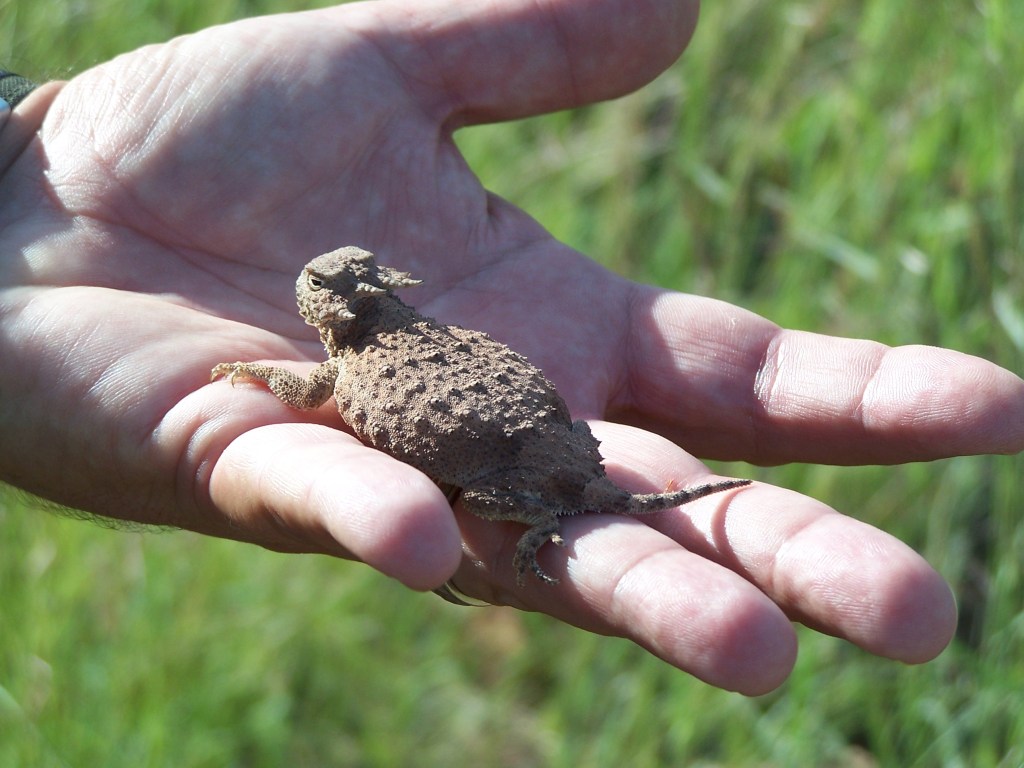
For the Navajo people, the horned lizard is a guardian of the underworld. It protects the gate and prevents the evil spirits from roaming the earth. When a Navajo sees a horned lizard, he or she will carefully pick it up, hold it to their heart, say a blessing, and give it a drop of water upon releasing it. The horned lizard will then protect their heart from evil spirits.
Just having had an encounter with a horned lizard a few days prior, we were in awe of the synchronicity of this meeting.
The final signboard on the trail loop at the Gila Cliff Dwellers had three words which totally changed the way I viewed all the ruins we visited along the rivers:
The Journey continues.
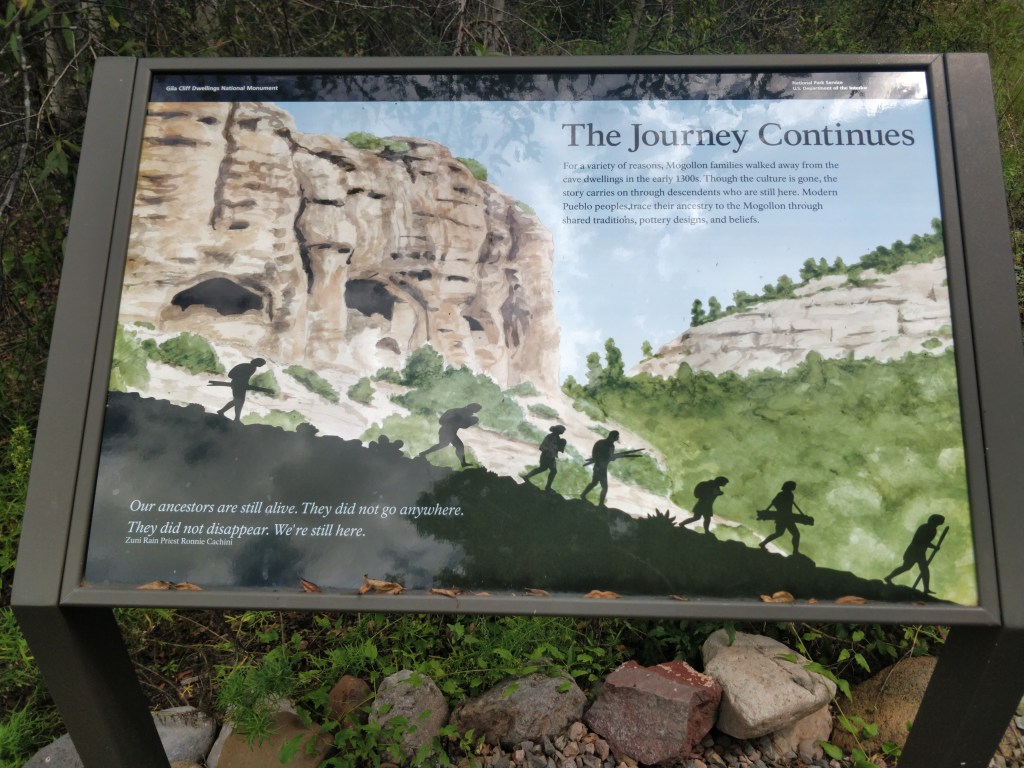
The ancient people of the ruins did not expect to stay in any one place for a length of time. Survival depended on seeking the resources offered by the land and when those resources were no longer available, they moved on as was their custom. Whereas I had always looked upon the abandonment of the site as a sad thing and a loss, it was not what the people of the ancient times would have felt. Change was not something to strive against but something to cooperate with. Everything in nature changes, and they understood that truth to pertain to their way of life as well.
Leaving natural breaths, sounds of rain and winds,
     calls as of birds and animals in the woods, syllabled
     to us for names,
Okonee, Koosa, Ottawa, Monongahela Sauk, Natchez,
     Chattahoochee, Kaqueta, Oronoco,
     Wabash, Miami, Saginaw, Chippewa, Oshkosh, Walla-Walla,
Leaving such to the States they melt, they depart,
      charging the water and the land with names.
  --Walt Whitman, excerpt from Starting from Paumanok
CAMPGROUND REVIEW: HOMOLOVI STATE PARK
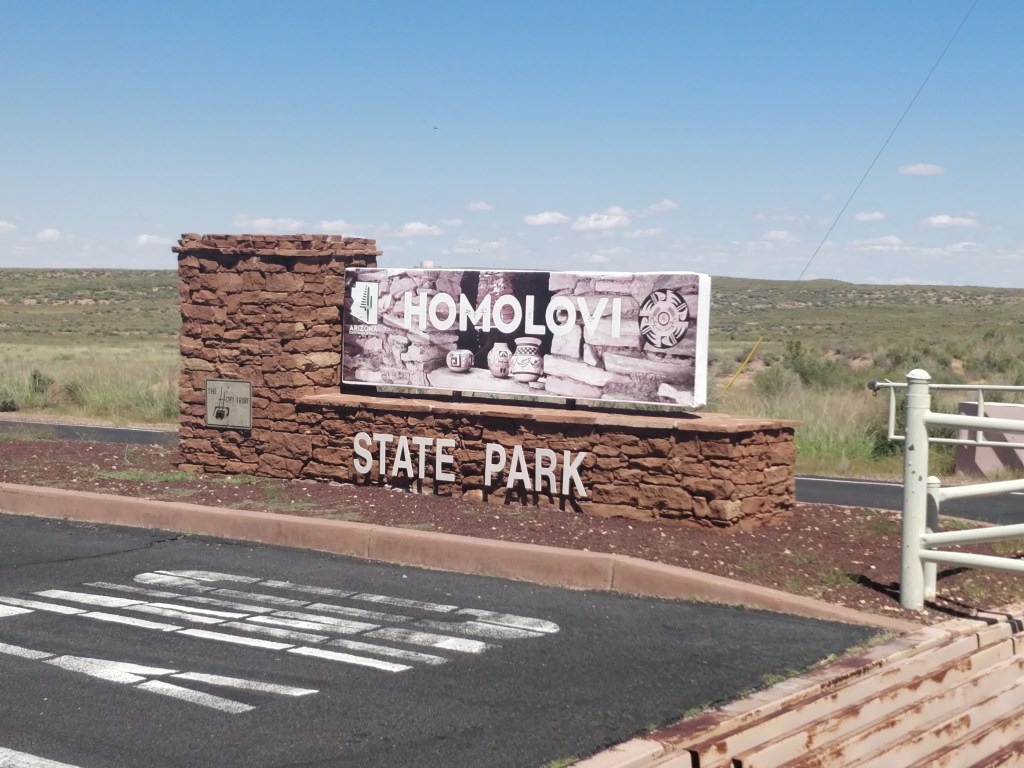
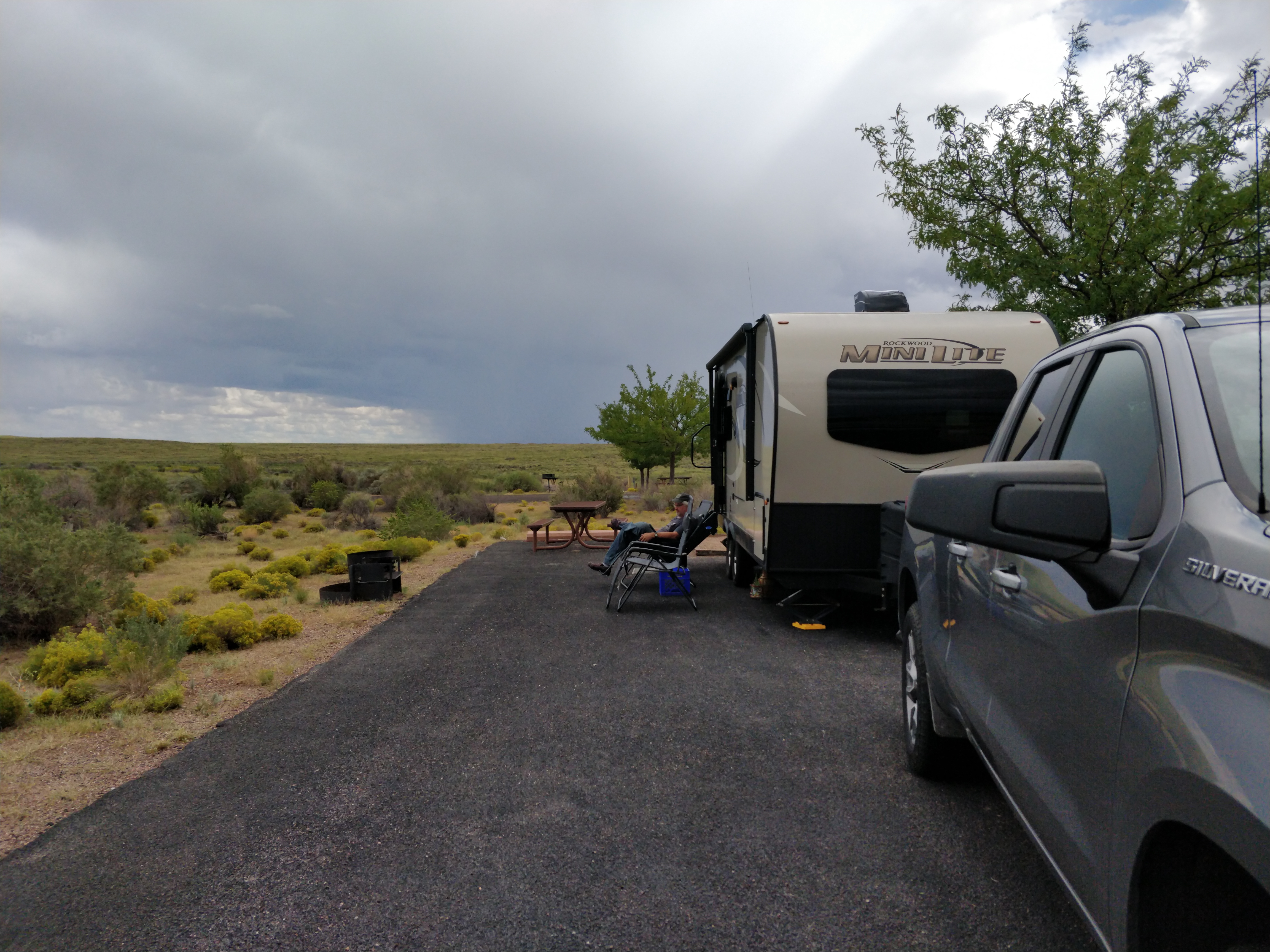
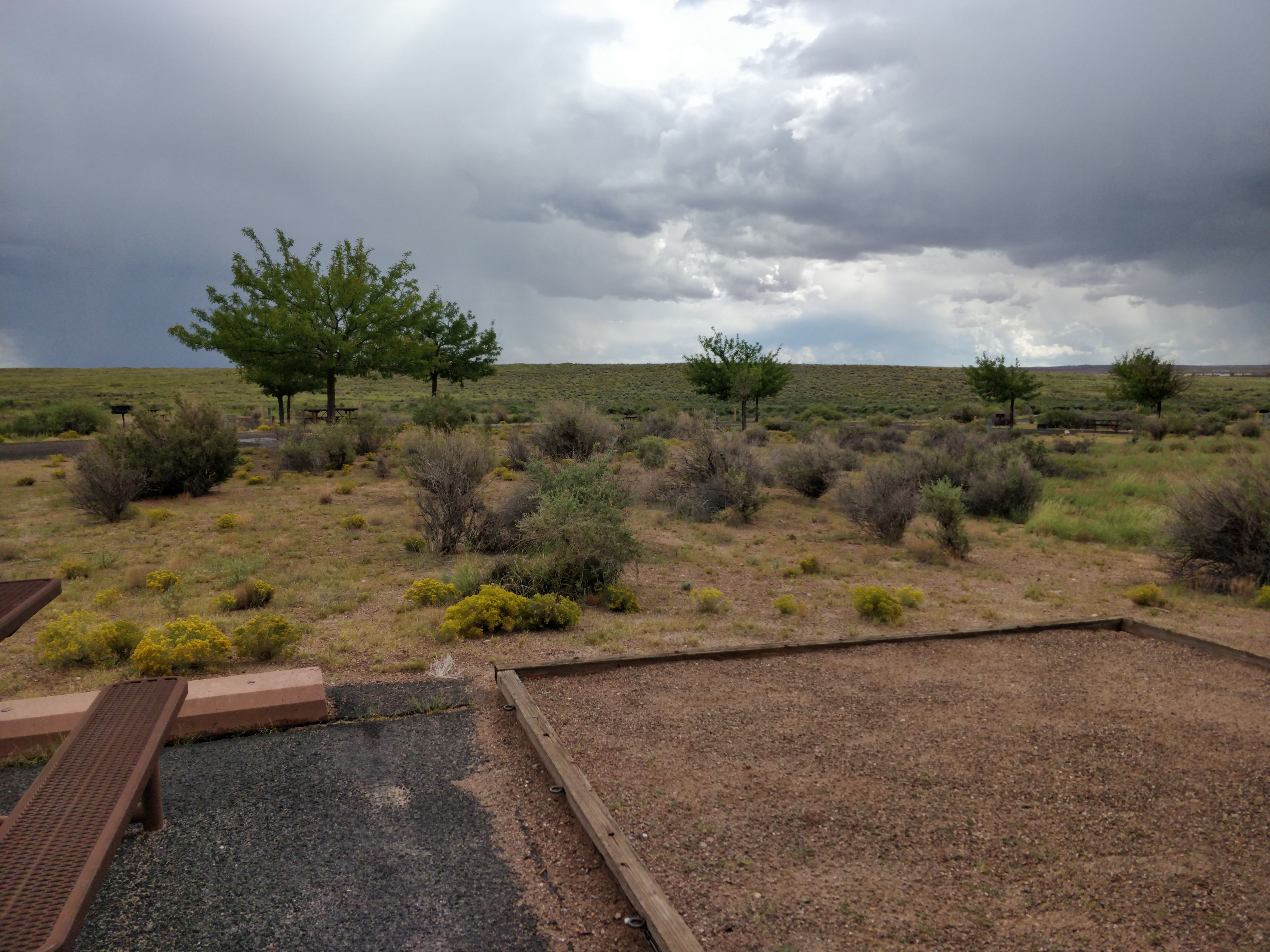
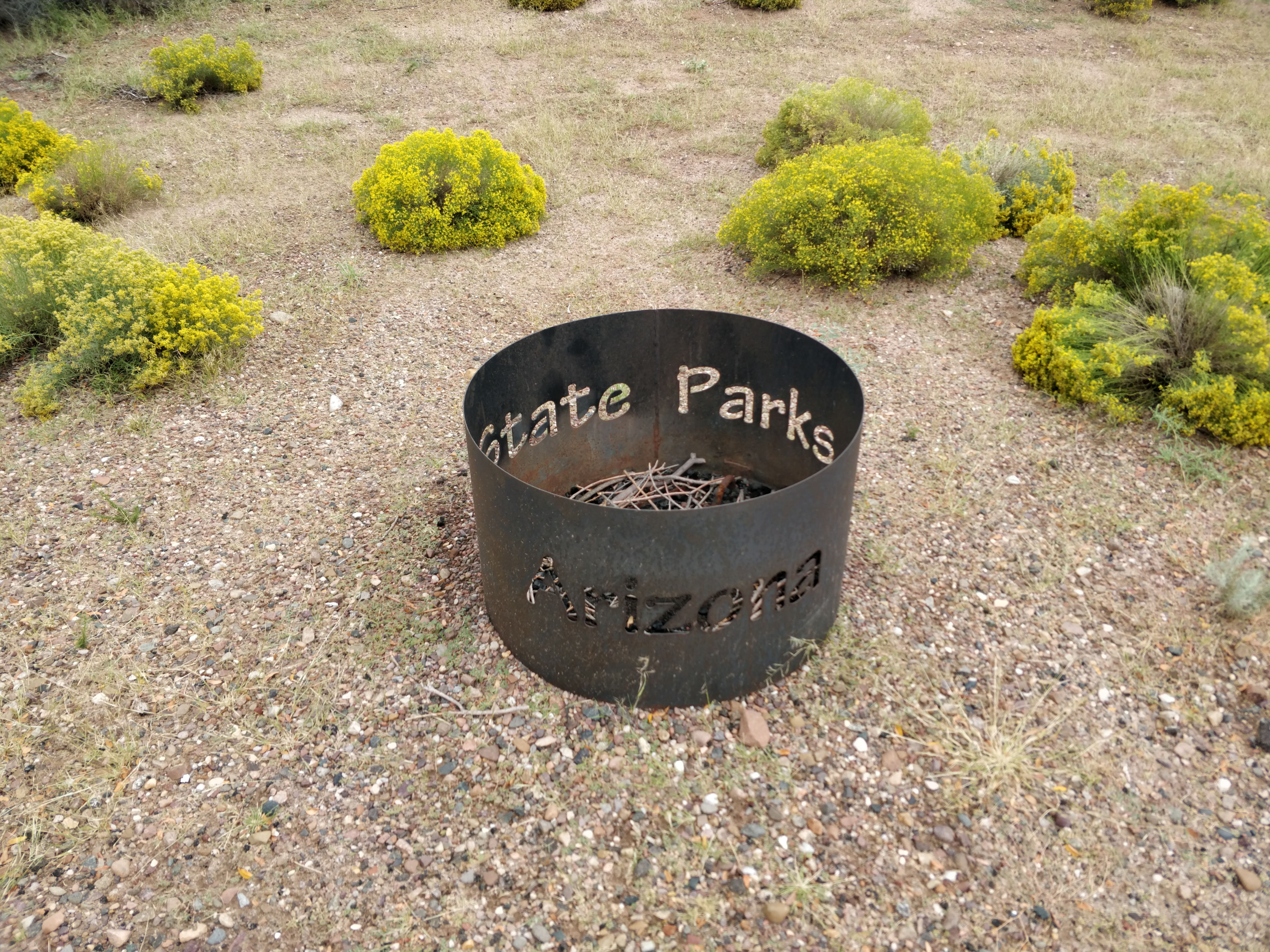
We stayed at Homolovi State Park near Winslow, AZ, for three days in a back in, water/electric site. Sites are asphalt, level and spacious. Each site has a picnic table, fire ring, and grill. Facilities include very clean private bathroom/showers and a large laundry room. The campground is nicely landscaped with terraced spaces and views of the grasslands. This is a dark sky park and an observatory is located near the Visitor Center which is open to the public one night a month. We heard coyotes in the evening. Archaeological sites are located throughout the park with trails through the ruins. Two of the ancient areas are accessed by a paved road with ample parking at the trail heads. We had strong T-Mobile service. The park was quiet and peaceful with beautiful sunsets and stargazing.
Thank you for visiting TheirRVtravels! We’re so glad to have you along for the ride!
Please take a moment to subscribe and you’ll receive a notice each time a new post is published.


Next up…Arizona – Traveling Historic Route 66
 Their RV Travels