
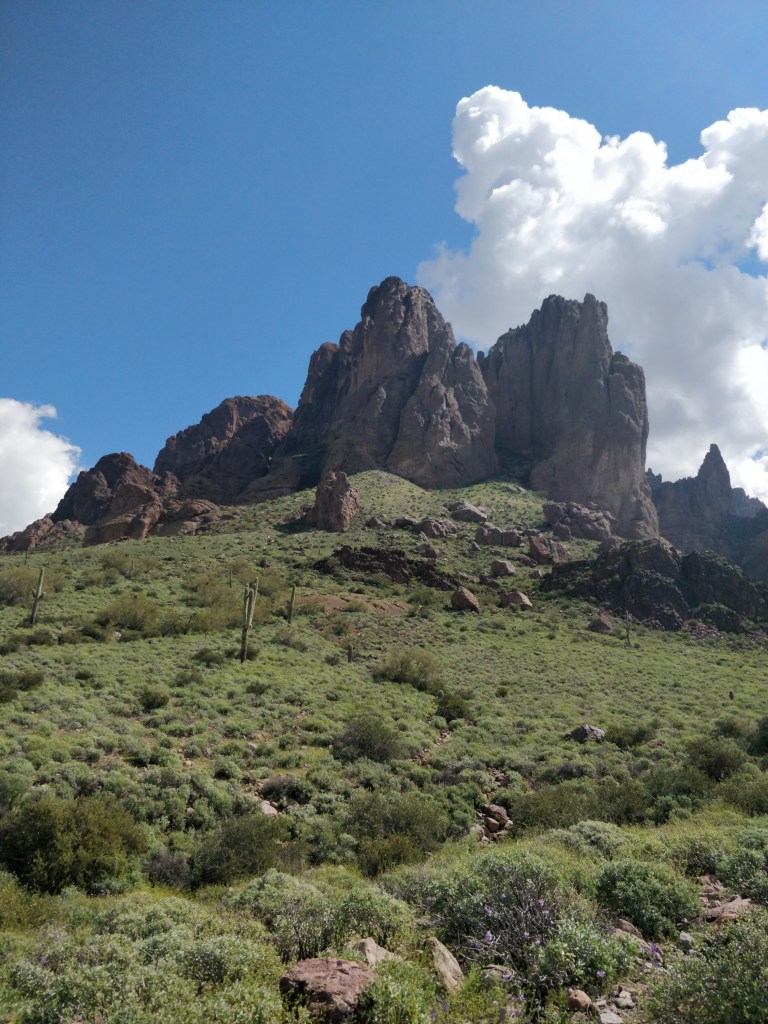
The similarities and differences within the state of Arizona are fascinating. Remaining constant throughout our travels were the Saguaros, the canyons, and the opportunities for outdoor activities. In the central part of Arizona, we experienced the wild west, the gold rush, the Civil War, and the Christian tradition.
(NOTE: For those receiving these posts by email, please click on the photo following each topic to access the complete slideshow linked to our youtube page.)
St Anthony’s Greek Orthodox Monastery
A world renowned monastery is located in central Arizona. Named after St. Anthony the Great, the active monastery of over 50 monks and novices continues the Mt. Athos Greek Orthodox traditions. Visitors are permitted to visit the chapels and walk the grounds following a self guided tour. There is a strict dress code required for all guests, but for us it just added to the experience. Built in 1995, St. Anthony’s has several chapel buildings and a main church connected by an elaborate set of pathways, gardens, fountains, citrus orchards, and an olive grove. The grounds are breathtaking. In the bookstore, olive oil made from the monastery’s own olives is available for purchase. Guest houses are available for Orthodox men and women who wish to spend a few days in the spiritual quietude of monastic life. However, the monks’ daily program begins at 10:00 pm with prayers and liturgical services throughout the night followed by a full work day. Monastic life is not for the faint of heart!
Mission San Xavier del Bac
The mission was founded in 1692 by a Jesuit missionary. The mission building was begun in 1783 by a Franciscan Father and continued for 14 years. Designed by a Spanish architect, detailed by artists from Mexico, and built by the local villagers, the mission is one of the best examples of Mexican baroque architecture in the country. It is listed as an Historical Landmark and still provides church services for the community.
Adjacent to the grounds is Grotto Hill. Named for a replica of the Grotto at Lourdes, the shrine is located about halfway up a hill and provides a place of quiet reflection. The circling trail offers views of all the surrounding mountain ranges as it climbs to the white cross placed at the top of the hill.
Picacho Peak State Park
It’s hard to miss Picacho Peak when traveling between Phoenix and Tucson. It towers over the highway and has provided a directional landmark for thousands of years. The most western battle of the Civil War with fatalities was fought here for its strategic position along the stagecoach and supply routes. Today, it is home to a beautiful state park which is highly regarded for the spring blooms and superblooms along the trails. We visited at the end of the season, but were still able to enjoy the Arizona poppies, lupines, and many other delicate spring flowers.
Superstition Mountains and Lost Dutchman State Park
Within the Superstition Mountains is the Lost Dutchman’s Gold Mine. Many stories have circulated about how to find the lost mine and people have been searching for it since the 1890’s. Mysterious clues to the whereabouts are etched in the sides of the Superstition Mountains, wedged into a Saguaro cactus, illuminated during a full moon through an arch, and navigated along Weaver’s Needle. The Dutchman, Jacob Walz, a cantankerous loner, never returned from his last trip to the hidden mine rumored to contain a wealthy stash of Spanish gold. An old movie,”Lust for Gold”, starring Glenn Ford and Ida Lupino, tells a version of the story and was filmed on location. It is one of our favorites!
The Lost Dutchman State Park is situated at the foot of one end of the Superstition Mountains with breathtaking views of the rugged range. Popular with climbers, most of the trails were rocky, steep, and required scrambling. Although we did not find the lost mine and were somewhat humbled by the difficulty of the trail, we came away with fuel for our imagination and a respect for the physicality of the miners, prospectors, and their trusty mules in the gold rush era.
Tortilla Flats
Follow the old Apache Trail past the Saguaro and Canyon Lake, where water sports abound and a paddlewheel steamboat ferries tourists around the high walled rocky shores, to one of the last remnants of the Old West – Tortilla Flat, AZ. Once a booming hub for prospectors and travelers, the town was destroyed by flood in 1942. It has been rebuilt and restored by a small group of independent business owners and offers one of the best hamburgers in the state. Live entertainment on the weekends draws hundreds of visitors and bikers to stroll the boardwalk, sample the homemade ice cream, tour the museums, and enjoy a spectacular scenic drive along the mythical Superstition Mountains.
Once again, our experience with state parks remains excellent. Both Lost Dutchman and Picacho Peak were well maintained and situated in beautiful settings. Proximity to trails and outdoor activities plus the wildlife viewing made everyday enjoyable.
CAMPGROUND REVIEW: LOST DUTCHMAN STATE PARK
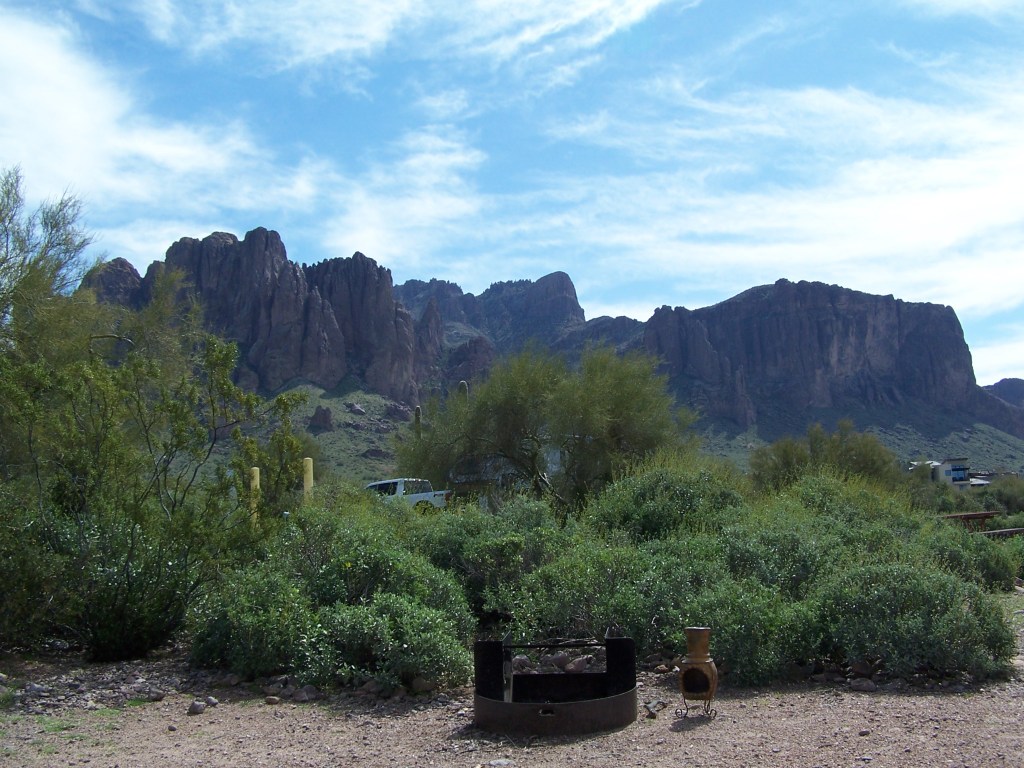
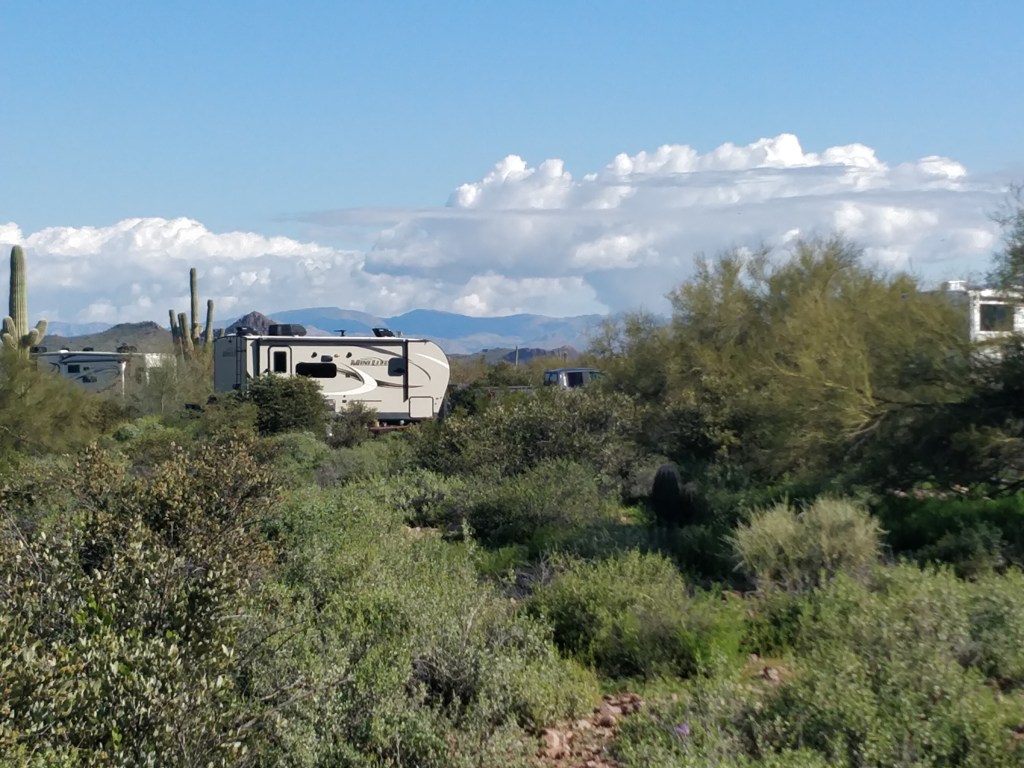
We camped at Lost Dutchman State Park for a week. Site #22 is a spacious, back-in spot with water and electricity. Site contains a level asphalt drive, picnic table, and fire ring. Connector trails are an easy access from the site. Dump station is located near the campground exit. Restroom/shower buildings were clean. The park is very popular with local hikers, so trails can get a bit crowded between day use visitors and campers.
Thank you for visiting TheirRVtravels! We’re so glad to have you along for the ride!
Please take a moment to subscribe and you’ll receive a notice each time a new post is published.


Next up… Tucson and back to Pahrump
 Their RV Travels