
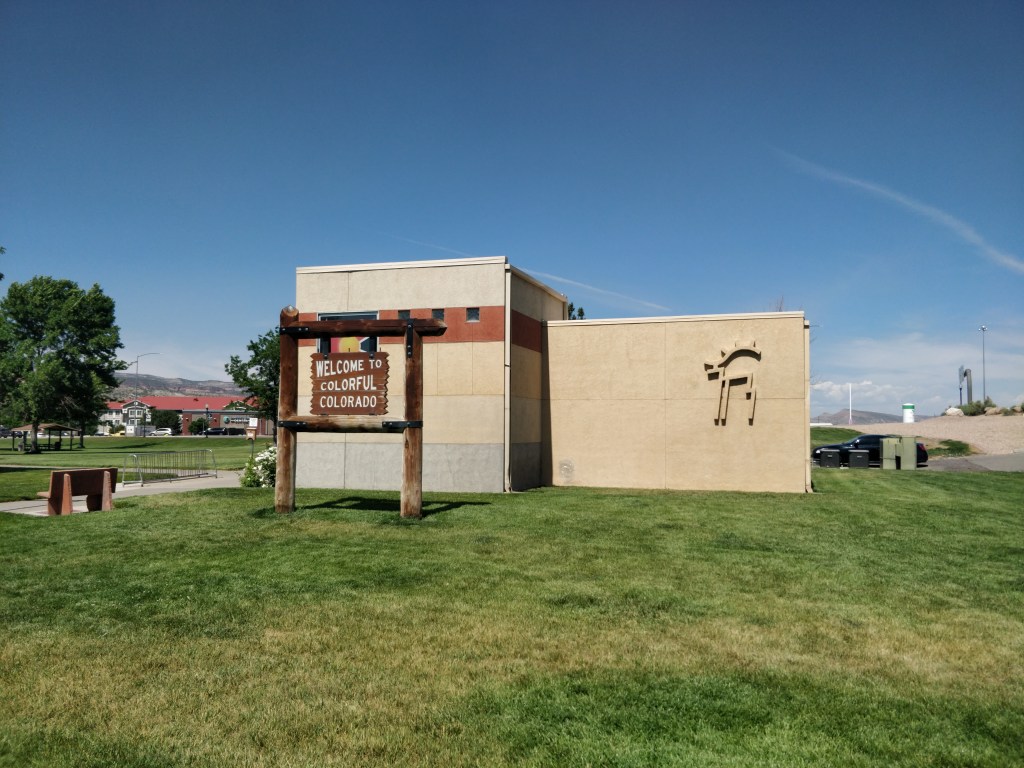
Colorado’s Grand Valley was our next dinosaur destination. Between the Colorado River and the Colorado National Monument in the western edge of the state, this area was originally heavily agricultural. Outdoor recreation has become the major focus now with cycling, hiking, fishing, and climbing the most popular. More importantly, the Dinosaur Trails area is located within this corridor where the paleontologists and volunteers continue to extract dinosaur fossils. Joining the Dinosaur Journey Museum’s fossil dig program was the highlight of our visit!
DINOSAUR JOURNEY MUSEUM IN FRUITA, COLORADO
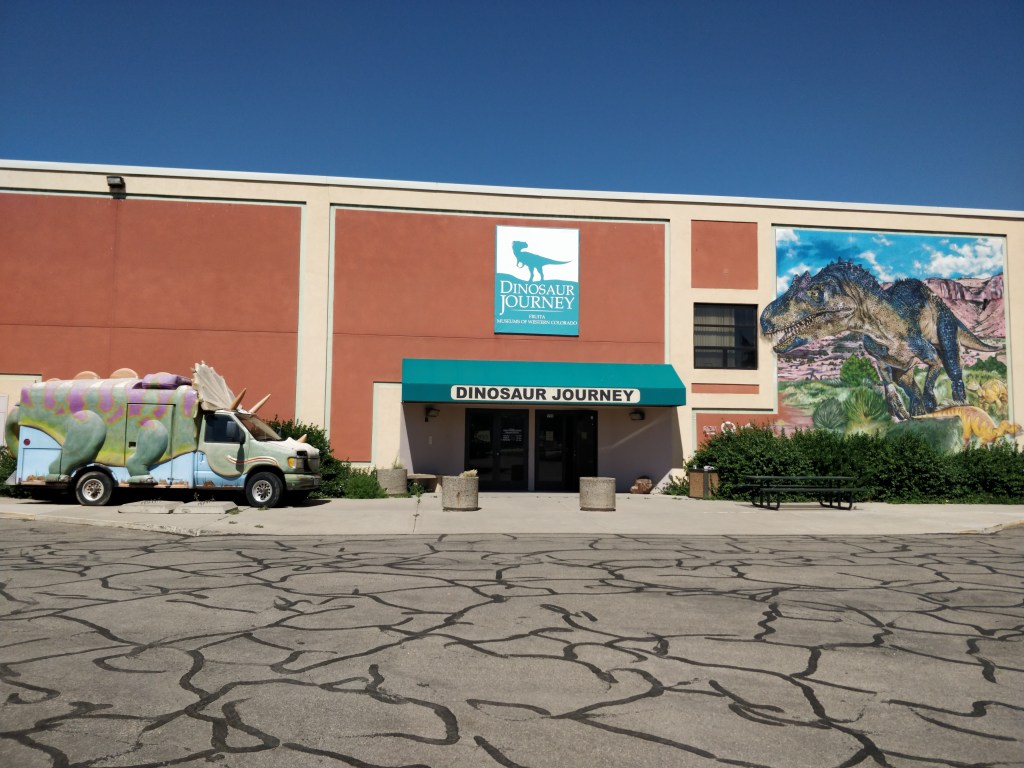
Colorado’s Dinosaur Journey Museum contains over 15,000 fossils from the Western Colorado region. A large paleontology lab receives, stores, prepares and preserves fossils from the field. Volunteers and scientists can be seen working on the fossils in the lab most weekdays. Many species of dinosaurs from the Triassic, Jurassic and Cretaceous periods are on display, including the full size leg of a Brachiosaurus which reaches from floor to ceiling. The displays were imaginatively arranged to portray interaction with both the environment and predator/prey behaviors. Walking around the museum after our dig brought even more relevance to the large collection.
Slideshow (for best quality, choose full screen viewing)
MYATT-MOORE QUARRY FOSSIL DIG-FOR-A-DAY
Meeting early in the morning, we joined a group of ten paleontologists-for-the-day to be shuttled to the Myatt-Moore Quarry fossil dig site to play in the dirt. We received a briefing from the museum’s paleontology curator, Dr. J, on what to look for and how to use the field “tools.” We each received our tools for the day – a five gallon plastic bucket, a stiff wire brush, a soft paint brush, and a screw driver. We took our stations at the face of a rocky wall in the Morrison Formation geological layer and began excavating for bones. As we brushed and gently poked away at the layers of dirt and gravel, we searched for purplish black colored rock-like fragments. Our leader and interns were on hand anytime we saw something that looked promising. Several fossils were already in various states of excavation and some of us worked to clear these of excess dirt and gravel. We learned terms like field jacketing and pedestals as well as chemical compositions of glues used to hold the bone fragments together. Later in the day, we returned to the Paleo Lab to see how the fossils are further cleaned after they are brought in from the field. It was an excellent experience and easy to see how people volunteer to work in the sites or lab for years.
Slideshow (for best quality, choose full screen viewing)
COLORADO RIVER STATE PARK – JAMES M. ROBB – ISLAND ACRES SECTION
Along the Colorado River are five separate sections of the James Robb State Park. Compared to a “string of pearls,” each park provides opportunities for fishing, hiking, boating, and camping. Our base camp was at the eastern edge of the valley in the Island Acres section. The river walk provided some great wildlife viewing as well as a look at the Book Cliffs formation.
Slideshow (for best quality, choose full screen viewing)
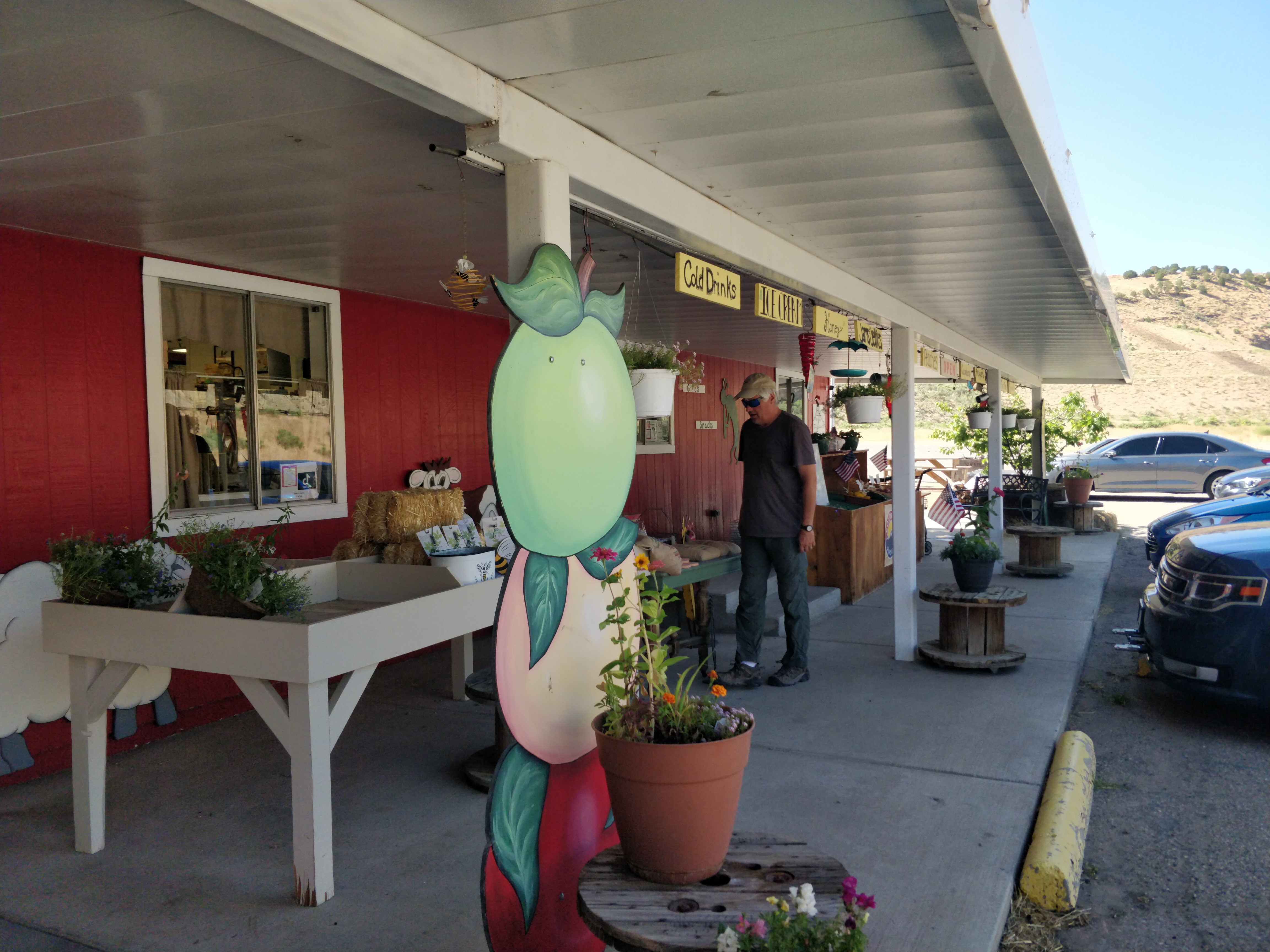
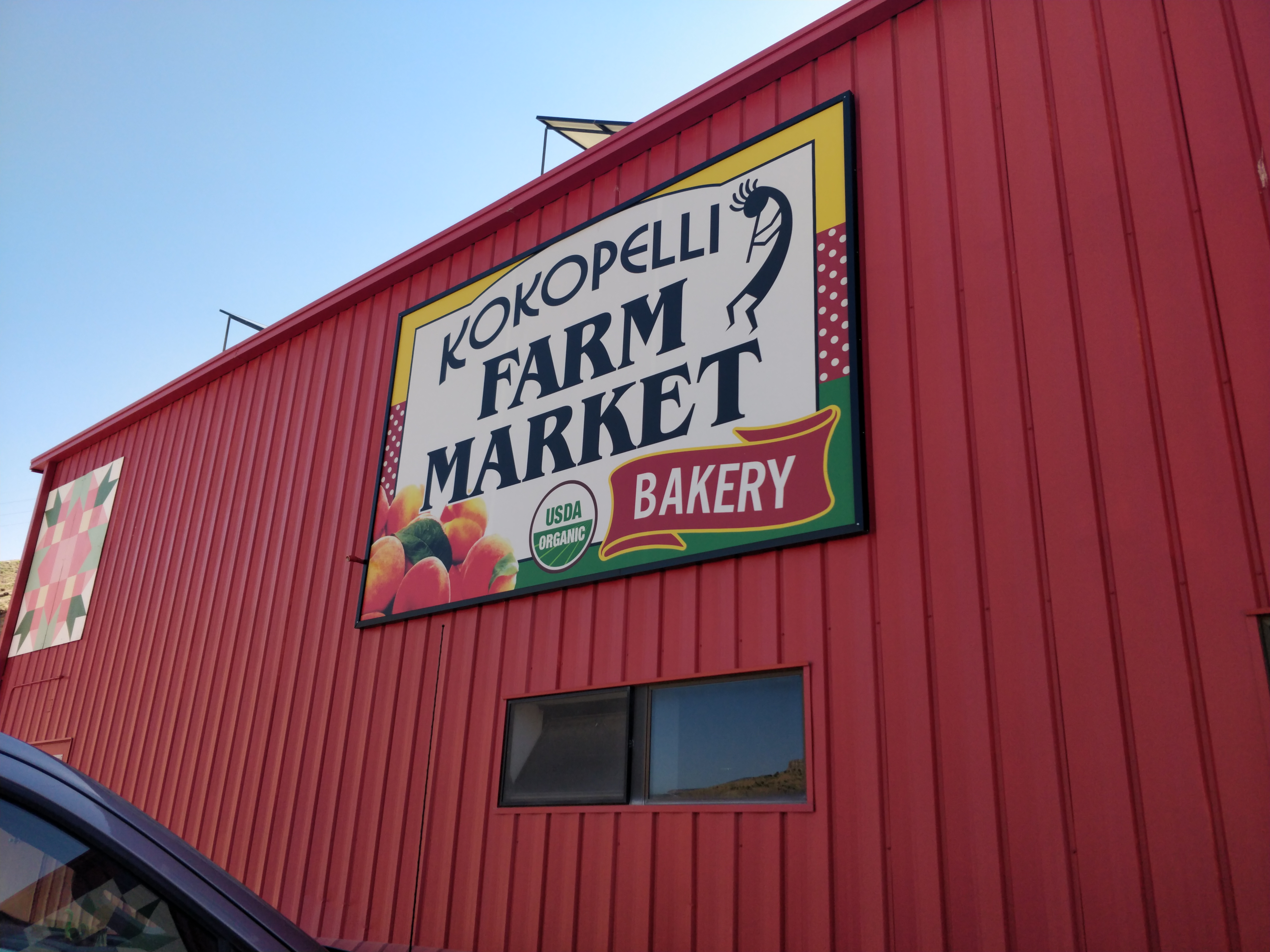
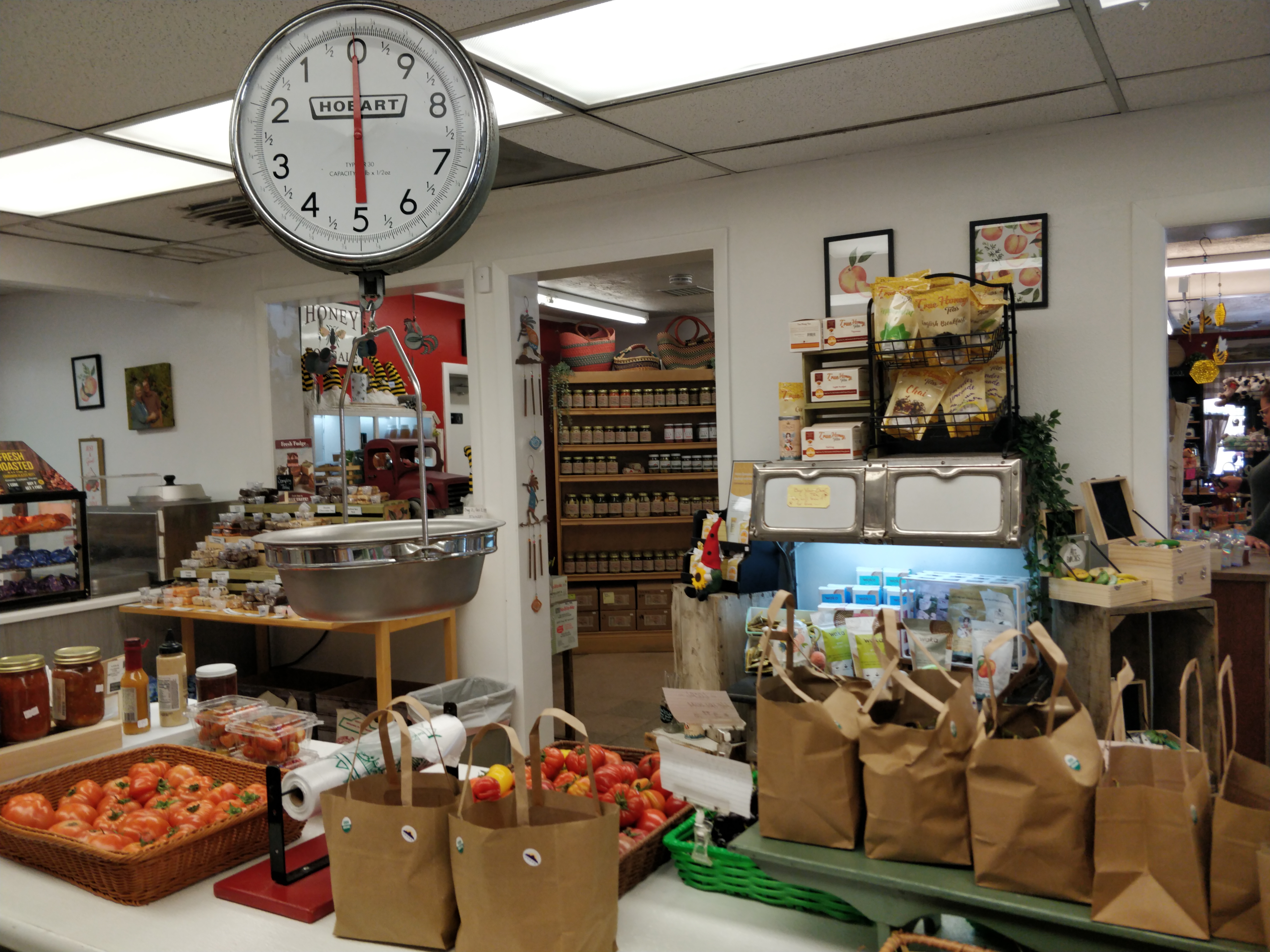
KOKOPELLI FARM MARKET
Nearby was a fantastic farmer’s market stocked with local produce, fresh baked and canned goods, coffees, arts and crafts, and lavender lemonade!

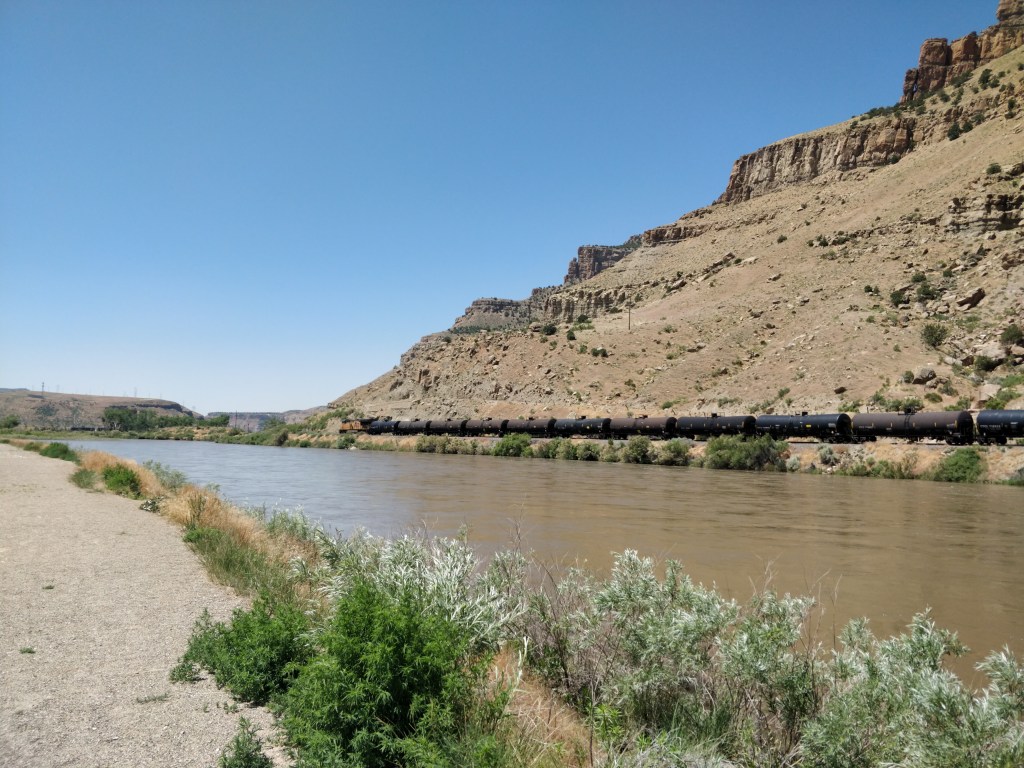
THE COLORADO RIVER
The river system of the west continues to astound us. Following the Colorado River over these many months from Arizona, New Mexico and Nevada to Utah, and Colorado, the one common characteristic is its reddish-brown color from which its name is derived in the Spanish language. About 1,450 miles long, eleven National Parks are located along its route. Traces of ancient cultures dating back to 6,000 BC and the beginnings of agricultural based societies are found along this winding and steep river. Explorers such as Powell and Fremont charted the Colorado and prospectors followed it to find gold and silver. Today, it is one of the most controlled rivers and provides water resources for millions and millions of people.
CAMPGROUND REVIEW: JAMES ROBB STATE PARK – ISLAND ACRES
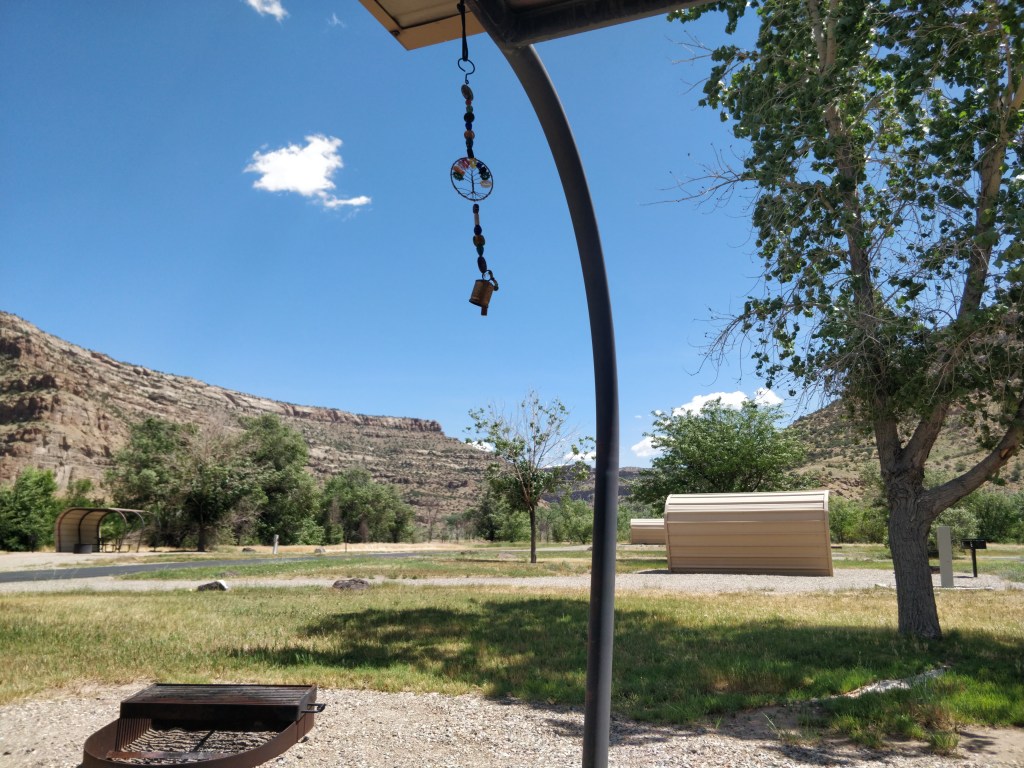
We stayed in the James M. Robb Island Acres State Park campground located in Palisade, Colorado for seven nights. Our pull-thru site with full hook ups included a picnic pavilion, fire pit, grill, and picnic table. We were a few steps away from the river and walking path. Showers and flush toilets were available in the central building and pit toilets were in each campsite loop. Facilities were clean. A couple ponds were open for swimming, fishing and kayaking/canoeing. We encountered some gnats and mosquitoes during our stay. Lighting was low throughout the park to allow for good stargazing. The campground is located near the highway and across the river from train tracks, so there is a significant amount of traffic noise, but manageable. The reservation website warns visitors about the noise level. The roads were well maintained and the sites were spacious. There is a separate daily fee required for admittance to the state park in addition to the nightly camping fee. We would return for a short stay only.
Thank you for visiting TheirRVtravels! We’re so glad to have you along for the ride!
Please take a moment to subscribe and you’ll receive a notice each time a new post is published.


Next up…Dinosaur Diamond: more Utah!
 Their RV Travels