
Our next destination took us into the counties of Mineral, Esmeralda, and Washoe where mining camps, stage coach stations, railroads, and the California Trail brought together thousands of people looking to “strike it rich.” Thousands of tons of gold and silver ore were moved out of this area during the rushes of the 1860’s to 1920’s.
Luning, Nevada
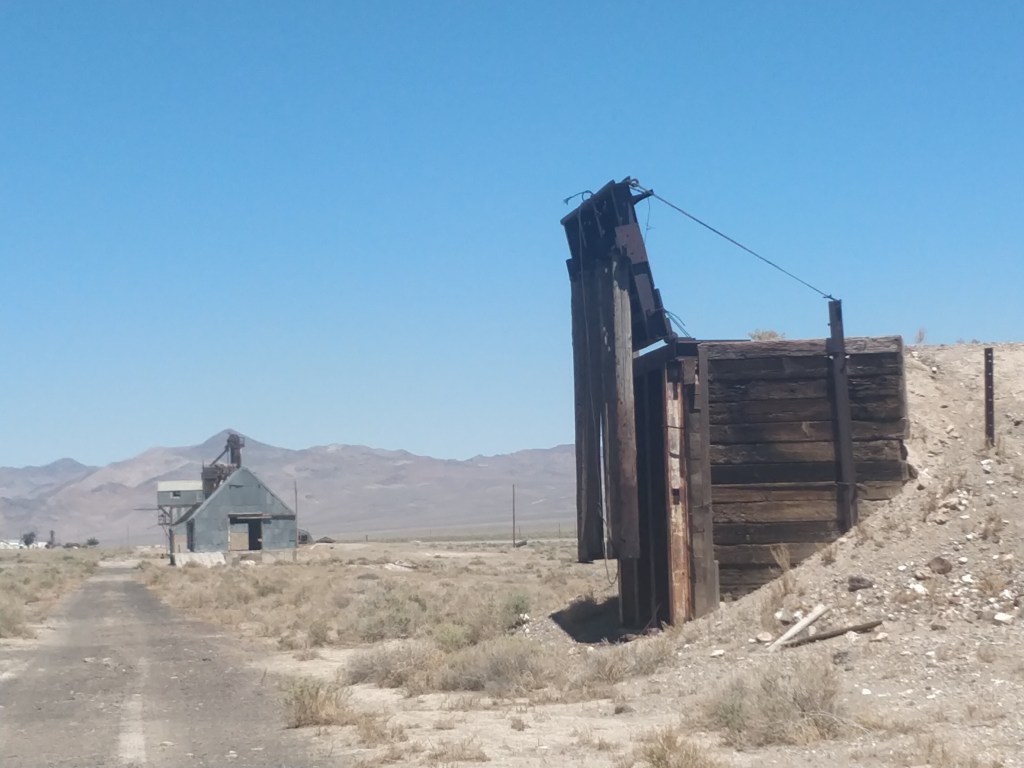
Originally named Deep Wells when it was a stagecoach station around 1864, the town of Luning changed its name when it became a stop on the Carson and Colorado Railroad. Many abandoned structures remain from the railway but all the tracks have been removed. In 1882, the town experienced a sliver mining boom which expanded Luning into one of the most populated places in the county at the time. Eventually, the silver played out and gave way to copper which was mined heavily until after World War I. We were able to walk along the old railway bed and see some of the deteriorating loading and storage structures. Only about 87 residents remain in the town today which has no grocery, gas, or other services as far as we could see.
Hawthorne, Nevada
The World’s largest ammo depot, Hawthorne is dotted with hundreds of storage buildings containing ordinances for the U.S. Army. Hawthorne loves its bombs, and aside from whirlygigs and monuments, the Ordinance Museum displays all shapes and sizes of explosives right on Main Street. The Mineral County Museum has a comprehensive collection of 19th century artifacts from the surrounding towns and mining camps. Ward, the volunteer docent, was a wealth of knowledge about the geography and history of the area and still actively explores the hills in his modified 1960 jeep! Walker Lake is on the northern edge of Hawthorne and is one of the best places to see big horn sheep. We encountered a herd crossing the highway one afternoon on their way to the hills beyond the lake. Hawthorne was a great base camp for access to ghost towns and sites along the Nevada and California border.
SLIDESHOW: Click following photo to begin
Bodie, California
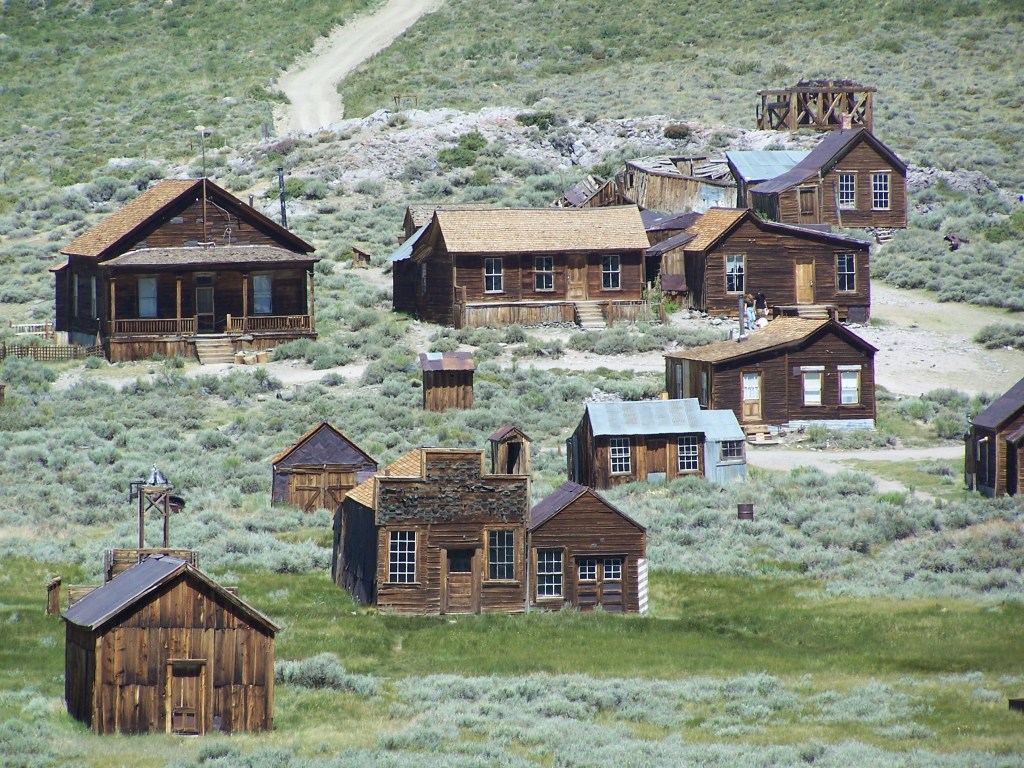
The gold camp of Bodie sits high in the Sierra Nevada mountains at an elevation of 8,379 ft. One of the richest strikes in California, the town attracted thousands of prospectors, outlaws, merchants and prostitutes in the boom of 1877. It was also one of the most dangerous places to live and work with any argument instantly resolved with bullets or a bowie knife. The long harsh winters fed discontent and isolation among the miners and residents which led to constant shoot-outs, murders, bar room brawls, and hold-ups. After about three years, the gold tapered off and the town began a slow decline. And, we learned, it’s the outlaws and madames that are among the first to leave as soon as the mines are played out.
Fortunately, Bodie has been preserved as an historic state park and many of the buildings remain in a state of arrested decay. It is quite impressive to walk around the town and look in the windows of the school, general store, residences, and miners’ shacks to see furniture and items left in place. Rusted equipment, tools, containers, and more litter the ground between buildings. The cemetery contains hundreds of graves with markers ranging from a simple stone to elaborate carvings.
Driving to Bodie, as we traveled along the narrowing road that took us up into the mountains, we came upon a shepherd with a flock of sheep being herded by working dogs. It was a magnificent sight!
SLIDESHOW: Click following photo to begin
Mono Lake, California
On our way back from Bodie, we stopped at Mono Lake. Formed over 760,000 years ago, the lake has no outlets which causes it to have high concentrations of salts and make it alkaline. Ancient peoples lived on the briny shrimp and alkali fly larva that exist in the water. Migratory birds utilize the lake for feeding as well. Otherworldly looking rock formations, called Tufa towers, grow from the lake bottom to form little pillars. Mark Twain visited Mono Lake often while mining and traveling in this area. Conservation efforts have restored much of the water level that was lost when freshwater inlet streams were diverted to Los Angeles.
SLIDESHOW: Click following photo to begin
Lake Washoe, Nevada
We headed north into Washoe County and stayed at the beautiful Washoe Lake State Park. With a variety of micro-environments, we explored sand dunes, beach, wetlands and desert right from our door. Boating (no wake) and fishing are the main recreational activities with birds and wildlife, including wild horses, providing lots of viewing opportunities. Fire bans were in effect for the whole state as temperatures soared into the 100’s.
SLIDESHOW: Click following photo to begin
SLIDESHOW: Click following photo to begin
Join us next time as our travels continue northward toward the state capital of Nevada — Carson City — and the beautiful Lake Tahoe region, in hopes of escaping the triple digit heat and searching out more old mines and ghost towns.
CAMPGROUND REVIEW: WHISKEY FLATS RV PARK
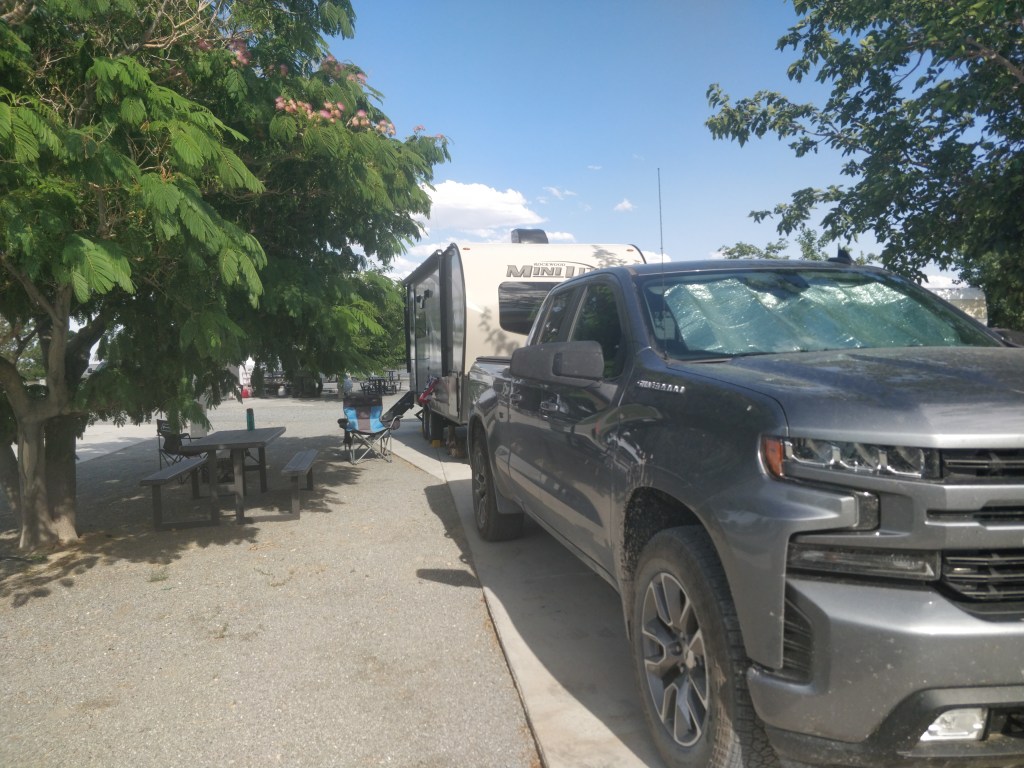
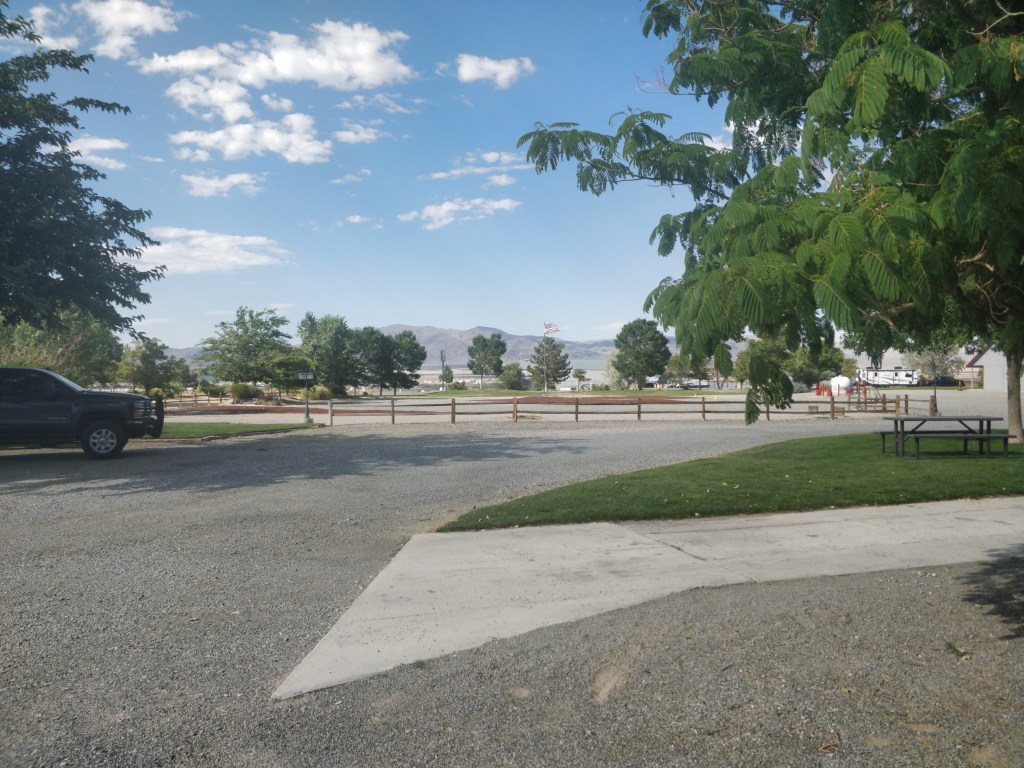
Whiskey Flats is located near the center of Hawthorne, Nevada, with easy access to Hwy 95. All sites are pull thru on gravel with full hook-ups. The sites have shade trees and a picnic table. Bathrooms are clean with locking shower doors. The park is set back enough that there is no noise from the road. The office building has a small general store and the park sells propane. WiFi and T-Mobile services were good. Grocery store and gas stations are nearby.
Thank you for visiting TheirRVtravels! We’re so glad to have you along for the ride!
Please take a moment to subscribe and you’ll receive a notice each time a new post is published.


Next up…Old Mines and Ghost Towns – Part 4
 Their RV Travels