
Bonanza!!!! The blueish-gray mud tossed aside as miners dug for gold was finally identified as raw silver. The Comstock Lode – the mother lode of silver – ran diagonally underground down the canyon and contained the richest deposit of raw silver that had ever been discovered. The 49ers of the gold rush were dwarfed by the thousands and thousands of silver seekers that flocked to Silver City and Virginia City. One hundred and fifty years later, we followed their footsteps through the canyon, past the mining ruins, and into the saloons. Many buildings, mines and railways have been restored in and around Virginia City, making this a top destination for tourists.
Virginia City
Virginia City is an historic landmark. The entire town is comprised of restored Victorian homes, shops, mines, saloons, churches, firehouse and other buildings with sections of the original boarded sidewalks still in use. At one time, the “Queen of the Comstock,” as the city was known, boasted over 100 saloons including the famous private Washoe Club for notorious and/or prominent citizens.
SLIDESHOW: Click following photo to begin
Virginia & Truckee Railroad Short Track
So many mines, both productive and speculative, filled the 20 mile long Gold Canyon that it became, one continuous mining camp from Dayton to Virginia City. Mills ran 24/7 pounding the ore brought in from the mines and shipped it out along the railroad lines that criss-crossed the territory. The Donovan Mill processed gold and silver for over 50 years, using cyanide to flush the huge lodes of ore as a new technology. The stamps and cyanide tanks still stand and are undergoing conservation and restoration work. The Bank of California built its own railroad just to transport the ore from their mining interests to San Francisco. Although this railroad track was removed in the 1940s, new preservation efforts by Virginia City raised millions of dollars to restore 19 miles of the original track. We rode the bright yellow “Queen of the Short Track” round trip between the original 1870 depot in Virginia City and Gold Hill in the heart of the historic mining district.
SLIDESHOW: Click following photo to begin
Chollar Mine
Among the rough and ready prospectors coming into the area in 1861 was a young Samuel Clemens (better known as Mark Twain). Traveling to Nevada to assist his brother who had been appointed secretary to the governor of Nevada Territory, he caught silver fever, purchased a claim and began the hard physical work of mining. Not long after, unsuccessful and broke, Sam accepted a position in Virginia City as a reporter for the Territorial Enterprise. He wrote for several area newspapers under the name, Mark Twain, and gained quite a bit of fame. He traveled between Virginia City and San Francisco reporting on the life and times of the miners. His book, “Roughing It,” is a witty yet eyewitness account of the bonanza era. It helped to bring alive for us the ghost towns and ruins strewn around Gold Canyon and the west. Highly recommended reading!
Chollar Mine operated in Virginia City during Mark Twain’s residency and was one of the leading producers on the Comstock Lode. The tour took us 400 feet underground through square set timber tunnels where we saw the mysterious “blue clay” layer embedded in the walls. It was muddy, slippery, damp, dark and filled with alcoves, shafts, and old mining equipment. How miners worked by candlelight for 8-10 hour shifts with the deafening noises from the pulleys, jack-hammers, drills and dynamite reveals a bit about the character of these hopefuls. Chollar Mine produced over $17 million dollars of silver ore between 1859 and 1939.
SLIDESHOW: Click following photo to begin
Virginia & Truckee Railway Steam Engine Ride
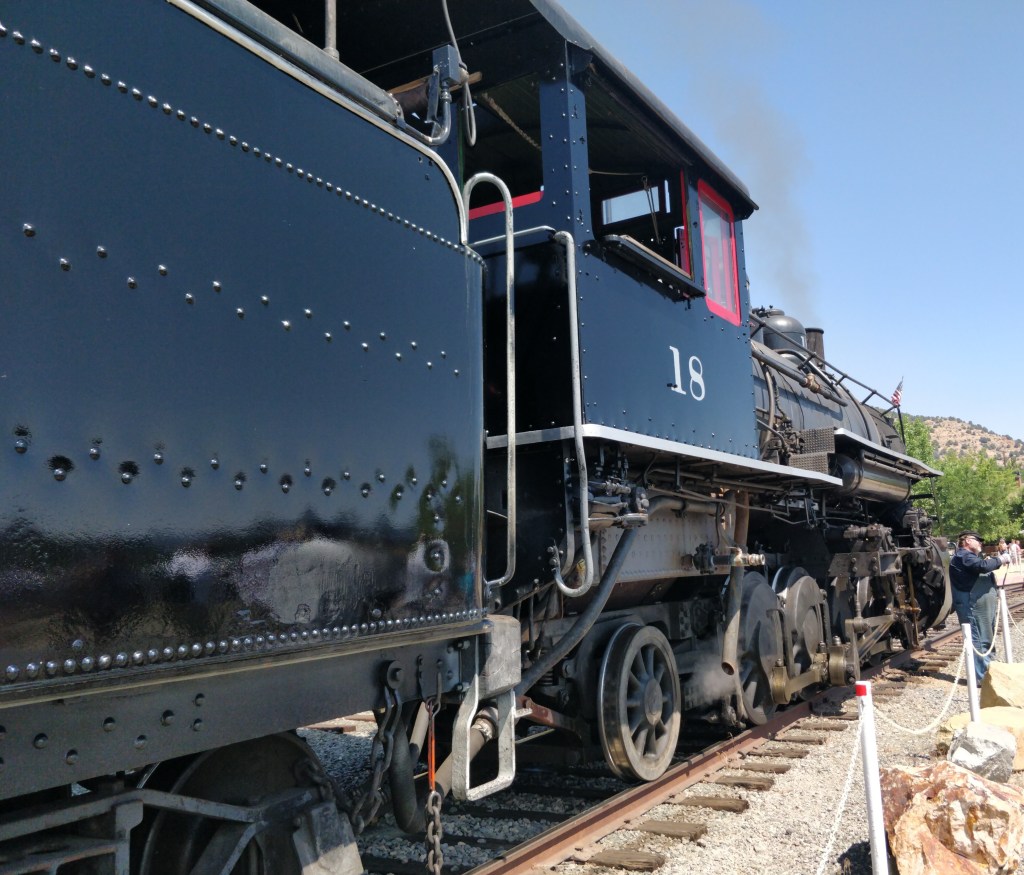
The V&T Railway also offers a longer route from Carson City to Virginia City on its restored steam locomotive and coaches. Traveling through the towns of Gold Hill and Silver City, we passed many abandoned mines along the canyon as we climbed up to Virginia City. The old television show, “Bonanza,” took place here. The conductor pointed out the locations where several of the scenes had been filmed. At present, this is the only train traveling the railway, but during the Comstock days, several trains a day would be running silver ore from mine to mill as fast as the tracks allowed.
SLIDESHOW: Click following photo to begin
Lake Tahoe
Some historians have written that as John Muir is to Yosemite, so Mark Twain is to Lake Tahoe. Only an hour from Virginia City now, this beautiful high Sierra mountain lake was a day’s travel for Mark Twain and his contemporaries. Known then for its serenity, he once described the topaz-colored lake as, “the fairest picture the whole earth affords.” We had both been to Lake Tahoe in the 1980’s and remembered the tall pines and mountains surrounding the crystal clear water. As with many iconic national locations, Lake Tahoe is significantly more crowded now with congested traffic and parking at a premium. The trees, mountains and water remain the same and our time at the Emerald Bay beaches included great people and watercraft watching as well as laughing at the antics of the bold Canadian geese.
SLIDESHOW: Click following photo to begin
Next time, we’ll inadvertently follow more of Mark Twain’s footsteps as we venture over Donner Pass and into the Eastern Sierra mountains of California.
Thank you for visiting TheirRVtravels! We’re so glad to have you along for the ride!
Please take a moment to subscribe and you’ll receive a notice each time a new post is published.


Next up…Old Mines and Ghost Towns – Part 6 – Donner Pass and vicinity
 Their RV Travels