

Heading north along Hwy 95, we entered some of the richest mining boom districts in Nevada. Old abandoned railroad grades paralleled the road and hinted at the frenzy of gold fever that brought thousands of people to this area at the turn of the 20th century.
Beatty, Gateway to Death Valley
Beatty, (pronounced B8-T) once a boomtown in central western Nevada, is now a sparsely populated old mining town. Currently advertised as the “Gateway to Death Valley,” tourism and renewed mining are fueling some growth in this desert place. During the gold mining rush of the late 1890’s to 1930’s, however, Beatty boasted three major railheads: the Las Vegas and Tonopah (LV&T), the Tonopah and Tidewater (T&T), and the Bullfrog Goldfield (BG). Millions of dollars worth of gold and silver ore traveled through this town, making it a prosperous location in the Bullfrog Mining District.
As was often the case, on the outskirts of the mining camps are the red light districts. A highway attraction marks the location of the once active Angel’s Ladies Brothel. As a publicity stunt, an airshow pilot was hired to advertise the business, but crashed near the front of the property. The plane was never removed and has become a roadside attraction for graffiti artists.
SLIDESHOW: Click following photo to begin
Goldfield, a Living Ghost Town and the World’s Largest Gold Camp
Goldfield was once the largest city in Nevada with a population of over 20,000 people. Prosperous mining barons from Tonopah invested heavily in Goldfield and employed thousands of hopeful gold miners looking to strike it rich. From 1901 thru 1940, Goldfield produced the equivalent in today’s prices of $1.8 billion dollars of gold. At the edge of town are the ruins of the Goldfield Consolidated Mines’ 100-stamp mill. The mill ran 24/7 crushing tons of ore each hour. The museum had an account of a visitor from San Francisco complaining about the constant deafening noise emanating from the mill, the mines, and the railroads.
Shortly after we arrived in Goldfield, we were startled by a very loud siren. Throughout our stay, this siren sounded three times a day, at 8:00 am, 12:00 noon, 5:00 pm. Evidently, this is a practice that dates back to the early days in mining towns.
The Goldfield Consolidated Mines company was so powerful that it built its own railroad to bring ore out of the mines and to the gigantic mill. From there, the gold and silver were shipped north to Tonopah or south to Beatty on the T&G (Tonopah & Goldfield), the B&G (Bullfrog Goldfield) or the LV&T (Las Vegas & Tonopah). Railroad history abounds in these old mining towns!
SLIDESHOW: Click following photo to begin
Aside from the historical treasures, more recently, Goldfield has become home to desert artists and a repository for Art Cars, sculptures and installations.
SLIDESHOW: Click following photo to begin
Goldfield is also known as one of the most haunted places in Nevada. The Goldfield Hotel has been featured on several paranormal programs as has the high school and cemetery. We fearlessly visited all these – in the daytime! However, the conversation at the famous Santa Fe Saloon (continuously operating since 1905) left us wondering if we hadn’t had an encounter with Large Marge.
SLIDESHOW: Click following photo to begin
Tonopah – Queen of the Silver Camps
Before Goldfield was established, Tonopah drew thousands of men and women from other mining camps throughout the West and beyond, hoping to make their fortunes. The second largest mining of silver ore in Nevada occurred here in the early 1900’s. The 100 acre mining park overlooks the town from the original mining claim and preserves four of the major mining companies’ buildings and equipment. From the height of the Desert Queen shaft, the town looks like something a model railroad enthusiast would design! As we stood among the century old structures, we were once again treated to the noon day mining siren here in Tonopah, too.
The Central Nevada Museum displayed artifacts from the gold rush era of the nearby towns. The outdoor section contained huge pieces of machinery from the mines and railroads as well as miner houses. From the unusual horn chair to the newspaper clippings of a record boxing match, the museum gave a good impression of the life and times in the boom towns.
Many original buildings from the turn of the 20th century remain in town, as well. The Mizpah Hotel has been restored and is currently operating. Both it and the Clown Motel have been featured in paranormal investigative programs.
SLIDESHOW: Click following photo to begin
Our plans are to continue north along Hwy 95 to explore more mining history and ghost towns in central Nevada and California.
CAMPGROUND REVIEW: GOLDFIELD MINERS CAMP
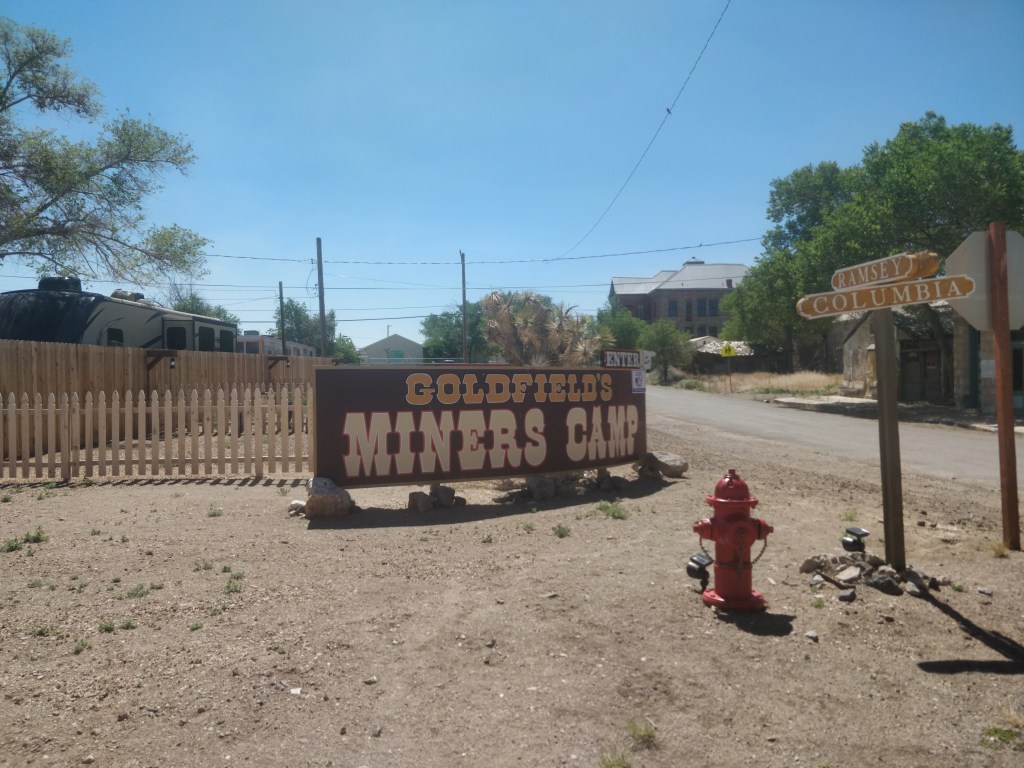
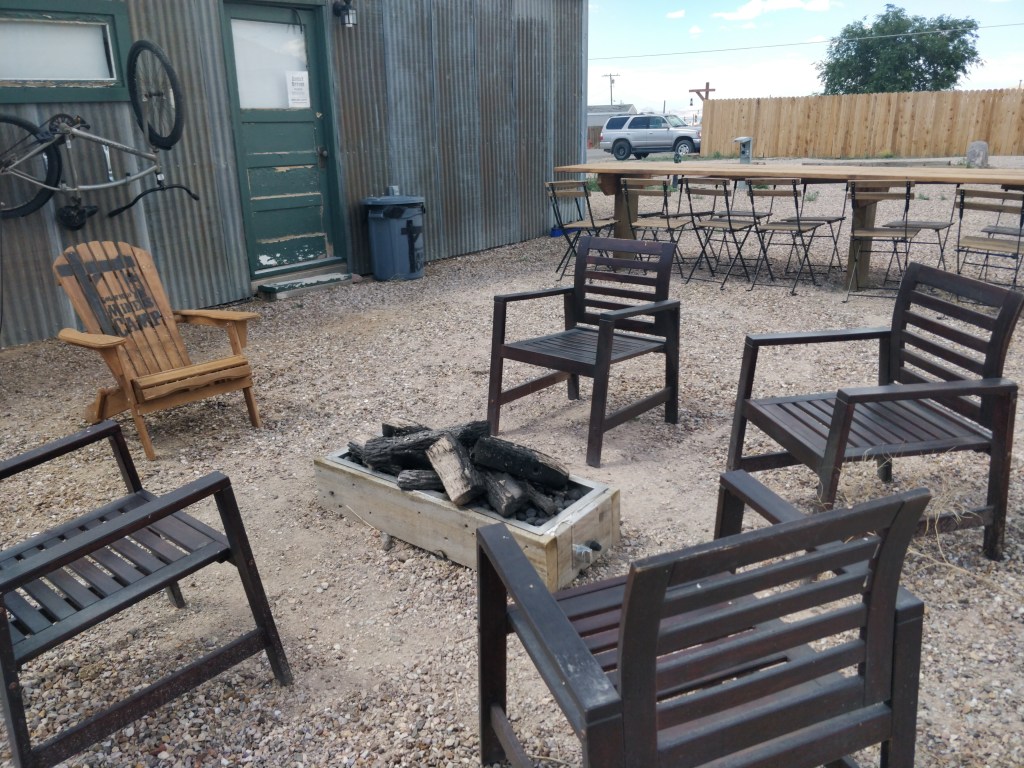
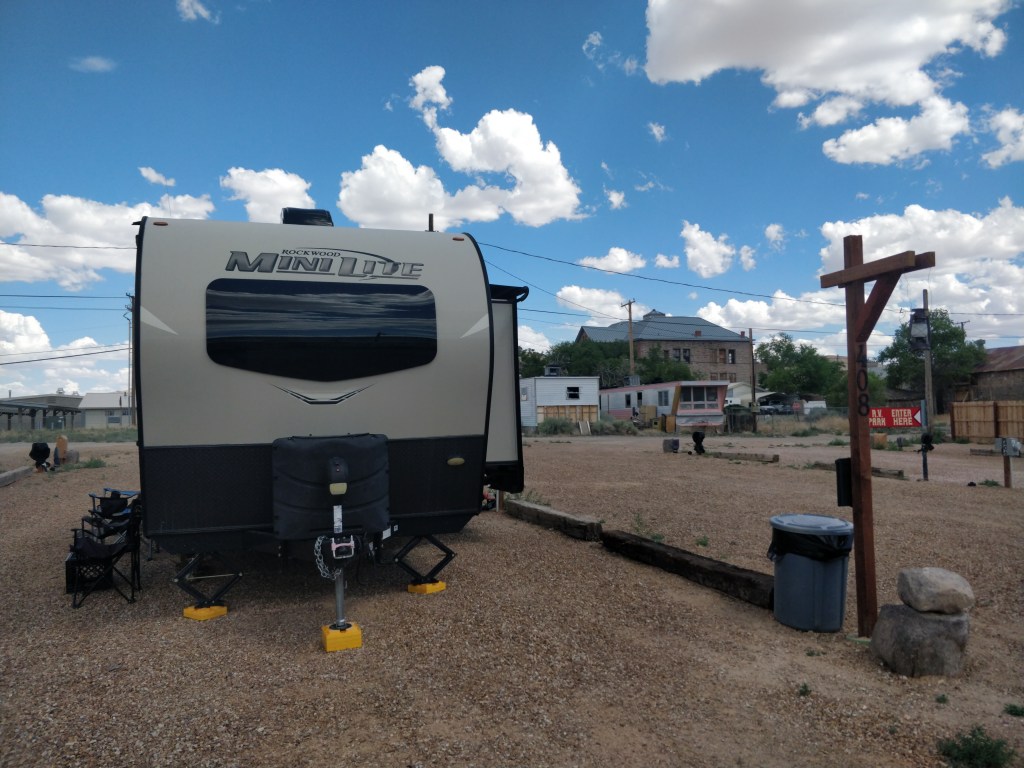
Miners Camp is located in the center of Goldfield and walking distance to most of the historic buildings, including the famous Goldfield Hotel. It is also an easy drive to several of the ghost towns in the area, including Tonopah, Beatty, Rhyolite, and more. All sites are pull thru on gravel with full hook-ups and plenty of room for both our vehicle and trailer. The individual bathrooms with shower are clean and beautifully decorated. The park has a central refrigerator, BBQ, fire pit and seating area for all guests to use. There is even an AirB&B on site in a restored Assay Office. The owner has provided an informational booklet with history, points of interest and shops listed at each site. WiFi and T-Mobile services were good. Great location for visiting Goldfield. Note: the nearest gas station is 30 miles away.
Thank you for visiting TheirRVtravels! We’re so glad to have you along for the ride!
Please take a moment to subscribe and you’ll receive a notice each time a new post is published.


Next up…Old Mines and Ghost Towns – Part 3
 Their RV Travels
More great and informative news. I love the Steam Punk Casino. Can’t wait to see you. ❤️
LikeLike